AI Appraisal Estimate

AI-generated estimates · not official valuations

From the user

What was submitted

Photo and notes provided by the user — not generated by AI

Submitted item photo
Submitted photo · May 27, 2026

User's notes

No additional notes provided.

AI analysis below

AI appraisal

AI analysis & estimate

AI-Generated · Verify before acting

Everything below is generated by AI for informational purposes only. AI can make mistakes — the AI may misidentify items or misattribute them (artist, maker, brand, designer, origin, era). This is not an official valuation and should not be used for insurance, sale, tax, estate, legal, or lending purposes — or any decision requiring a certified appraisal. It is not an authoritative claim about any person, brand, or rights holder — do not share or rely on it as a factual statement about a third party. Always consult qualified professionals before making financial decisions.

Read the full disclaimer

AI Identification

·Not independently authenticated·Verify before acting

Kahla Porcelain Dinner Plate with Blue Checkered Rim, Made in GDR

Dinnerware / Collectible Porcelain

AI Estimated Value

·Not an official valuation·Verify before acting

$8-15

As of May 27, 2026

AI Item Analysis

·AI can make mistakes·Verify before acting
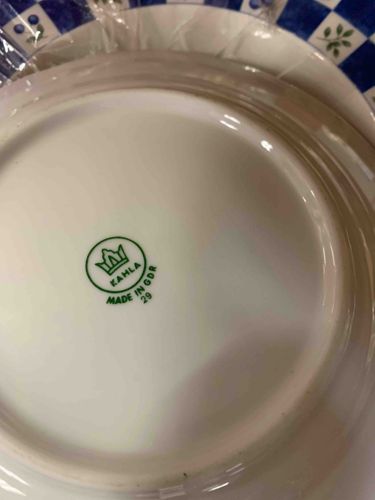
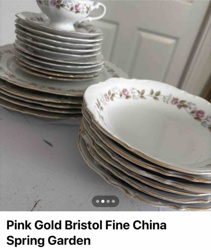
The item is a porcelain plate, likely part of a dinnerware set, featuring a distinctive blue and white checkered pattern around the rim, accented with small olive or berry motifs. The central portion of the plate is plain white. The plate exhibits a smooth, glossy glaze. Its physical characteristics align with standard dinner plate dimensions, though precise measurements are not available from the image. The most prominent feature is the green manufacturer's mark on the underside, which is clearly visible. This mark consists of a stylized crown symbol above the word "KAHLA," with "MADE IN GDR" written below it in a semi-circular fashion, and the number "29" underneath "GDR." The "GDR" designation indicates that the plate was manufactured in the German Democratic Republic (East Germany), dating its production to between 1949 and 1990. The overall condition appears to be very good; the surface is clean, and there are no immediately visible chips, cracks, or significant wear. There is a plastic film or packaging material draped over the top, suggesting it might be new old stock or very well-preserved. The craftsmanship appears to be of good quality, with clear printing on the maker's mark and a consistent glaze, indicating a mass-produced item from a reputable manufacturer of the era. The presence of the original packaging hints at its pristine condition.
AI Appraisal Report

·AI can make mistakes·Verify before acting
Upon visual examination of the provided images, I have assessed this Kahla porcelain dinner plate. The item presents in what appears to be excellent, possibly unused condition, supported by the presence of protective wrapping. The maker's mark on the underside, featuring a crown over 'KAHLA' and 'MADE IN GDR', is consistent with items produced by the VEB Porzellanwerke Kahla in East Germany between 1949 and 1990. The pattern, a blue checkered rim with small olive motifs, is a charming example of mid-century East German design. From a market perspective, Kahla porcelain from the GDR era is widely available and generally not considered rare. It was mass-produced for both domestic use and export. While collectible, individual dinner plates do not command high prices unless they are part of a rare or exceptionally desirable pattern. Current market comparables for similar individual Kahla GDR plates typically sell for modest amounts on online marketplaces. The primary factor influencing this item's value is its excellent, near-mint condition. However, demand for this specific pattern is limited, appealing primarily to collectors of GDR memorabilia or those seeking replacement pieces. It is important to note the limitations of this appraisal. Without physical inspection, I cannot definitively confirm the absence of hairline cracks, crazing under the glaze, or subtle repairs. Full authentication would require in-person examination to feel the surface and inspect the mark under magnification. However, based on the clear visual evidence, the item appears authentic to its period and manufacturer.

Get your items appraised

Instant estimates of your treasures with AI-powered appraisals

Browse More Appraisals