AI estimate as of October 11, 2025 · verify with a professional before acting
AI-Generated · Verify before acting
Everything on this page is generated by AI for informational purposes only. AI can make mistakes — the AI may misidentify items or misattribute them (artist, maker, brand, designer, origin, era). This is not an official valuation and should not be used for insurance, sale, tax, estate, legal, or lending purposes — or any decision requiring a certified appraisal. It is not an authoritative claim about any person, brand, or rights holder — do not share or rely on it as a factual statement about a third party. Always consult qualified professionals before making financial decisions.
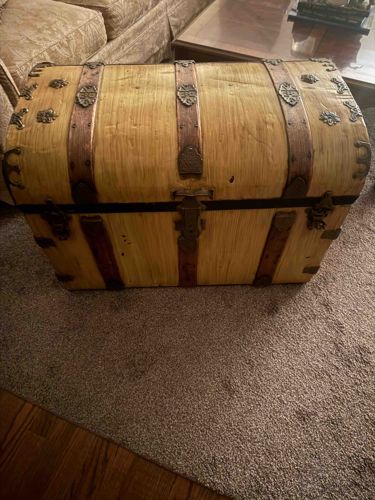
This is an antique domed top or 'camelback' trunk, characterized by its distinctive curved lid. The primary material appears to be wood, possibly pine or a similar light-colored timber, covered with a textured surface that has a light, natural wood grain finish, perhaps a veneer or painted and distressed finish to mimic aged wood. The dominant color is a light, somewhat yellowish-beige. The trunk is reinforced with multiple dark brown or tarnished bronze-colored strapping, likely made of metal (iron or steel), running both horizontally and vertically across the body and curved lid. These straps are secured with numerous decorative metal studs or tacks, giving it a robust and rustic appearance. Further ornamentation is provided by ornate, shield-like or floral embossed metal escutcheons and corner protectors, which show signs of tarnishing and possibly some verdigris, indicating age. The hardware, including the central latch and two side clasps, is also made of dark, tarnished metal, aligning with the overall aged aesthetic. Two original side handles, likely leather or thick metal loops, are visible near the corners. The condition appears consistent with an item of significant age, showing commensurate wear, including minor scuffs, scratches, and patination on the metal elements. There are no immediate visible signs of major damage, repairs, or missing components. The style suggests it dates from the late 19th to early 20th century, a period when trunks were essential for travel and storage. The craftsmanship, though utilitarian, includes decorative flourishes that were common during this era, adding to its appeal as a collectible or decorative accent piece.
AI Appraisal Report
Having visually examined this antique domed top trunk, I assess its condition as good, commensurate with its probable age of late 19th to early 20th century. The curved lid, metal strapping, decorative studs, and ornate escutcheons are consistent with period construction. Authenticity appears strong based on the visual cues; the patination on the metal and natural distress on the wood-like surface suggest genuine age rather than artificial aging. There are no obvious signs of major damage or repair, which is a positive factor. The presence of all hardware, including side handles, is also beneficial.
Market conditions for antique trunks of this type fluctuate. While once highly utilitarian, they are now primarily decorative pieces, used for storage or as accent furniture. Domed top trunks, often referred to as 'camelback' trunks, are generally more desirable than flat-top utility trunks due to their distinctive aesthetic. However, they are not exceedingly rare. Demand is moderate, driven by collectors of Americana, antique furniture enthusiasts, and those seeking unique decor.
Factors significantly impacting value include the overall craftsmanship, the retention of original hardware, and the general state of preservation. The appealing light finish and decorative metalwork enhance its marketability. Without an in-person physical examination, I cannot definitively verify the internal condition, the specific wood type, or the integrity of any interior lining. I also cannot confirm the composition of the metal or the exact age without closer inspection of any maker's marks or internal labels. Provenance documentation, if available, would further authenticate its history and potentially increase its value. However, based purely on visual assessment, this trunk presents as a solid, attractive example of its type, falling into the upper-average range for similar decorative antiques.