AI estimate as of August 15, 2025 · verify with a professional before acting
AI-Generated · Verify before acting
Everything on this page is generated by AI for informational purposes only. AI can make mistakes — the AI may misidentify items or misattribute them (artist, maker, brand, designer, origin, era). This is not an official valuation and should not be used for insurance, sale, tax, estate, legal, or lending purposes — or any decision requiring a certified appraisal. It is not an authoritative claim about any person, brand, or rights holder — do not share or rely on it as a factual statement about a third party. Always consult qualified professionals before making financial decisions.
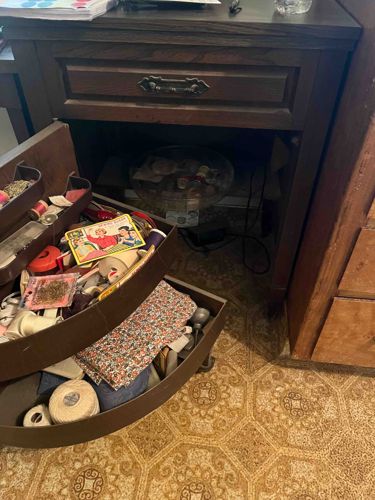
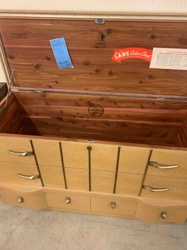
The item is a vintage cantilever sewing box, characterized by its expandable, multi-tiered design. It appears to be constructed primarily of wood, likely a darker stained hardwood, given the rich brown hue and visible grain. The box features a set of 'accordion' or 'cantilever' trays that open outwards when the lid is lifted, revealing several compartments for organizing sewing notions. These trays are filled with various sewing supplies, including spools of thread, fabric scraps (one with a floral pattern), pin cushions, bobbins, tapes, and what appears to be a small, vintage instructional booklet or pattern. The exterior of the box shows signs of wear consistent with age and use, including scuffs and possible minor scratches, contributing to a desirable patina. The internal compartments appear well-used but functional, suggesting good craftsmanship from its original manufacture. Its design is typical of sewing boxes from the mid-20th century, likely 1940s-1970s, designed for efficiency and portability. The quality of its construction, with multiple moving parts, indicates it was a well-made utilitarian piece intended for long-term use. No specific maker's marks or signatures are visible in the image, but the overall design points to a mass-produced item common in its era.
AI Appraisal Report
Upon visual inspection of the provided image, I assess this vintage cantilever sewing box. The item exhibits attributes consistent with mid-20th century craftsmanship (likely 1940s-1970s), characterized by its functional expandable design. The apparent construction from stained hardwood, rich in hue with visible grain, points to a utilitarian piece designed for durability. The presence of original sewing notions, though not significantly impacting value individually, adds to the charm and completeness of the piece. The condition is consistent with age and use, displaying desirable patina, scuffs, and minor scratches rather than significant damage. This 'wear' authenticates its vintage status and utility. Without a physical examination, I cannot definitively verify the specific wood type, joinery, or internal structural integrity. Authenticity is assessed based purely on visual style and apparent age; maker's marks, if any, are not visible. In-person examination would allow for closer inspection of construction methods, and physical assessment of all moving parts. Provenance documentation, such as original purchase receipts or family history, would further solidify its authenticity and potentially its unique narrative. Market conditions for vintage utilitarian furniture like this are stable. There's consistent demand for functional, aesthetically pleasing, and nostalgic items. Comparables typically range from $75-$150 depending on condition, wood species, and completeness (with or without contents). This particular piece, with its visible contents and good overall presentation, is at the higher end of the range. Rarity is low as these were mass-produced, but well-preserved examples remain sought after by hobbyists, collectors, and those seeking decorative storage.