These notes were written by the person who submitted this item. Appraiser.AI has not verified them, and the AI's identification and estimate may rely on them.
AI Estimated Value
Not an official valuation
$40-60
AI estimate as of July 8, 2025 · verify with a professional before acting
AI-Generated · Verify before acting
Everything on this page is generated by AI for informational purposes only. AI can make mistakes — the AI may misidentify items or misattribute them (artist, maker, brand, designer, origin, era). This is not an official valuation and should not be used for insurance, sale, tax, estate, legal, or lending purposes — or any decision requiring a certified appraisal. It is not an authoritative claim about any person, brand, or rights holder — do not share or rely on it as a factual statement about a third party. Always consult qualified professionals before making financial decisions.
This analysis also relies on unverified notes provided by the user, which may be incomplete or inaccurate and could affect the result.
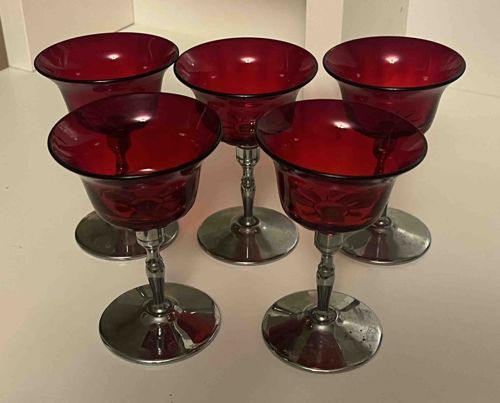
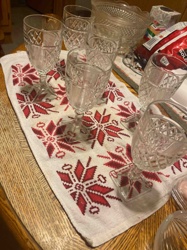
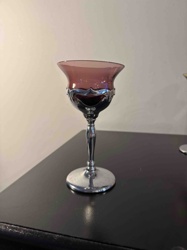
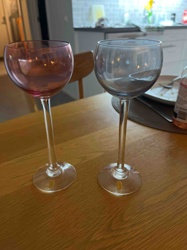
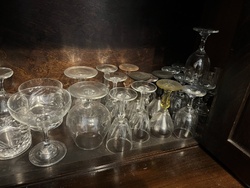
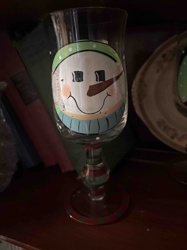
This set of five vintage ruby red glass goblets features a unique construction combining glass bowls with polished metal stems and bases. Each goblet stands approximately 5-6 inches tall, with the vibrant, translucent ruby red glass contrasting sharply with the silver-toned, possibly chrome or aluminum, metal components. The glass bowls have a flared, bell-like shape with a smooth rim. A discernible floral or starburst pattern is etched or molded into the exterior lower portion of each glass bowl, visible when light passes through. The metal stems appear to be intricately designed, possibly featuring 'twist' or 'barley twist' details on some, providing an elegant and decorative touch, while others seem to have a more fluted or sculpted form, indicating a level of craftsmanship beyond simple utilitarian design. The round metal bases are flat and provide stability. Visible condition issues include varying degrees of tarnish, scratching, and potential spotting on the metal bases and stems, suggesting age and use. The glass bowls appear to be in good condition with no obvious chips or cracks, although closer inspection would be needed for fleabites or internal scratches. The manufacturing detail "Made in Japan" indicates their origin and likely places their production from the mid-20th century, possibly the 1950s to 1970s, a period when Japanese manufacturers exported a wide range of decorative and functional household items. The combination of materials and decorative elements points to a mid-century modern or perhaps Hollywood Regency style influence, offering a blend of functionality and decorative appeal. The quality of materials and the molded glass patterns, combined with the metal bases, suggest they are of decent, mass-produced quality for the period, intended for regular use or display.
AI Appraisal Report
Upon examining the set of five ruby red glass and metal stem goblets, I observe a charming vintage aesthetic. The ruby red glass bowls are vibrant and appear to be in good condition from the images provided, showing a distinctive floral or starburst pattern in the lower portion. This molded detail is consistent with mid-century mass-produced decorative glass. The 'Made in Japan' mark, as stated by the owner, firmly places their origin, likely within the 1950s-1970s, a period known for a wide export of such items. The metal stems, with their varying 'twist' or fluted designs, and flat bases are the primary components showing age. Visible tarnish, scratching, and potential spotting are consistent with decades of use and storage. These condition issues on the metal, while expected, do detract slightly from optimal presentation. Authenticity appears consistent with typical Japanese imports of that era. Market conditions for vintage ruby red glass, especially stemware, are generally stable, with a strong niche of collectors. However, the mass-produced nature and the condition of the metal components prevent these from achieving higher values. Comparables in the market for similar 'Made in Japan' ruby red stemware sets, particularly those with mixed materials, typically retail in the lower-to-mid range. Demand for such items is moderate; they are decorative and functional but not exceedingly rare. Factors impacting value include the number in the set (five is an unusual number for a 'set'), the condition of the metal, and the overall aesthetic appeal. Without a physical inspection, I cannot definitively assess for fleabites, internal scratches in the glass, or precisely identify the metal composition (e.g., chrome vs. aluminum). Full authentication of material quality or confirmation of specific manufacturing dates would require in-person examination and possibly scientific testing.