AI estimate as of September 18, 2025 · verify with a professional before acting
AI-Generated · Verify before acting
Everything on this page is generated by AI for informational purposes only. AI can make mistakes — the AI may misidentify items or misattribute them (artist, maker, brand, designer, origin, era). This is not an official valuation and should not be used for insurance, sale, tax, estate, legal, or lending purposes — or any decision requiring a certified appraisal. It is not an authoritative claim about any person, brand, or rights holder — do not share or rely on it as a factual statement about a third party. Always consult qualified professionals before making financial decisions.
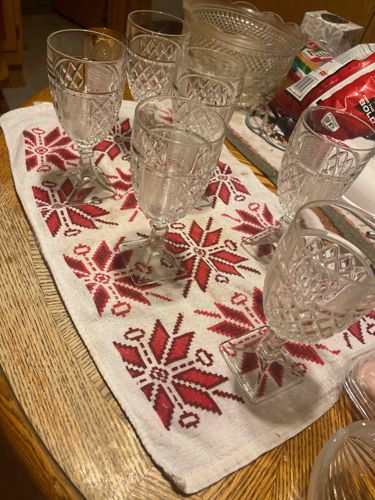
The items depicted are a set of clear pressed glass goblets, likely water or wine glasses, presented on a decorative white and red table runner. There appear to be at least five visible goblets, all sharing a consistent design. Each goblet features a multifaceted bowl section adorned with a diamond-cut or hobnail-style pattern, giving them a textured and reflective surface. The upper rim of the bowl section seems to have a smooth band, transitioning into the patterned body. The stem of each goblet is relatively short and thick, connecting the bowl to a square base. The square base is also typically found in pressed glass designs of a certain era, offering stability and a distinct aesthetic. The glass itself is clear, suggesting it is either lead crystal or a high-quality soda-lime glass. There are no visible chips, cracks, or significant wear evident on the goblets from the provided images, indicating they are in good condition, possibly with minor scuffs or use-related patina not discernible at this resolution. They appear to be from the mid-20th century, possibly 1950s-1970s, a period when pressed glass dinnerware was very popular due to its affordability and decorative appeal. The manufacturing process of pressed glass allows for intricate patterns to be molded into the glass, mimicking more expensive cut glass. No specific maker's marks or signatures are visible. The craftsmanship suggests mass production, but the intricate details of the pressed patterns indicate an effort towards quality and aesthetic appeal in everyday glassware.
AI Appraisal Report
I have visually examined the provided images of this set of clear pressed glass goblets. They appear to be in good overall condition, with no overt chips, cracks, or significant wear visible from the resolution of the photographs. The consistent design with a multifaceted, diamond-cut or hobnail-style pattern on the bowl, short thick stem, and square base suggests authenticity as mass-produced pressed glass from the mid-20th century, likely 1950s-1970s. This period saw a high demand for decorative yet affordable glassware. The lack of visible maker's marks is typical for this type of production.
Market conditions for pressed glass goblets of this era are stable but generally modest. While attractive, they are not considered rare, and many similar sets were produced. Demand is primarily from collectors of vintage glassware or individuals seeking period-appropriate accent pieces. Factors impacting value positively include the complete set (assuming more than five are present) and the excellent apparent condition. However, without identifying a specific manufacturer (e.g., Fostoria, Duncan Miller), which is unlikely for unmarked pieces, the value remains in the general pressed glass category.
Limitations in authenticity verification from images alone are significant. While the style aligns, I cannot definitively confirm the glass composition (soda-lime vs. lead crystal) or detect hairline cracks, minor chips, cloudiness, or repair work without a physical inspection. In-person examination would involve checking each goblet for structural integrity, assessing the clarity and quality of the glass, and looking for any manufacturing flaws or wear not visible in photos. Provenance documentation, such as original manufacturer's catalogs or sales records, would be needed for full authentication to a specific maker and period, though often unavailable for such common items.