AI estimate as of September 22, 2025 · verify with a professional before acting
AI-Generated · Verify before acting
Everything on this page is generated by AI for informational purposes only. AI can make mistakes — the AI may misidentify items or misattribute them (artist, maker, brand, designer, origin, era). This is not an official valuation and should not be used for insurance, sale, tax, estate, legal, or lending purposes — or any decision requiring a certified appraisal. It is not an authoritative claim about any person, brand, or rights holder — do not share or rely on it as a factual statement about a third party. Always consult qualified professionals before making financial decisions.
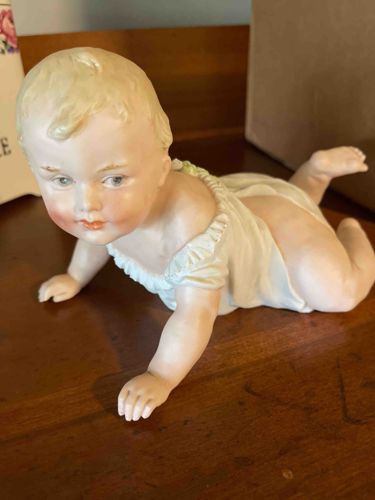
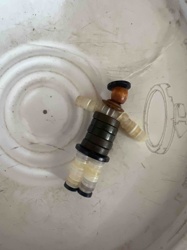
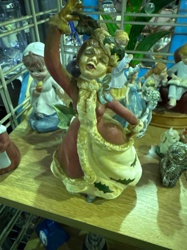
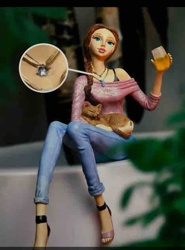
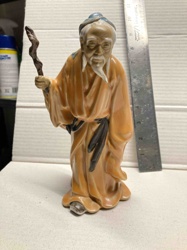
This item is a charming porcelain or bisque figurine depicting a crawling baby. The baby is portrayed in a naturalistic crawling pose, resting on its hands and knees, with its head turned slightly to the left and looking forward. It appears to be made from a matte, unglazed ceramic material, likely bisque porcelain, which gives it a soft, skin-like texture. The coloring is predominantly pale 'skin' tones, with delicate rosy blush applied to the cheeks, lips, and possibly hands and knees, mimicking the warmth of infant skin. The head features molded blonde hair, with faint painted details suggesting individual strands, and light blue painted eyes that convey an innocent gaze. The baby is dressed in what appears to be a light-colored, possibly white or cream, romper or undergarment, which has ruffled edges around the sleeves or shoulders, and is gathered around the waist or hips, giving the impression of either a loose-fitting garment or a diaper. The craftsmanship suggests a good quality piece, with fine detailing in the facial features and the sculpted form of the hands and feet. There are no immediately obvious cracks, chips, or repairs visible from the provided image, but a closer inspection for crazing or hairline fractures would be necessary for a full condition report. The style, particularly the delicate painting and molded hair, suggests it could date from the late 19th to early 20th century, a popular period for such baby figurines and dolls. The item's primary purpose would have been decorative, possibly as a nursery accent or collectible.
AI Appraisal Report
This charming porcelain or bisque crawling baby figurine presents as a well-preserved example of its type. Based on my visual examination, the condition appears very good. The matte, unglazed bisque surface shows no readily apparent chips, cracks, or significant abrasions. The delicate rosy blush on the cheeks and lips, along with the light blue painted eyes, seems intact. The molded blonde hair also shows good detail. The 'romper' or undergarment with its ruffled edges is a nice detail. The quality of craftsmanship, particularly the fine detailing in the facial features and the anatomical sculpting, indicates a piece of good manufacture. I deduce its authenticity as a period piece based on the stylistic elements, such as the painting technique and the overall aesthetic typical of late 19th to early 20th-century ceramic baby figures.
In terms of market conditions, bisque baby figurines or dolls from this era generally attract a steady collector base, particularly those in appealing poses and good condition. Comparable sales of similar crawling baby figures, often unmarked or from lesser-known German or American manufacturers, typically fall within this value range. Demand is stable rather than high, and while not exceedingly rare, a well-preserved example like this is desirable. Factors significantly impacting value include its appealing posture, delicate painting, and apparent lack of damage. The primary limitation from image-only examination is the inability to detect hairline cracks, crazing, or professional repairs. A physical inspection would be crucial for a definitive condition assessment. Furthermore, examining the base for any maker's marks or provenance documentation would be essential for full authentication and could potentially increase its value if attributed to a renowned manufacturer.