AI estimate as of October 2, 2025 · verify with a professional before acting
AI-Generated · Verify before acting
Everything on this page is generated by AI for informational purposes only. AI can make mistakes — the AI may misidentify items or misattribute them (artist, maker, brand, designer, origin, era). This is not an official valuation and should not be used for insurance, sale, tax, estate, legal, or lending purposes — or any decision requiring a certified appraisal. It is not an authoritative claim about any person, brand, or rights holder — do not share or rely on it as a factual statement about a third party. Always consult qualified professionals before making financial decisions.
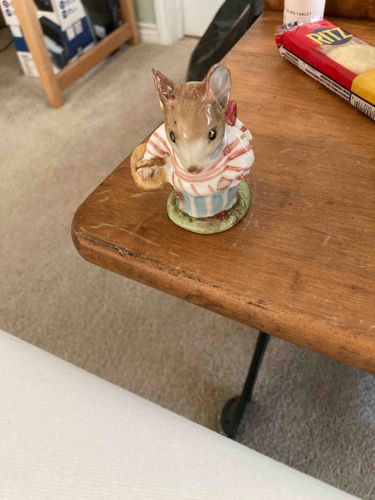
This item is an anthropomorphic figurine depicting a charming mouse. It is crafted from glazed ceramic or porcelain, exhibiting a smooth, lustrous finish. The mouse is depicted wearing clothing: a shirt with alternating white and light red horizontal stripes on the upper portion, and a light blue and white striped lower garment, possibly a skirt or pantaloons. A small red bow is perched on the mouse's right ear. The mouse's fur is depicted in shades of brown and tan, with lighter tones on the face and a darker brown snout. Its eyes are small, black dots, and its ears are prominent, pinkish-brown, and alert. The figurine sits upon a circular green base that simulates grass or a natural ground surface, with some textural details visible. In its left hand, the mouse appears to be holding a small, light brown 'basket' or satchel-like object. The overall craftsmanship suggests a whimsical, decorative piece, likely hand-painted given the slight variations in line work. There are no immediately obvious chips, cracks, or significant repair marks visible from the provided image, though without closer inspection, minor flaws cannot be ruled out. The colors are vibrant and well-preserved. It measures approximately 4-6 inches in height, based on its context on a table. The style is reminiscent of collectable animal figurines that gained popularity in the mid to late 20th century, suggesting it could be from this period. The quality of the painting and molding indicates a production meant for decorative appeal, potentially a part of a larger series of animal characters.
AI Appraisal Report
I have examined the image of this anthropomorphic mouse figurine, which appears to be crafted from glazed ceramic or porcelain. Visually, the condition appears excellent; I can discern no chips, cracks, or significant losses to the glaze or paint from the provided image. The colors are vibrant and well-preserved, suggesting careful handling over its lifespan. The whimsical design, apparent hand-painted details, and clothing place it firmly in the category of decorative animal figurines popular from the mid to late 20th century.
Market conditions for such pieces are modest. While charming, these types of mass-produced decorative items, even those with good craftsmanship, generally do not command high prices unless they are from a highly sought-after manufacturer (e.g., Beatrix Potter figurines by Beswick, specific Disneyana, or very rare regional pottery). Comparables for generic anthropomorphic ceramic figures of this size and period typically fluctuate between $15 and $60, depending on condition, specific artistic quality, and perceived brand.
Demand for general ceramic animal figurines is consistent but not high-end, primarily appealing to collectors of novelty items or specific themes. Rarity is difficult to ascertain without maker's marks, but most pieces of this style were produced in quantity, so true rarity is unlikely. The vibrant colors and good condition enhance its appeal, pushing it towards the higher end of the expected range for an unmarked piece.
My primary limitation in authenticating and valuing this piece fully is the lack of physical examination. An in-person inspection would allow me to check for manufacturer's marks (which are critical for establishing provenance and often value), assess the actual weight and feel of the material, and detect any hairline cracks, repairs, or subtle flaws invisible in a photograph. Without physical inspection, I cannot confirm the material definitively as ceramic or porcelain, nor can I verify if it is part of a known series or a one-off. Provenance documentation, such as original sales receipts or information about its acquisition history, would also be invaluable in confirming its authenticity and origin.