AI estimate as of August 25, 2025 · verify with a professional before acting
AI-Generated · Verify before acting
Everything on this page is generated by AI for informational purposes only. AI can make mistakes — the AI may misidentify items or misattribute them (artist, maker, brand, designer, origin, era). This is not an official valuation and should not be used for insurance, sale, tax, estate, legal, or lending purposes — or any decision requiring a certified appraisal. It is not an authoritative claim about any person, brand, or rights holder — do not share or rely on it as a factual statement about a third party. Always consult qualified professionals before making financial decisions.
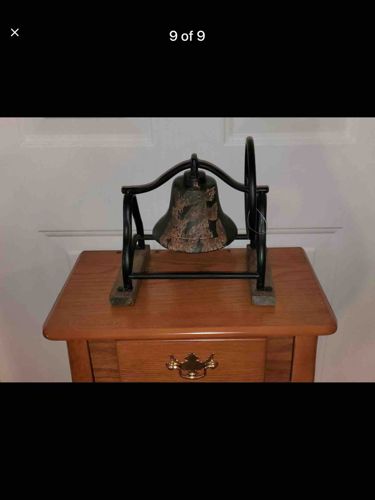
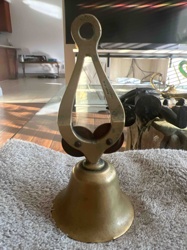
This item is a decorative table bell, likely made from cast iron or a similar heavy metal, with a rustic and aged appearance. The bell itself is integrated into a black metal frame that appears to be made of wrought iron, featuring a curved arch support on top and rectangular bases on the bottom. The bell has a mottled or textured surface with various shades of brown, green, and possibly orange or rust, indicating significant patina or intentional distressing to simulate age. This coloration suggests it could be bronze or brass that has heavily oxidized, or cast iron with a patina finish. There are visible areas where the original metal color, possibly a darker bronze or iron, shows through. The clapper of the bell is not clearly visible but is presumed to be present given the item's function. The black metal frame has a matte finish and shows some minor scuffs or wear consistent with handling but overall appears structurally sound. The total size appears to be suitable for placement on a tabletop or mantel, likely measuring around 10-15 inches in height and width. The construction quality seems robust, suggesting durability. There are no clear maker's marks or signatures visible in the provided image, making it difficult to ascertain specific manufacturing details or precise age, but its style suggests it could be an antique reproduction or a genuine late 19th to early 20th-century piece designed with a utilitarian or rustic aesthetic. The overall condition suggests a well-preserved piece with age-appropriate wear and a desirable aged patina.
AI Appraisal Report
Upon visual examination of the provided image of the Cast Metal Table Bell with Wrought Iron Frame, I find it to be in remarkably good condition for an item exhibiting such an aged aesthetic. The bell itself displays a desirable, multi-hued patina with shades of brown, green, and hints of orange, consistent with heavy oxidation on bronze or brass, or an expertly applied faux patina on cast iron. The wrought iron frame appears structurally sound with only minor surface scuffs, adding to its rustic charm rather than detracting from it. The overall construction quality seems robust, suggesting durability.
Authenticity, based solely on visual cues, is challenging to definitively confirm. While its style evokes late 19th to early 20th-century utilitarian pieces, without maker's marks or provenance, it could easily be a high-quality antique reproduction. The market for decorative bells, particularly those with a rustic or antique aesthetic, remains steady, driven by interior design trends favoring farmhouse, industrial, and vintage styles. Comparable items, ranging from genuine antiques to well-made reproductions, often appear at estate sales, antique shops, and online marketplaces. Demand exists for unique, decorative objects that accent home decor. While not exceedingly rare, a well-preserved piece with a compelling patina like this one has a niche market.
Factors significantly impacting its value include its excellent visual condition, desirable aged patina, and robust construction. However, the lack of visible maker's marks and definitive provenance prevents a higher valuation. For full authentication, an in-person examination would be crucial to assess the true metal composition, verify construction techniques, and search for faint or hidden marks. Scientific testing, such as XRF analysis, could confirm metal type and age, and thorough provenance documentation would solidify its history and authenticity. Without these, the 'antique' status remains presumptive.