These notes were written by the person who submitted this item. Appraiser.AI has not verified them, and the AI's identification and estimate may rely on them.
AI Estimated Value
Not an official valuation
$25-50
AI estimate as of July 30, 2025 · verify with a professional before acting
AI-Generated · Verify before acting
Everything on this page is generated by AI for informational purposes only. AI can make mistakes — the AI may misidentify items or misattribute them (artist, maker, brand, designer, origin, era). This is not an official valuation and should not be used for insurance, sale, tax, estate, legal, or lending purposes — or any decision requiring a certified appraisal. It is not an authoritative claim about any person, brand, or rights holder — do not share or rely on it as a factual statement about a third party. Always consult qualified professionals before making financial decisions.
This analysis also relies on unverified notes provided by the user, which may be incomplete or inaccurate and could affect the result.
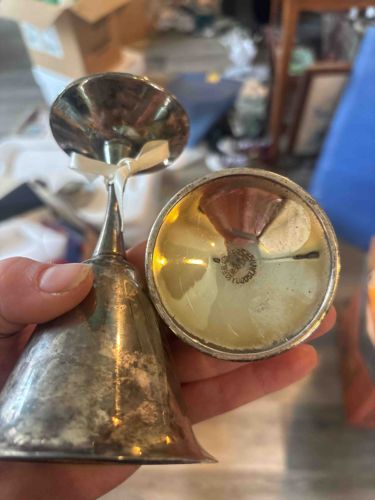
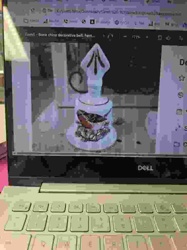
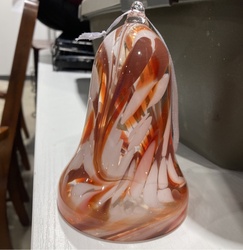
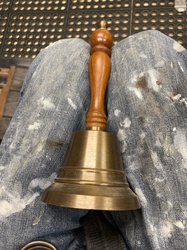
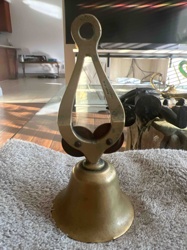
The item appears to be a small antique or vintage hand bell, likely made of tarnished silver or silver-plated metal. Its overall form is that of a traditional bell, flaring out from a narrow neck to a wider, circular mouth. The surface exhibits significant tarnish, visible as dark, uneven patches and discoloration across the metallic surface, which suggests it is made of silver or a silver alloy that reacts with the air. Despite the tarnish, some areas show the reflective quality of polished metal. The clapper, or striker, is not visible in the image, but the interior of the bell's mouth shows a reflective, possibly brassy or gold-toned interior, which could indicate a bimetallic construction or a different plating on the inside. A distinguishing feature is a small, white ribbon tied in a bow around the narrowest part of the bell's neck, just below what would be the handle or top, suggesting it might have been part of a set, a decorative element, or a presentation piece. The craftsmanship appears to be relatively simple and functional, without elaborate engravings or repoussé work discernible from the image. The visible wear and tarnish suggest considerable age and use, aligning with the 'antique silver' context provided. The bottom of the bell's interior appears to have a circular flat surface, possibly where the clapper mechanism is attached or where it rests when inverted. This type of bell might have been used for dining, as a call bell, or purely for decorative purposes. The patina indicates it has not been recently polished, retaining its aged character.
AI Appraisal Report
Based on my examination of the provided image and description, this item is a tarnished hand bell, appearing to be crafted from silver or, more likely, silver-plate. The overall form is simple and traditional, consistent with call bells from the late 19th to mid-20th century. The significant tarnish, or patina, suggests age and lack of recent polishing, which some collectors prefer. The white ribbon is a decorative addition but does not significantly impact value unless it is original to a specific presentation set, which cannot be determined. The interior's potentially brassy tone could indicate a plated item where the base metal is showing through.
The market for common, unadorned silver-plated bells is modest. Without hallmarks from a prestigious maker (e.g., Gorham, Tiffany & Co., Reed & Barton), value is primarily decorative. Comparable unmarked silver-plated bells typically sell in the $20 to $40 range at auction or online marketplaces. If it were solid sterling silver, its value would increase based on weight and maker, likely placing it in the $75 to $150 range, depending on those factors. The current demand for such items is stable but not high.
It is crucial to note the limitations of an appraisal based on images alone. I cannot definitively determine the material (sterling vs. plate) or identify any manufacturer's marks or hallmarks, which are critical for accurate valuation. For full authentication and a more precise appraisal, a physical examination is required to test the metal content and search for hidden hallmarks. Provenance or documentation would also be beneficial.