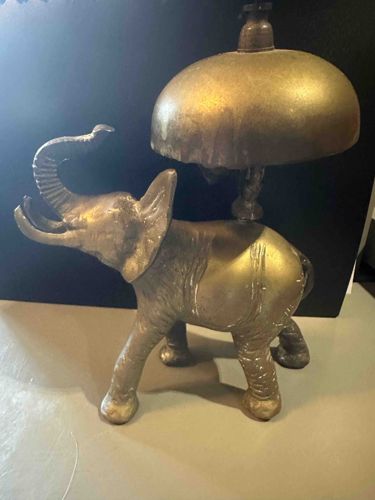
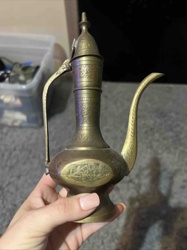
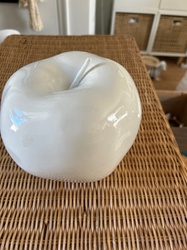
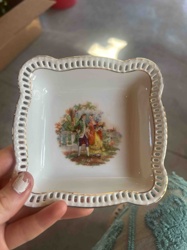
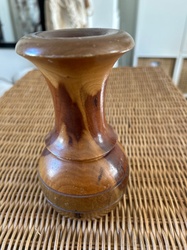
Elephant decorative bell. Size is approx 5” wide by 7” high
These notes were written by the person who submitted this item. Appraiser.AI has not verified them, and the AI's identification and estimate may rely on them.
AI Estimated Value
Not an official valuation
$40-60
AI estimate as of August 16, 2025 · verify with a professional before acting
AI-Generated · Verify before acting
Everything on this page is generated by AI for informational purposes only. AI can make mistakes — the AI may misidentify items or misattribute them (artist, maker, brand, designer, origin, era). This is not an official valuation and should not be used for insurance, sale, tax, estate, legal, or lending purposes — or any decision requiring a certified appraisal. It is not an authoritative claim about any person, brand, or rights holder — do not share or rely on it as a factual statement about a third party. Always consult qualified professionals before making financial decisions.
This analysis also relies on unverified notes provided by the user, which may be incomplete or inaccurate and could affect the result.
This item is a decorative bell featuring an elephant as its base. It appears to be constructed from a metal, possibly cast brass or bronze, given its dull golden-brown patina and the visible wear patterns. Its dimensions are approximately 5 inches wide by 7 inches high, making it a tabletop-sized decor piece. The elephant figure is depicted with its trunk raised in an upright, curved position, which is a common motif in elephant statuary, often symbolizing good luck or welcoming. Its ears are prominently flared, and the body shows some sculptural detail consistent with elephant anatomy, though it is not hyper-realistic. The bell component, shaped like an inverted mushroom or dome, is mounted above the elephant's back, connected by what appears to be a twisted or spiraled column. The overall color is a muted, aged brass or bronze, indicating either a natural oxidation process or an applied finish designed to mimic an antique appearance. There are noticeable areas of wear where the surface color has chipped or worn away, particularly on the elephant's legs, trunk, and the edges of the bell, revealing a lighter, possibly silver-colored, underlayer. This suggests either a plating over a different metal or significant surface abrasion to an alloy with varying color throughout. The absence of specific maker's marks or signatures prevents definitive identification of its manufacturer or precise origin. Based on the style and apparent construction, it likely dates from the mid to late 20th century. The craftsmanship, while appearing solid in construction, shows some rough casting marks or irregularities, suggesting it was mass-produced for decorative purposes rather than a fine art piece. The condition shows significant signs of age and handling, with the aforementioned paint loss or patination wear being the most prominent feature.
AI Appraisal Report
Upon examining the provided image and description of this Elephant Decorative Bell, my assessment indicates it is a charming, utilitarian decorative piece. The construction, likely cast metal (brass or bronze given the patina), suggests a sturdy yet mass-produced item. Its approximate dimensions of 5” wide by 7” high make it a suitable tabletop accent. The raised trunk motif is widely associated with good fortune, adding to its appeal. The noticeable wear, revealing a lighter underlayer, suggests either plating or significant surface abrasion on an alloy with varying color throughout. This, coupled with some rough casting marks, points to decorative rather than fine art craftsmanship, typical of mid to late 20th-century production. While the condition shows significant age and handling, this wear is generally acceptable for such an item and contributes to its aged aesthetic rather than detracting substantially, unless the goal is pristine preservation. Its authenticity as a decorative bell is clear; however, without maker's marks or provenance, definitive identification of its exact origin or manufacturer is not possible from images alone. Market conditions for such vintage, mass-produced decorative home accents are generally stable, with demand driven by interior decorators and collectors of traditional or eclectic decor. While not rare, its appealing subject matter ensures a consistent, albeit modest, value. The primary factors impacting its value are its decorative appeal, condition (despite wear), and the lack of specific provenance or rarity. To fully authenticate its material composition (e.g., specific alloy) or determine if the wear is due to plating loss versus natural patination, an in-person examination and potentially scientific testing (e.g., XRF analysis) would be beneficial, particularly if there were claims of significant age or precious metal content. However, for a decorative item of this type, such extensive testing is generally unwarranted given its likely value bracket.