These notes were written by the person who submitted this item. Appraiser.AI has not verified them, and the AI's identification and estimate may rely on them.
AI Estimated Value
Not an official valuation
$5 - $10
AI estimate as of November 9, 2025 · verify with a professional before acting
AI-Generated · Verify before acting
Everything on this page is generated by AI for informational purposes only. AI can make mistakes — the AI may misidentify items or misattribute them (artist, maker, brand, designer, origin, era). This is not an official valuation and should not be used for insurance, sale, tax, estate, legal, or lending purposes — or any decision requiring a certified appraisal. It is not an authoritative claim about any person, brand, or rights holder — do not share or rely on it as a factual statement about a third party. Always consult qualified professionals before making financial decisions.
This analysis also relies on unverified notes provided by the user, which may be incomplete or inaccurate and could affect the result.
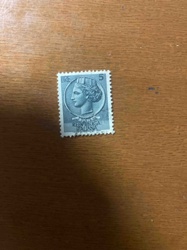
This item is a postage stamp from Bolivia, featuring a vivid green color scheme with a central illustration of a condor in flight. The stamp is rectangular with perforated edges, indicative of its typical manufacturing process. The main design element is a large, majestic condor, presumably a representation of the Andean Condor, soaring amidst clouds. This central image is enclosed within a circular frame. Above the condor, elegantly curved text reads "CORREOS DE BOLIVIA," indicating its country of origin and purpose as a postal service stamp. Below the central design, the denomination "5 CINCO CENTAVOS" is clearly visible, flanked by the numeral "5" in both lower corners. The overall design features ornate scrollwork and decorative filigree around the text and the central image, typical of early to mid-20th-century philatelic designs, suggesting an estimated age from that period. The stamp exhibits some condition issues, most notably a significant dark black mark or ink smudge on the left-hand side, partially obscuring the "CORREOS" text and extending into the condor illustration. There are also smaller black flecks near the top left corner, and the perforations show some wear and minor tears, particularly on the left edge. The color appears somewhat muted, possibly due to age, environmental exposure, or the photograph's quality. Despite the visible damage, the intricate details of the condor and the surrounding decorative elements are still discernible, highlighting the craftsmanship involved in its production.
AI Appraisal Report
I have examined the provided image of the Bolivian 5 Centavos Stamp featuring a condor design. This appears to be a definitive issue from Bolivia, likely dating from the early to mid-20th century given its design characteristics. The stamp's authenticity, based solely on the visual cues in the image, seems probable for a common issue of this type. However, a definitive authentication would require in-person examination to verify paper type, watermark (if any), printing method, and gum condition, as well as to compare against known forgeries.
From a condition standpoint, this stamp is significantly impacted. The prominent dark ink smudge on the left-hand side, obscuring text and part of the condor design, is a major flaw. Additional smaller flecks and noticeable wear and minor tears to the perforations, especially on the left edge, further detract from its aesthetic and philatelic value. The color appears somewhat faded, which could be due to age, exposure, or image quality, but nonetheless affects its appeal. These condition issues place the stamp firmly in the 'faulty' or 'damaged' category.
Regarding market conditions, Bolivian stamps of this common definitive series are generally not rare, especially in used condition. While the condor design is iconic, the extensive damage severely limits its desirability. Comparable stamps in fine to very fine condition might fetch a modest sum, but one with such a significant flaw would command a much lower price. Demand for heavily damaged common stamps is very limited, appealing primarily to completionist collectors who prioritize filling a space in an album over quality. Given the condition, the value is primarily nominal. A higher value would require a much better preserved example, ideally mint never hinged, or a rare variety. Without physical inspection, precise identification of specific printings or varieties that might increase value is impossible.