AI identification & appraisal estimate

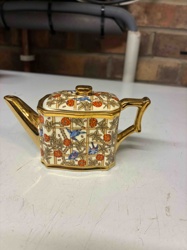
Floral Pattern Porcelain Teapot

This name is the AI's identification of the item — it may be incorrect.

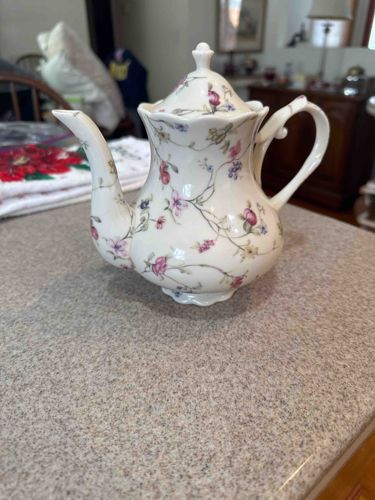
Submitted photo of Floral Pattern Porcelain Teapot
Photo submitted by the user — not generated by AI

AI Estimated Value

Not an official valuation

$30-60

AI estimate as of December 14, 2025 · verify with a professional before acting

AI-Generated · Verify before acting

Everything on this page is generated by AI for informational purposes only. AI can make mistakes — the AI may misidentify items or misattribute them (artist, maker, brand, designer, origin, era). This is not an official valuation and should not be used for insurance, sale, tax, estate, legal, or lending purposes — or any decision requiring a certified appraisal. It is not an authoritative claim about any person, brand, or rights holder — do not share or rely on it as a factual statement about a third party. Always consult qualified professionals before making financial decisions.

Read the full disclaimer

AI Item Analysis

This is a porcelain teapot, likely for serving tea or coffee, featuring a delicate floral pattern. The teapot has an ivory or off-white base color, adorned with scattered floral sprigs in shades of pink, purple, and light blue, accented by thin green leaves and stems. The overall shape is elegant, with a slightly bulbous body that tapers towards the neck. It features a gracefully curved spout and a C-shaped handle, both integrated smoothly into the main body. The lid is domed with a small finial at the top, echoing the floral motif with subtle scalloped edges where it meets the teapot's rim. The base of the teapot also has a scalloped or fluted edge, adding to its decorative appeal. The material appears to be glazed porcelain, indicative of fine tableware. There are no visible chips, cracks, or significant wear in the provided image, suggesting good to excellent condition. The craftsmanship appears to be of good quality, with clear, vibrant decoration and a smooth finish. While no maker's marks or signatures are visible, the style suggests it could be a decorative piece from the late 20th or early 21st century, possibly mass-produced but still designed with aesthetic appeal in mind. The floral design gives it a somewhat traditional or cottage-core aesthetic, a common style for teaware.
AI Appraisal Report

Based on my visual examination of the provided image, this Floral Pattern Porcelain Teapot appears to be in good to excellent condition. There are no visible chips, cracks, or significant wear, and the glaze appears intact and glossy. The floral decoration is vibrant and clear. However, my assessment of authenticity is limited by viewing images alone; I cannot verify the material composition beyond what is visually evident (glazed porcelain) or confirm the specific manufacturing origin or age without physical inspection. An in-person examination would allow me to check for manufacturer's marks on the base, assess the weight and feel of the porcelain, and detect any subtle imperfections indicative of age or specific production techniques. Provenance documentation, if available, would significantly aid in authenticating its origin and history. Scientific testing, such as thermoluminescence dating, could provide a more precise age if deemed necessary, though that is unlikely for an item of this type. Market conditions for decorative teapots like this are generally stable but not experiencing high demand unless they are from a renowned manufacturer or possess unique artistic qualities. Comparables in the market for mass-produced floral porcelain teapots, particularly those from the late 20th or early 21st century without a distinct maker's mark, typically range from $25 to $75. This particular teapot’s aesthetic—a traditional floral pattern with a cottage-core appeal—is common, and while pleasant, it doesn't suggest exceptional rarity. Factors impacting value are primarily its good condition and pleasing design; the lack of a visible maker's mark and its likely mass-produced nature prevent it from commanding a higher value. Had there been a reputable maker's mark (e.g., Royal Albert, Limoges) or if it were an antique with verifiable age, the value would be significantly higher.

Keep exploring

More teapot appraisals

Get your items appraised

Instant AI-powered appraisal estimates from a photo

Browse More Appraisals