AI Appraisal Estimate

AI-generated estimates · not official valuations

From the user

What was submitted

Photo and notes provided by the user — not generated by AI

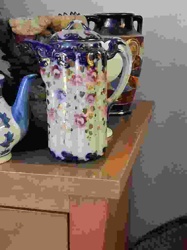
Submitted item photo
Submitted photo · May 23, 2026

User's notes

No additional notes provided.

AI analysis below

AI appraisal

AI analysis & estimate

AI-Generated · Verify before acting

Everything below is generated by AI for informational purposes only. AI can make mistakes — the AI may misidentify items or misattribute them (artist, maker, brand, designer, origin, era). This is not an official valuation and should not be used for insurance, sale, tax, estate, legal, or lending purposes — or any decision requiring a certified appraisal. It is not an authoritative claim about any person, brand, or rights holder — do not share or rely on it as a factual statement about a third party. Always consult qualified professionals before making financial decisions.

Read the full disclaimer

AI Identification

·Not independently authenticated·Verify before acting

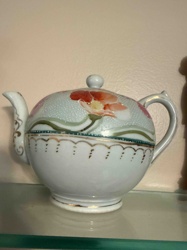
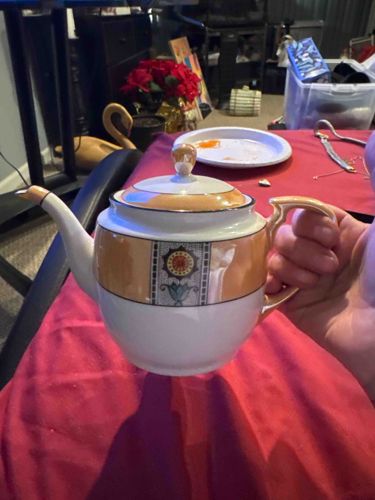
Japanese Lustreware Teapot

Antique Ceramics and Teaware

AI Estimated Value

·Not an official valuation·Verify before acting

$45.00 - $75.00

As of May 23, 2026

AI Item Analysis

·AI can make mistakes·Verify before acting
This is a vintage ceramic teapot featuring a round body with a distinctive lustreware finish, likely originating from Japan during the mid-20th century (circa 1930s-1950s). The teapot is constructed from fine porcelain or bone china, characterized by a creamy white base color. It is decorated with a wide horizontal band of peach or apricot-toned iridescent lustre glaze around the upper shoulder, which is repeated on the lid. A prominent Art Deco-inspired medallion serves as a focal point, featuring a stylized sunburst or floral motif in red, yellow, and black, enclosed within a geometric border and anchored by a teal lotus-like base. The handle is gracefully curved with an inner thumb rest, and both the handle and the spout tip show integrated lustre accents. The spout is slender and upward-curving. While the maker's mark is not visible, the style is highly characteristic of 'Made in Japan' export ware from the Noritake or Marutaki era. The condition appears good with no visible cracks or chips, though minor shelf wear on the base and slight thinning of the delicate gold-trimmed edges are typical for a piece of this vintage. The high-gloss finish and chromatic vibrancy indicate a well-preserved piece of decorative tableware with strong period-specific aesthetics.
AI Appraisal Report

·AI can make mistakes·Verify before acting
Upon visual examination of this Japanese lustreware teapot, I find it to be a representative example of ‘Made in Japan’ export ceramics from the mid-20th century, likely dating between 1930 and 1950. The piece displays the characteristic iridescent glaze and Art Deco geometric motifs synonymous with the Noritake era, though the absence of a visible backstamp necessitates a broader attribution to the Nagoya region manufacturers. The condition appears to be excellent vintage quality; the apricot lustre remains vibrant, and the hand-painted medallion shows minimal pigment loss, which is common in pieces of this age. Markets for mid-century Japanese export ware are currently stable but saturated. While historically significant as examples of post-war recovery art, these pieces were mass-produced for the Western market, making them highly accessible to collectors rather than rare. Comparables for individual teapots in this condition typically hammer at auction between $40 and $85, with full tea services commanding higher premiums. The primary value drivers here are the aesthetic appeal of the sunburst motif and the lack of visible crazing. Please note that this appraisal is based on photographic evidence only. A physical inspection is required to check for micro-fractures, professional restorations (which can be hidden under lustre), and to verify the tactile ‘ping’ of the porcelain. Full authentication would require viewing the base markings to identify the specific kiln and verifying provenance through original invoices or imported set records. Scientific testing like thermoluminescence is unnecessary for this category of ceramic, but a UV light test should be performed in person to confirm the absence of modern adhesive repairs.

Get your items appraised

Instant estimates of your treasures with AI-powered appraisals

Browse More Appraisals