AI Appraisal Estimate

AI-generated estimates · not official valuations

From the user

What was submitted

Photo and notes provided by the user — not generated by AI

Submitted item photo
Submitted photo · June 6, 2026

User's notes

Austria

AI analysis below

AI appraisal

AI analysis & estimate

AI-Generated · Verify before acting

Everything below is generated by AI for informational purposes only. AI can make mistakes — the AI may misidentify items or misattribute them (artist, maker, brand, designer, origin, era). This is not an official valuation and should not be used for insurance, sale, tax, estate, legal, or lending purposes — or any decision requiring a certified appraisal. It is not an authoritative claim about any person, brand, or rights holder — do not share or rely on it as a factual statement about a third party. Always consult qualified professionals before making financial decisions.

Note

This analysis also relies on unverified notes provided by the user, which may be incomplete or inaccurate and could affect the result.

Read the full disclaimer

AI Identification

·Not independently authenticated·Verify before acting

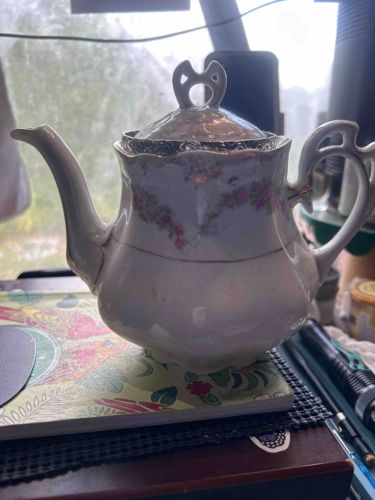
Antique Porcelain Teapot with Floral Decoration

Tableware

AI Estimated Value

·Not an official valuation·Verify before acting

$150-350

As of June 6, 2026

AI Item Analysis

·AI can make mistakes·Verify before acting
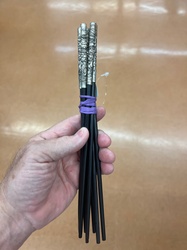
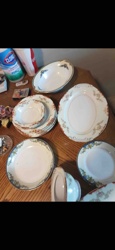
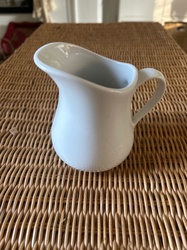
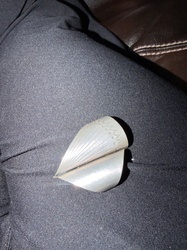
This is an antique or vintage porcelain teapot, likely dating from the late 19th to early 20th century, consistent with the 'Austria' context provided, as the style is indicative of European porcelain from that era. The teapot features a gracefully rounded, somewhat globular body, tapering slightly towards the base. Its primary coloration is a luminous white or off-white with a subtle iridescent or pearlescent sheen that adds depth and a delicate glow to the surface. A prominent decorative band encircles the upper portion of the body, just below the rim, featuring small, delicate pink rose motifs and possibly other floral elements, likely applied as transfer-prints with some hand-painted accents. The rim of the pot and the lid are adorned with what appears to be a complementary decorative edge, possibly in gold or a darker contrasting color, which appears to have some wear or a mottled patination. The most distinctive features are the elaborately designed handle and finial on the lid. The handle is an open-worked, curvilinear design, possibly stylized scrollwork or hearts, attaching elegantly to the body. The lid's finial mirrors this ornate style, presenting a similar open-worked, decorative flourish that adds to the overall aesthetic appeal. The spout is graceful and tapered, typical of turn-of-the-century teapots. Overall condition appears good for its age, with no immediately visible major chips, cracks, or repairs, though closer inspection might reveal minor wear to the decorative elements or faint crazing. The craftsmanship suggests a factory production of reasonable quality, characteristic of European porcelain houses of the period.
AI Appraisal Report

·AI can make mistakes·Verify before acting
Based on my examination of the provided images, this antique porcelain teapot, likely Austrian and dating from the late 19th to early 20th century, appears to be in good overall condition for its age. I observe no obvious major chips, cracks, or repairs, though minor wear to the decorative elements and patination on the gold trim is evident. Its design, featuring an iridescent white body, delicate pink rose transfer decoration with possible hand-painted accents, and an elaborately open-worked handle and finial, is consistent with European factory production of the period. The market for this type of decorative antique porcelain is stable. While attractive, without a specific, highly collectible factory mark beyond 'Austria,' its value is driven more by aesthetic appeal and condition than extreme rarity. Comparables for such well-preserved pieces from lesser-known Austrian or European factories typically fall into the mid-hundreds range, appealing to collectors of antique tea ware or period decor. Limitations: My appraisal is based purely on visual assessment. A physical examination is crucial to confirm authenticity, assess precise condition (e.g., hidden crazing, subtle repairs not visible in photos), and identify any specific maker's marks on the base, which would significantly refine dating and valuation. Provenance documentation would further corroborate its history.

Get your items appraised

Instant estimates of your treasures with AI-powered appraisals

Browse More Appraisals