AI Appraisal Estimate

AI-generated estimates · not official valuations

From the user

What was submitted

Photo and notes provided by the user — not generated by AI

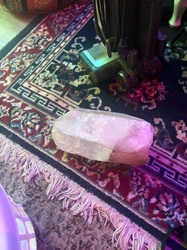
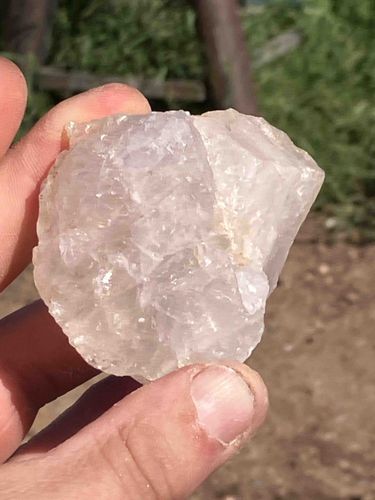
Submitted item photo
Submitted photo · June 8, 2026

User's notes

No additional notes provided.

AI analysis below

AI appraisal

AI analysis & estimate

AI-Generated · Verify before acting

Everything below is generated by AI for informational purposes only. AI can make mistakes — the AI may misidentify items or misattribute them (artist, maker, brand, designer, origin, era). This is not an official valuation and should not be used for insurance, sale, tax, estate, legal, or lending purposes — or any decision requiring a certified appraisal. It is not an authoritative claim about any person, brand, or rights holder — do not share or rely on it as a factual statement about a third party. Always consult qualified professionals before making financial decisions.

Read the full disclaimer

AI Identification

·Not independently authenticated·Verify before acting

Raw Quartz Crystal Specimen

Mineral Specimen

AI Estimated Value

·Not an official valuation·Verify before acting

$10-25

As of June 8, 2026

AI Item Analysis

·AI can make mistakes·Verify before acting
The item is a raw, unpolished crystal specimen, likely a variety of Quartz due to its crystalline structure and translucent appearance. It is handheld, suggesting a size of approximately 2-4 inches in its longest dimension. The crystal exhibits a milky, slightly translucent to opaque quality with a predominant color that appears to be a very pale, almost colorless pink or lavender hue, characteristic of rose quartz or milky quartz with faint impurities. Its surfaces are largely unformed and rough, indicating it is an unworked natural piece, possibly a fragment from a larger crystal or a rough piece as found in its natural state. Several facets and cleavage planes are visible, catching the light in various angles, showcasing typical mineral crystalline breakage. There are no obvious signs of significant damage, repairs, or unusual wear; the rough edges appear to be natural formations rather than chips from human interaction. The quality of the crystal appears good for an unworked specimen, with reasonable clarity for its type. There are no discernible manufacturing marks or signatures, as it is a natural mineral. Determining an exact age or style period is not applicable, as it is a geological formation, but its 'age' would be millions of years old. The photography shows it held outdoors, suggesting natural light conditions, which enhances its translucent properties and subtle color.

AI Appraisal Report

·AI can make mistakes·Verify before acting
Based on my visual examination of the provided image, I assess this Raw Quartz Crystal Specimen. Its condition appears excellent for a natural, unworked piece. The rough edges and visible cleavage planes are typical of a geological formation and not indicative of damage. Its authenticity as natural quartz is highly probable from its crystalline structure and translucency; there are no signs of it being man-made or altered. The slightly milky, pale pink/lavender hue suggests it could be a form of milky or rose quartz. Market conditions for such raw, unpolished quartz specimens are generally modest. Comparables often include similar handheld mineral pieces sold at gem shows, metaphysical shops, or online platforms. These typically range from a few dollars to perhaps $50, depending on size, clarity, and specific mineral rarity. As this piece appears to be a common quartz variety of moderate size (2-4 inches), its demand is stable but not indicative of high value. Factors significantly impacting value include its unpolished state (which generally lowers value compared to cut or polished specimens), and its commonality. While attractive, it lacks the exceptional clarity, unique formations, or significant size that would command a higher price. Rarity is low; natural quartz specimens are abundant. My primary limitation in authenticity verification from an image alone is establishing the exact mineral composition and ruling out subtle treatments or artificial forms that might mimic natural crystal. A physical inspection would allow me to perform hardness tests, assess true crystal habit, and observe inclusions more clearly. For full authentication and precise identification of the quartz variety (e.g., distinguishing between milky quartz and very pale rose quartz), an in-person examination, potentially with specific geological testing like X-ray diffraction, would be beneficial. Provenance documentation would confirm its origin, but for a common natural specimen, this is rarely available or necessary for appraisal.

Get your items appraised

Instant estimates of your treasures with AI-powered appraisals

Browse More Appraisals