AI estimate as of June 7, 2025 · verify with a professional before acting
AI-Generated · Verify before acting
Everything on this page is generated by AI for informational purposes only. AI can make mistakes — the AI may misidentify items or misattribute them (artist, maker, brand, designer, origin, era). This is not an official valuation and should not be used for insurance, sale, tax, estate, legal, or lending purposes — or any decision requiring a certified appraisal. It is not an authoritative claim about any person, brand, or rights holder — do not share or rely on it as a factual statement about a third party. Always consult qualified professionals before making financial decisions.
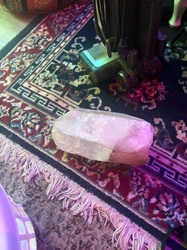
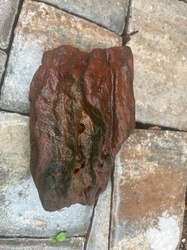
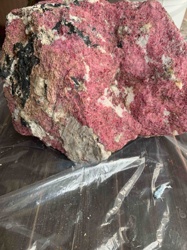
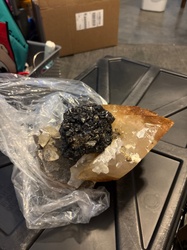
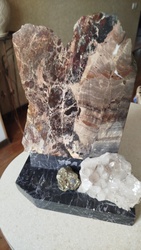
The item is a small, irregular-shaped mineral specimen held in a hand for scale. It measures approximately 3-4 centimeters at its longest dimension. The specimen is primarily composed of a translucent, bulbous white material with a botryoidal or nodular formation. The surface is textured with small, individual spheres or grape-like clusters. Some areas of the white material have a slightly yellowish tinge. Attached to one end is a smaller section of a different material, translucent and greyish-purple or pinkish in color, also exhibiting a botryoidal structure, though with larger, more defined individual spheres. This greyish-purple portion also shows evidence of embedded sediment or small, light-colored crystalline fragments. There are visible deposits of a reddish-brown, earthy material in the crevices of both sections. The overall appearance is consistent with a type of chalcedony or agate, likely in its raw, unpolished state. No manufacturing details, maker's marks, or signatures are discernible. The condition appears as found, with natural inclusions and external sediment.
AI Appraisal Report
Examined the supplied image of a small mineral specimen, approximately 3-4 cm. The item appears to be a raw, unpolished sample of botryoidal chalcedony or agate. The primary translucent white material displays characteristic grape-like formations, with a secondary greyish-purple section showing larger nodules. Reddish-brown earthy deposits are present in crevices, likely sediment from its origin. Based on the visual evidence, the condition is as found, consistent with a natural, unworked mineral. Authenticity as a natural mineral specimen appears likely based on form and composition, though definitive confirmation of material type (chalcedony vs. agate) and origin requires in-person examination and possibly testing. The market for small, raw mineral specimens like this is relatively niche. Value is primarily driven by aesthetics, unusual formations, or rare color combinations. While the botryoidal form is interesting, the overall size and common colors depicted limit its appeal to serious collectors of fine mineral specimens. Comparables in the retail market for similar small, unpolished chalcedony or agate specimens suggest a modest value. There is demand from hobbyists and those interested in lapidary rough. This particular piece, while authentic as a natural mineral based on the image, lacks the crystal structure, color intensity, or size that commands significant value. Factors impacting value negatively are the small size, common coloring, and the presence of visible sediment. Limitations in this appraisal are significant due to assessment solely from an image. Full authentication and precise valuation would require in-person examination to assess clarity, translucency, internal structure, and to perform tests (e.g., Mohs hardness, specific gravity) to definitively identify the mineral type. Provenance documentation, if available, could also add value.