AI Appraisal Estimate

AI-generated estimates · not official valuations

From the user

What was submitted

Photo and notes provided by the user — not generated by AI

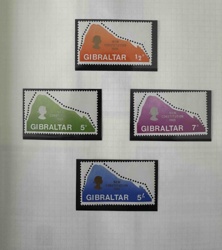
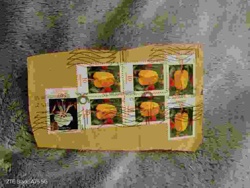
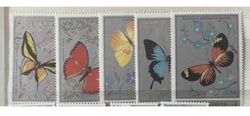
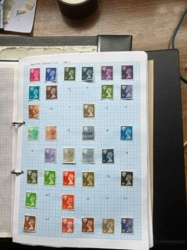
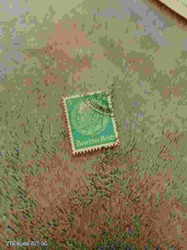
Submitted item photo
Submitted photo · June 23, 2026

User's notes

Complete serie

AI analysis below

AI appraisal

AI analysis & estimate

AI-Generated · Verify before acting

Everything below is generated by AI for informational purposes only. AI can make mistakes — the AI may misidentify items or misattribute them (artist, maker, brand, designer, origin, era). This is not an official valuation and should not be used for insurance, sale, tax, estate, legal, or lending purposes — or any decision requiring a certified appraisal. It is not an authoritative claim about any person, brand, or rights holder — do not share or rely on it as a factual statement about a third party. Always consult qualified professionals before making financial decisions.

Note

This analysis also relies on unverified notes provided by the user, which may be incomplete or inaccurate and could affect the result.

Read the full disclaimer

AI Identification

·Not independently authenticated·Verify before acting

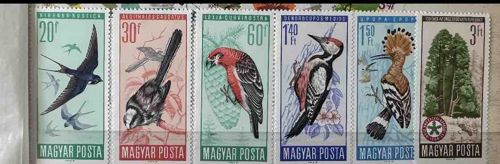
1962 Hungary (Magyar Posta) Bird and Nature Stamps Set

Philately / Collectible Postage Stamps

AI Estimated Value

·Not an official valuation·Verify before acting

$4.00 - $7.00

As of June 23, 2026

AI Item Analysis

·AI can make mistakes·Verify before acting
This is a partial set from the 1962 'Birds' and 'Protected Trees' definitive and commemorative issues from Hungary (Magyar Posta). The collection shown includes six vertical rectangular postage stamps, printed via colorful offset lithography on perforated paper. The denominations visible range from 20 fillér to 3 forint. The subjects depicted are biologically accurate illustrations including Hirundo rustica (Barn Swallow), Aegithalos caudatus (Long-tailed Tit), Loxia curvirostra (Red Crossbill), Dendrocopos medius (Middle Spotted Woodpecker), Upupa epops (Hoopoe), and a 3 forint stamp depicting a giant sequoia tree from the Jellacic-garden. Each stamp features the species name in Latin at the top, the denomination in the upper corner, and 'MAGYAR POSTA' along the bottom edge. Physically, the stamps appear to be in 'mint never hinged' (MNH) or 'mint hinged' condition, with crisp edges and vibrant coloration showing no significant fading. The perforations appear intact without visible tears. These stamps represent the mid-century aesthetic of Eastern European philately, characterized by high-quality scientific illustration and the use of multi-colored printing palettes. They were issued during the Socialist era of the Hungarian People's Republic and remain popular among thematic collectors specializing in ornithology or botanical subjects.
AI Appraisal Report

·AI can make mistakes·Verify before acting
I have completed a visual assessment of this 1962 Hungarian 'Birds' and 'Protected Trees' philatelic grouping. Based on the provided imagery, the stamps appear to be authentic examples of the issues from the Magyar Posta. The offset lithography exhibits the correct color saturated registration characteristic of this era, and the perforations show the standard gauge for the series without significant blunting. The condition appears to be Mint Never Hinged (MNH) to Mint Lightly Hinged (MLH). Market value for mid-century Eastern European thematic stamps is determined primarily by completeness and condition. While these specimens are aesthetically pleasing and scientifically accurate, they were produced in high quantities for the international collector market during the Socialist era, which limits their rarity. Comparable complete sets currently retail in the $5.00 range on the secondary market. Factors impacting value include the lack of 'Cancelled-to-Order' (CTO) marks, which makes these postal-use specimens slightly more desirable than the mass-cancelled versions. However, the high survival rate of these issues prevents significant appreciation. Please note that this appraisal is based on digital images alone; a physical inspection is required to verify gum integrity and the absence of regumming or hidden thinning. To fully authenticate these, I would need to examine the reverse side for watermarks and paper fiber consistency. No formal provenance or scientific testing is required for these specific issues as they are widely documented and of low individual value.

Get your items appraised

Instant estimates of your treasures with AI-powered appraisals

Browse More Appraisals