AI estimate as of November 9, 2025 · verify with a professional before acting
AI-Generated · Verify before acting
Everything on this page is generated by AI for informational purposes only. AI can make mistakes — the AI may misidentify items or misattribute them (artist, maker, brand, designer, origin, era). This is not an official valuation and should not be used for insurance, sale, tax, estate, legal, or lending purposes — or any decision requiring a certified appraisal. It is not an authoritative claim about any person, brand, or rights holder — do not share or rely on it as a factual statement about a third party. Always consult qualified professionals before making financial decisions.
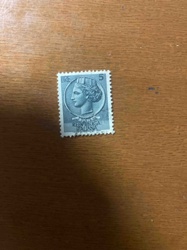
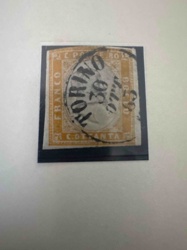
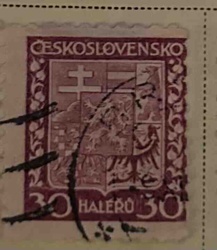
This item is a postage stamp from the Deutsches Reich (German Empire/Nazi Germany), with a denomination of 15 Pfennig. The stamp features a prominent illustration of a large circular or oval-shaped building with multiple tiers or levels, possibly a stadium or a large public hall. The architecture appears classical or monumental in style, characterized by a rounded structure with many windows, and a grand entrance featuring columns or pillars. Below the building, the text "Breslau 1936" is clearly visible, along with "Deutsches Turn-u. Sportfest," indicating it commemorates the German Gymnastics and Sports Festival held in Breslau (now Wroclaw, Poland) in 1936. A significant and historically sensitive detail is the inclusion of a swastika symbol within a square frame in the lower left corner of the stamp's design, underscoring its origin during the Nazi era. The stamp's primary colors appear to be monochromatic, likely shades of brown, sepia, or grey, suggesting a common printing technique for stamps of that period. Visible condition issues include some light discoloration or aging typical of an old paper item, and the image itself has a somewhat blurry resolution, making it difficult to discern very fine details or specific printing marks. The edges are perforated, the standard manufacturing detail for postage stamps, designed for easy separation. The overall style is characteristic of state-issued propaganda or commemorative stamps from the 1930s in Germany, intended to promote national events and ideology. The quality of the printing appears adequate for its function, with clear text and a recognizable depiction of the building.
AI Appraisal Report
I have examined the provided image of the Deutsches Reich 15 Pfennig Breslau 1936 stamp. Based on visual assessment, the stamp appears to be authentic to the period, featuring the correct design elements including the Breslau 1936 text, the building illustration, and significantly, the swastika, which confirms its Nazi-era origin. The perforation and general style are consistent with stamps from this era.
In terms of condition, the stamp exhibits evidence of aging and some discoloration, which is typical for a paper item of this vintage. The resolution of the image makes it difficult to ascertain fine details such as hinge remnants, minor creasing, or exact perforation integrity, and whether it is unused (mint) or used (canceled). These factors significantly impact value. Without a clear view of the reverse side or any cancellation marks, assuming a 'used' or 'hinged' condition is prudent for an image-based appraisal.
Market conditions for common Third Reich stamps of this denomination are generally stable but not exceptionally high. This particular commemorative issue (Michel #611) is relatively common. Demand exists primarily among thematic collectors (sports, architecture), German philatelists, and those interested in historical artifacts from the period. However, its abundance prevents it from being a rarity. Comparables typically sell for low single to double-digit dollar amounts, depending heavily on condition and whether it's mint or used.
Limitations regarding authenticity verification from an image alone are significant. I cannot definitively confirm paper type, watermarks, exact printing methods, or rule out expertly crafted forgeries without a physical examination. A detailed in-person inspection would allow for assessment under magnification, comparison with known genuine examples, and verification of any cancellation marks and their authenticity. Provenance documentation, such as where and when it was acquired, could also add to its verifiable authenticity and value, particularly for higher-value items, though this stamp is not typically a high-value target forger's target due to its commonality.