AI Appraisal Estimate

AI-generated estimates · not official valuations

From the user

What was submitted

Photo and notes provided by the user — not generated by AI

Submitted item photo
Submitted photo · June 12, 2026

User's notes

No additional notes provided.

AI analysis below

AI appraisal

AI analysis & estimate

AI-Generated · Verify before acting

Everything below is generated by AI for informational purposes only. AI can make mistakes — the AI may misidentify items or misattribute them (artist, maker, brand, designer, origin, era). This is not an official valuation and should not be used for insurance, sale, tax, estate, legal, or lending purposes — or any decision requiring a certified appraisal. It is not an authoritative claim about any person, brand, or rights holder — do not share or rely on it as a factual statement about a third party. Always consult qualified professionals before making financial decisions.

Read the full disclaimer

AI Identification

·Not independently authenticated·Verify before acting

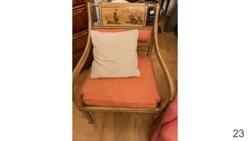
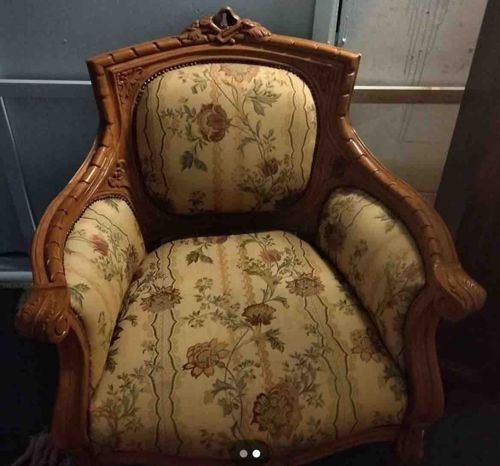
French Provincial Style Carved Wood Armchair

Antique/Vintage Furniture

AI Estimated Value

·Not an official valuation·Verify before acting

$450 - $650

As of June 12, 2026

AI Item Analysis

·AI can make mistakes·Verify before acting
This is a mid-20th-century armchair featuring a robust French Provincial or Rococo Revival influence. The frame is constructed from a solid light-colored hardwood, likely fruitwood or birch, finished with a medium oak or honey stain. The woodwork exhibits high-quality craftsmanship, characterized by a shield-shaped backrest topped with an ornate foliate and shell-motif crest rail. The stiles and arm supports are adorned with repetitive notched or 'bamboo style' carvings, ending in delicately scrolled hand rests. The chair is fully upholstered in a traditional floral damask tapestry featuring vertical stripes and botanical patterns in shades of gold, burgundy, and sage green, held in place by individual decorative brass upholstery tacks. The condition appears fair to good; while the wooden structure looks sturdy, there is noticeable darkening and wear on the scrolled armrests consistent with frequent hand contact. The upholstery shows slight sagging in the seat area and some typical fading of the fabric dyes. There are no visible maker's marks, but the style suggests a production date between 1940 and 1960. The combination of the deep seat, padded interior arms, and detailed relief carving indicates a piece designed for both aesthetic formality and comfort.

AI Appraisal Report

·AI can make mistakes·Verify before acting
I have virtually examined this mid-20th-century French Provincial style armchair. Based on the provided imagery, the construction displays hallmarks of high-quality mass production from the 1940–1960 era rather than 18th-century antiquity. The use of a shield-back silhouette with shell-and-foliate cresting is characteristic of the Rococo Revival movement popular in American and European suburbs during the post-war period. The condition is fair; while the frame's integrity appears sound, the darkening of the wood on the hand-rests indicates a loss of lacquer and significant oil absorption from skin contact, which requires professional cleaning or refinishing. The floral damask upholstery, though period-appropriate, shows signs of compression and fading that diminish the piece's immediate decorative value. The current market for mid-century traditional furniture is stable but soft, as contemporary collectors often prioritize 'Atomic' or 'Minimalist' styles over the ornate Provincial look. Comparables sold at regional auctions typically range between $300 and $800 depending on the fabric condition. The lack of a visible maker’s mark (such as Baker or Ethan Allen) prevents a premium valuation based on brand heritage. Limitations of this appraisal include the inability to inspect the underside for joinery techniques (such as dowels vs. mortise and tenon) or to check the internal springing and padding (horsehair vs. foam). A physical inspection would be required to confirm the wood species and detect any hidden repairs or insect damage. Full authentication of the age would require examining the oxidation levels of the wood beneath the upholstery tacks and reviewing any available provenance documents or original purchase receipts.

Get your items appraised

Instant estimates of your treasures with AI-powered appraisals

Browse More Appraisals