AI Appraisal Estimate

AI-generated estimates · not official valuations

From the user

What was submitted

Photo and notes provided by the user — not generated by AI

Submitted item photo
Submitted photo · May 30, 2026

User's notes

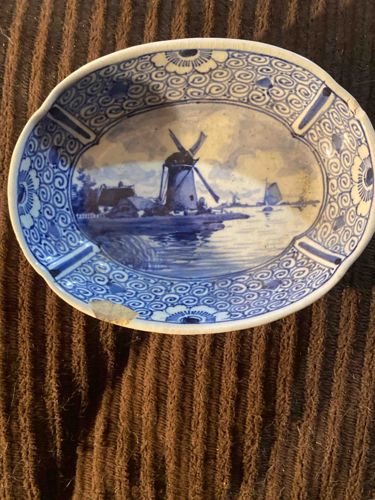
Bone China Blue windmill

AI analysis below

AI appraisal

AI analysis & estimate

AI-Generated · Verify before acting

Everything below is generated by AI for informational purposes only. AI can make mistakes — the AI may misidentify items or misattribute them (artist, maker, brand, designer, origin, era). This is not an official valuation and should not be used for insurance, sale, tax, estate, legal, or lending purposes — or any decision requiring a certified appraisal. It is not an authoritative claim about any person, brand, or rights holder — do not share or rely on it as a factual statement about a third party. Always consult qualified professionals before making financial decisions.

Note

This analysis also relies on unverified notes provided by the user, which may be incomplete or inaccurate and could affect the result.

Read the full disclaimer

AI Identification

·Not independently authenticated·Verify before acting

Blue and White Oval Dish with Windmill Scene

Decorative Dishware

AI Estimated Value

·Not an official valuation·Verify before acting

$40-70

As of May 30, 2026

AI Item Analysis

·AI can make mistakes·Verify before acting
This is an oval-shaped dish, possibly bone china given the user context, featuring a prominent blue and white transferware or hand-painted design. The central motif depicts a classic Dutch-style windmill on the bank of a body of water, flanked by small buildings or houses. In the distance, another, smaller windmill and what appears to be a sailboat are visible under a cloudy or atmospheric sky. The color palette is predominantly shades of cobalt blue on an off-white or cream background, showcasing variations in tone that suggest depth and detail in the landscape elements. The rim of the dish is adorned with an intricate, repeating scroll-like pattern, punctuated by small floral or star-burst designs and rectangular panels. The edges of the dish are subtly scalloped or undulating, adding to its decorative appeal. Visible condition issues include several chips along the rim, particularly noticeable on the bottom left side, where a section of the white base material is exposed. There may also be some minor wear to the glaze and possibly some crazing, though this is not clearly discernible from the provided images. The craftsmanship appears to be of moderate quality, characteristic of decorative tableware from the late 19th or early 20th century, likely produced for a consumer market rather than high art. The specific mention of 'Bone China' in the context suggests the base material is fine porcelain, known for its translucency and strength.
AI Appraisal Report

·AI can make mistakes·Verify before acting
I have examined the provided image and information regarding this oval-shaped dish, described as 'Bone China Blue windmill.' From the visual evidence, it is an attractive piece of decorative tableware, likely transferware, featuring a Dutch-style windmill scene in cobalt blue on an off-white background, characteristic of late 19th to early 20th-century production. The rim features an intricate scroll-like pattern with subtle scalloped edges. The condition of the dish significantly impacts its value. I observe multiple chips along the rim, particularly noticeable on the bottom left, where the base material is exposed. While not clearly discernible from the image, I'd also look for minor wear to the glaze and crazing during an in-person examination, as these are common with age and use. The 'Bone China' designation, while enhancing perceived quality, does not translate to high rarity in this common decorative style. Market conditions for blue and white transferware, especially common scenic patterns like windmills, are generally moderate. While there's a steady collector base, demand for mass-produced items in damaged condition is not high. Comparable items in similar condition typically fetch modest prices. Factors impacting value negatively are the chips along the rim. Rarity is low; similar styles and motifs were widely produced. Demand is primarily from casual collectors or those seeking decorative accents rather than investment pieces. My assessment of authenticity and condition is based solely on the provided image. To fully authenticate the 'Bone China' material and assess the full extent of wear and any repairs, an in-person physical examination would be crucial. Furthermore, identifying any maker's marks on the underside would be essential for more precise dating and attribution, which could slightly influence the value within this range. Without these, the appraisal remains an informed estimate.

Get your items appraised

Instant estimates of your treasures with AI-powered appraisals

Browse More Appraisals