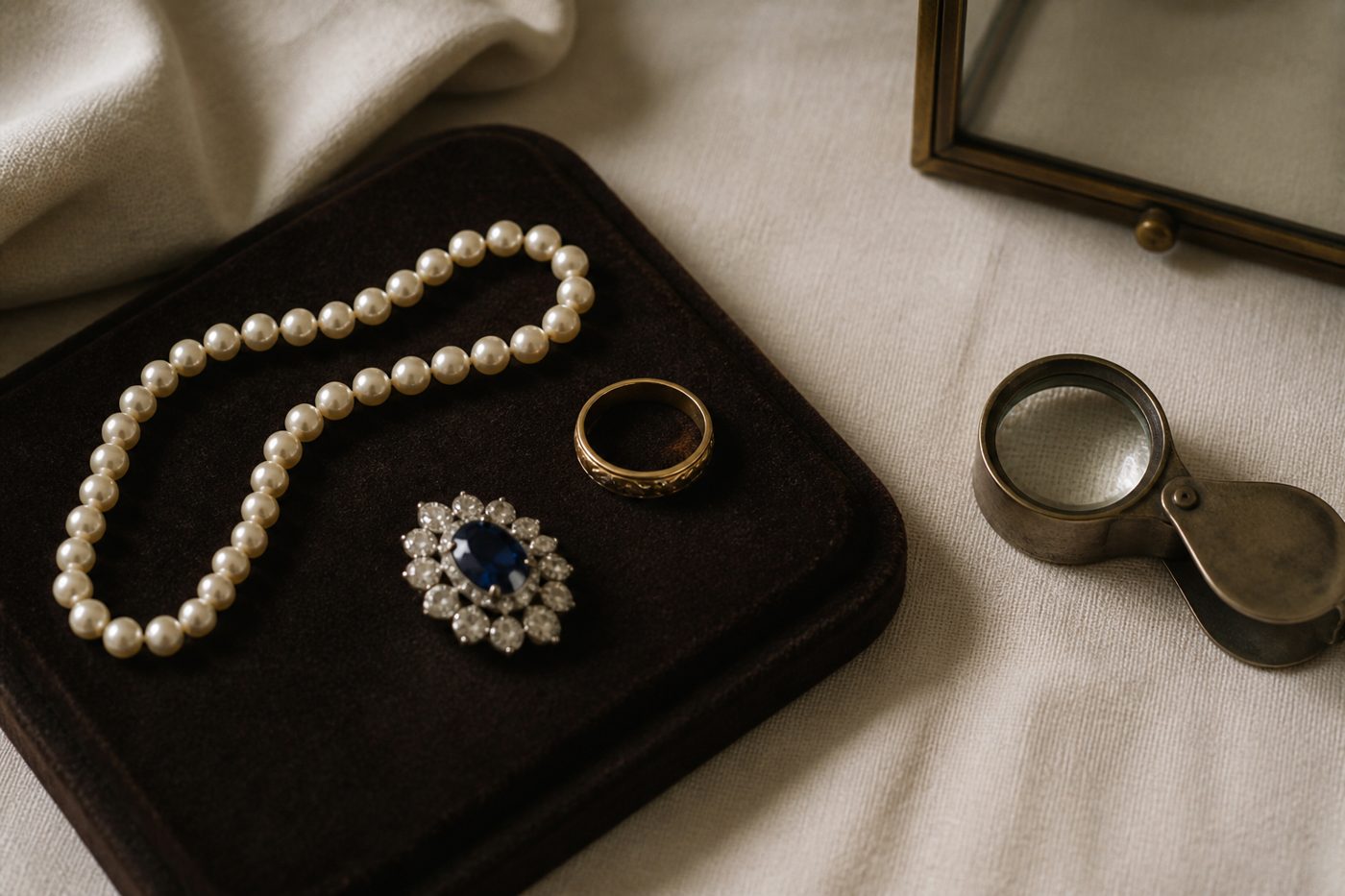
There is no single best place to sell jewelry — the right venue depends on what you have, how fast you need money, and how much effort you're willing to put in. A plain gold chain, a certified two-carat diamond, and a signed Art Deco brooch belong in very different sales channels. Before choosing, it helps to know roughly what you're selling; an instant AI estimate from Appraiser.AI can give you a starting sense of a piece's type and market position, though you should confirm anything significant with a qualified professional appraiser before selling.
Auction houses
For signed pieces, important gemstones, and fine period jewelry, auction houses can reach the serious collectors who tend to pay the most. Specialists catalog and photograph your piece, and competitive bidding can work in your favor.
- Tradeoffs: Seller's commissions and fees can take a meaningful percentage of the hammer price. The process is slow — consignment to payment often takes months. There is no guaranteed result; pieces can sell below estimate or fail to sell. Regional auction houses are more accessible but reach smaller audiences than the major international ones.
Jewelry dealers and jewelers
Selling outright to a dealer is the fastest route: you walk in, negotiate, and leave with payment. Dealers are also a realistic option for pieces that are valuable but not exceptional.
- Tradeoffs: A dealer must resell at a profit, so offers are wholesale, often well below retail replacement value. Offers vary widely between dealers, so getting several quotes tends to pay off. Choose established businesses, and be aware that an insurance appraisal figure is not what a dealer will pay — those numbers serve different purposes.
Gold and precious-metal buyers
For broken jewelry, unfashionable pieces, or plain chains with no collector appeal, scrap buyers pay based on metal weight and purity.
- Tradeoffs: Fast and simple, but you receive only material value — never sell a piece with potential collector or gemstone value this way without checking first. Payout percentages of the metal's market value vary significantly between buyers.
Online marketplaces
General marketplaces and specialist jewelry platforms let you reach buyers directly and often keep more of the final price.
- Tradeoffs: You do the work — photography, description, pricing, shipping, and handling returns. High-value jewelry attracts fraud attempts, so insured shipping and payment protection matter. Unsigned or uncertified pieces can be hard to sell online because buyers can't inspect them. Some platforms vet listings and handle authentication, usually in exchange for higher fees.
Consignment
A jeweler or consignment shop displays your piece and takes a percentage when it sells. This can achieve closer-to-retail prices than an outright dealer sale without the effort of selling it yourself.
- Tradeoffs: Sales can take months, and your piece is out of your hands in the meantime. Get a written agreement covering the price, the commission split, insurance while in the shop's custody, and what happens if it doesn't sell.
Estate sales, shows, and fairs
Antique shows and estate sale channels suit vintage and antique jewelry, putting pieces in front of an audience that already appreciates them. Tradeoffs include booth or organizer fees, travel, and results that depend heavily on who shows up.
Choosing well
A few habits protect sellers in every venue: know your piece before you price it, get certification for significant diamonds, collect more than one offer, and never feel pressured into a same-day sale. The venues that tend to yield the most — auctions and direct sales to collectors — are also the slowest, while the fastest options pay the least. Matching the piece to the right channel usually matters more than squeezing the last dollar out of the wrong one.