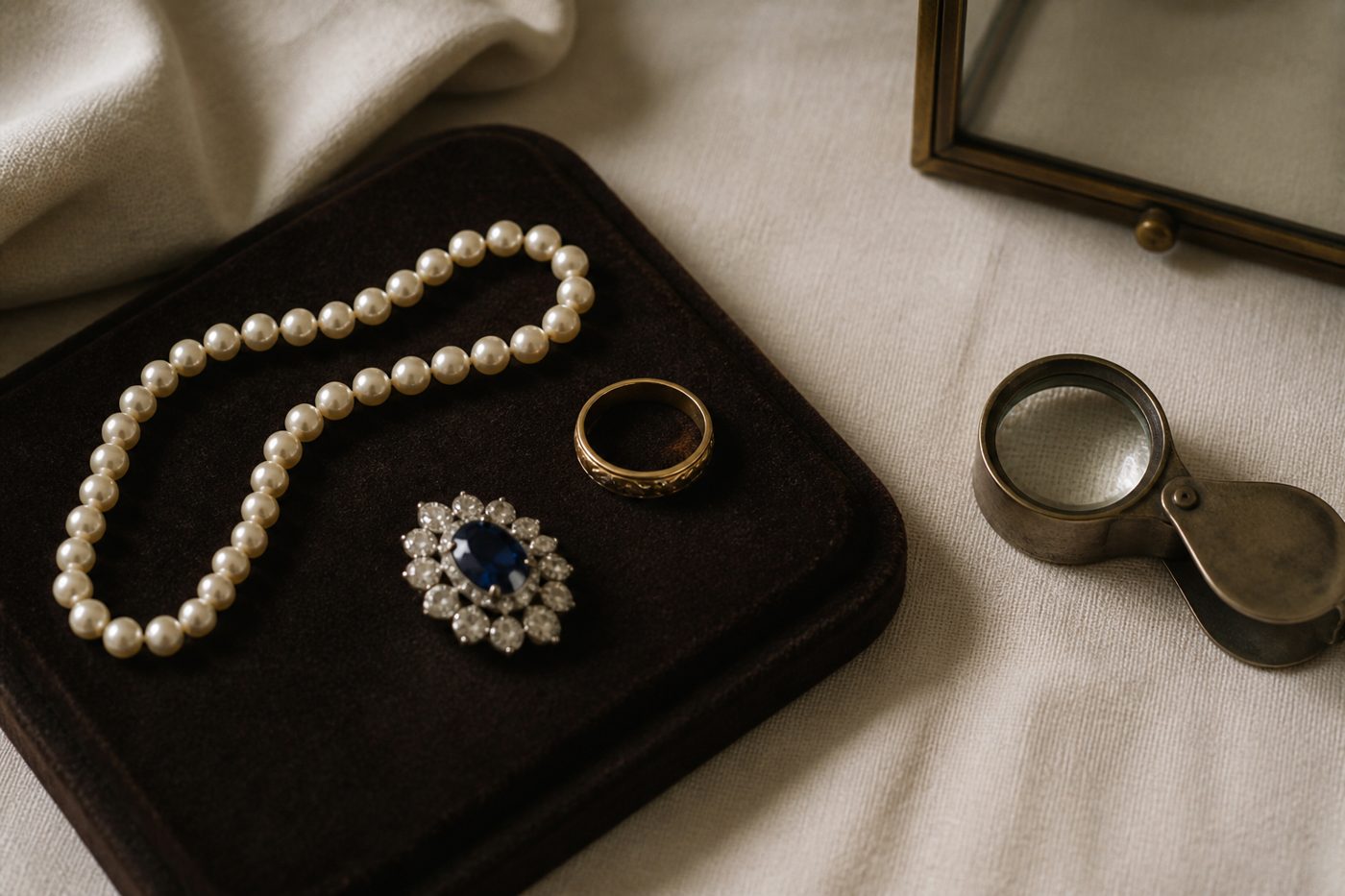
Jewelry value is layered. At the bottom sits intrinsic value — the melt worth of the metal and the wholesale worth of the stones. Above that sit craftsmanship, brand, age, rarity, and story. A piece can be worth roughly its materials, or many multiples of them, depending on how these layers stack up.
Materials and metal content
The starting point is what the piece is made of. Gold is valued by purity (10k, 14k, 18k, 22k) and weight; platinum and silver follow the same logic. A heavy 18k gold chain has a meaningful floor value even with no design merit at all, while a gold-plated piece of similar appearance may have almost none. Hallmarks — the tiny stamps indicating purity and often country of origin — are one of the first things an appraiser checks.
Gemstone quality
For diamonds, the familiar four Cs — carat weight, color, clarity, and cut — drive most of the value, and small differences matter: a well-cut stone tends to outperform a larger but poorly cut one. Whether a diamond is natural or lab-grown has become a major value factor, and it generally cannot be determined from a photo. Colored stones follow their own rules: origin (a sapphire's source region, for example), whether the stone has been heat-treated or otherwise enhanced, and the vividness of color can all matter as much as size. Natural pearls tend to command far more than cultured pearls, which in turn outrank imitation.
Maker and brand
Signed pieces from prestigious houses — Cartier, Tiffany & Co., Van Cleef & Arpels, Bulgari — often sell for well above the value of their materials, because collectors pay for design heritage and authenticity. Even in costume jewelry, certain mid-century makers have followings that lift prices well above unsigned equivalents. A signature or maker's mark is only meaningful if genuine, which is why authentication matters so much in this category.
Age, style, and rarity
Period matters. Georgian, Victorian, Art Nouveau, Art Deco, and Retro-era pieces each have distinct looks and distinct collector bases. Age alone doesn't create value — plenty of old jewelry is common — but a piece that is both period-correct and scarce, such as an intact Art Deco platinum-and-diamond brooch, tends to attract strong interest. Original, unaltered condition adds to this: a Victorian ring that has been resized, re-shanked, or had stones replaced usually appeals less to collectors than an untouched example.
Condition and completeness
Worn prongs, chipped stones, stretched links, and later repairs all pull value down. Completeness helps: original boxes, papers, certificates for stones, and matching pieces of a suite (necklace, earrings, bracelet made together) can all make an item more desirable than the same piece alone.
Provenance and demand
Documented history — a receipt from a famous retailer, a family record, association with a notable estate — can add appeal, though claims need paperwork to count. Finally, fashion moves markets: yellow gold, chunky chains, or signet rings can be in or out of favor, and demand shifts affect what pieces actually bring.
Putting it together
Because these factors interact, no single one tells the whole story. An instant AI estimate from Appraiser.AI can weigh the visible signals — type, style, apparent materials, era cues — and give you a useful starting range, but photos can't confirm purity, stone treatment, or authenticity. Before insuring, dividing, or selling a piece, have it examined by a qualified professional appraiser.