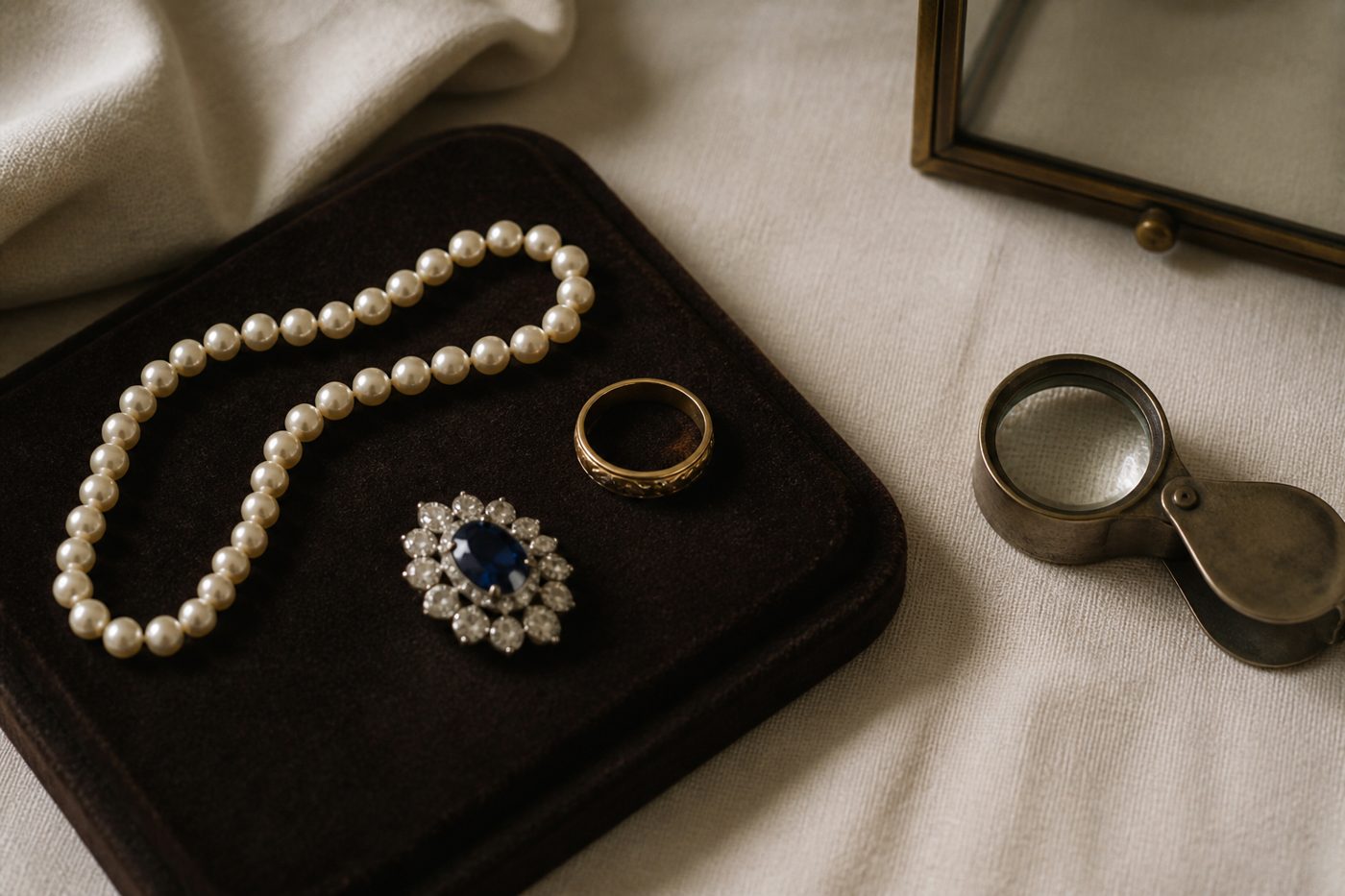
Condition works differently in jewelry than in most collectible categories. Jewelry was made to be worn, so some honest wear is expected — but the line between charming patina and value-destroying damage is thinner than many owners realize, and much of what matters is invisible without a loupe.
How condition is assessed
An appraiser examines a piece under magnification, checking the settings, the metal, the stones, and any signs of repair. Key questions include: Are the prongs worn thin or re-tipped? Is the shank of the ring thin from decades of wear? Are solder joints original or later? Do the stones match each other, or has one been replaced? Are hallmarks and signatures crisp, rubbed, or suspiciously fresh?
Common condition issues
- Worn or damaged settings. Thin prongs and bent claws risk stone loss and signal heavy wear.
- Chipped or abraded stones. Diamonds are hard but brittle; chips at the girdle are common. Softer stones like emerald, opal, and pearl scratch and bruise far more easily.
- Stretched or repaired chains. Kinks, weak links, and replaced clasps reduce appeal.
- Resizing and alterations. A resized ring is normal for wearability but can matter to collectors of period pieces, especially if the work was done crudely.
- Replaced stones. A period ring with a modern replacement diamond usually appeals less to collectors than an all-original example.
- Over-polishing. Aggressive polishing can soften engraving, blur hallmarks, and erase the crisp detail that makes antique pieces desirable.
- Pearl deterioration. Pearls can lose their nacre, dry out, or show drill-hole wear; restringing is routine, but surface damage is not reversible.
Grading conventions that genuinely exist
Jewelry as a whole has no universal condition scale the way coins or trading cards do — descriptions like "excellent," "very good," or "worn" are used loosely. But the stones themselves are formally graded. Diamonds are graded by independent gemological laboratories on standardized scales: color from D (colorless) down through the alphabet, clarity from Flawless through Internally Flawless, VVS, VS, SI, and Included grades, plus cut quality assessments. A lab report from a respected gemological laboratory tends to matter a great deal to buyers of significant diamonds, and stones without reports often sell at a discount to comparable certified stones. Colored gemstones and pearls have looser, lab-specific grading, with treatment disclosure (heated, oiled, irradiated) often more important than any letter grade.
What collectors look for
For antique and signed jewelry, collectors tend to prize originality above shininess: crisp hallmarks, original stones, untouched patina in recesses, working original clasps and fittings, and no evidence of later solder. A piece that looks slightly aged but completely original is generally more desirable to that audience than one restored to a bright, modern finish. For contemporary branded jewelry, the calculus flips somewhat — buyers often want pieces that look close to new, with box and papers.
How condition affects desirability
Condition problems affect value unevenly. On a piece valued mainly for its gold weight, a broken clasp barely matters. On a signed Art Deco brooch, a replaced stone or clumsy repair can cut collector interest sharply. As a rule, the more a piece's value depends on craftsmanship, brand, or period, the more condition and originality matter.
Getting a first read
Photographing your piece in good light — front, back, hallmarks, and any damage — and running it through Appraiser.AI's instant AI estimate is a quick way to understand what you might have and which condition issues stand out. But since so much of jewelry condition lives under the loupe, treat that as a starting point and have any potentially valuable piece evaluated in person by a qualified professional appraiser before making financial decisions.