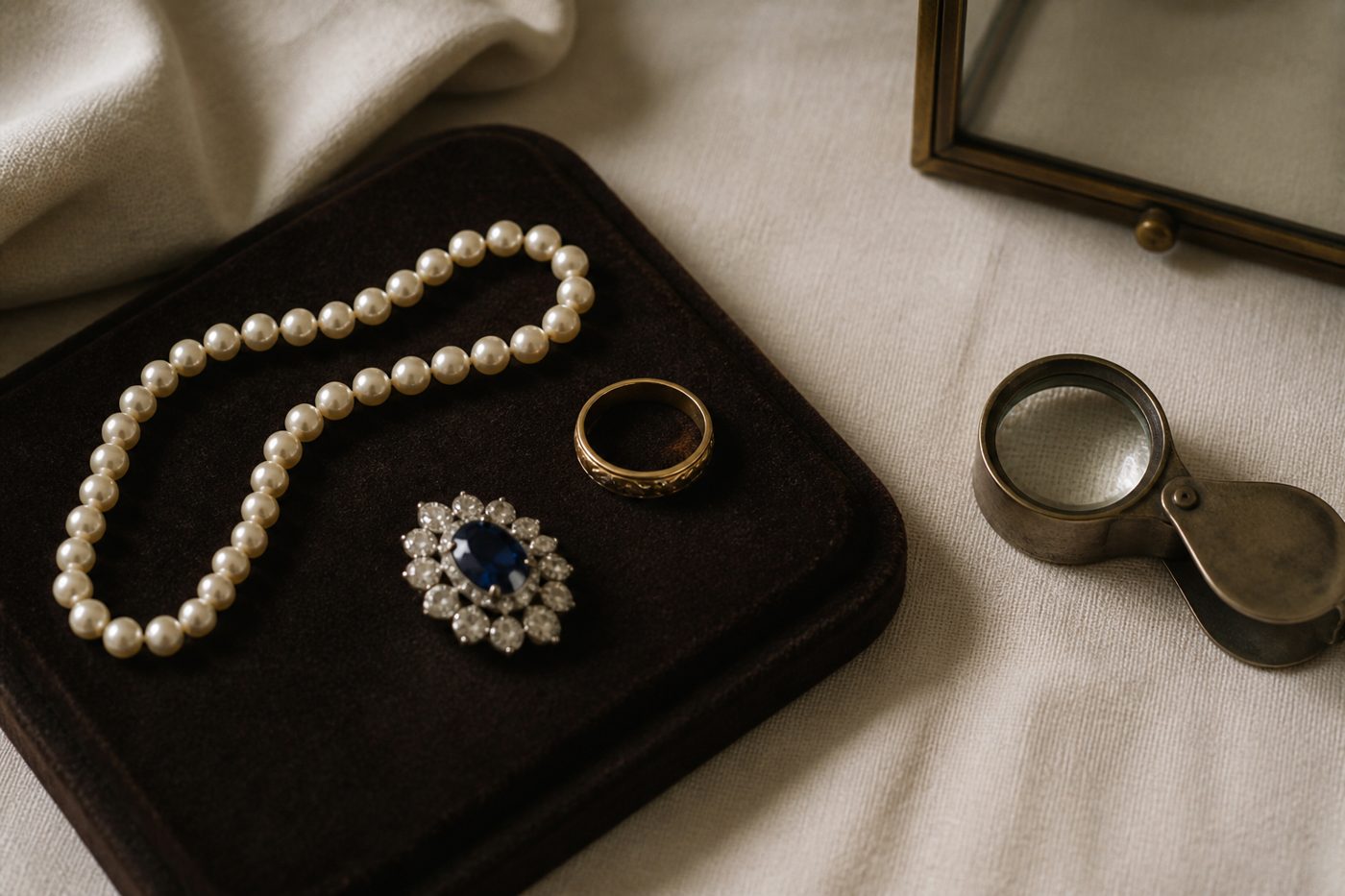
Jewelry is one of the most commonly appraised categories for a simple reason: small objects can carry significant value, and that value is rarely obvious at a glance. This category covers the full range of personal adornment — diamond engagement rings, gold and silver chains, pearl strands, colored gemstones, vintage and antique brooches, watches worn as jewelry, and costume pieces that sometimes turn out to be more than costume.
Why people get jewelry appraised
Most jewelry appraisals start with a life event: an inheritance, a divorce, an insurance renewal, a decision to sell, or simple curiosity about a piece found in a drawer. Because jewelry mixes intrinsic material value (gold, platinum, diamonds) with craftsmanship, brand, and age, two pieces that look similar can differ enormously in what buyers tend to pay.
What an AI estimate can and cannot tell you
An AI-powered estimate from a photo can often recognize the type of piece, likely materials, style and era cues, and how comparable items are generally positioned in the market. Appraiser.AI gives you that instant starting point in seconds. What a photo cannot do is test metal purity, weigh stones, detect lab-grown versus natural diamonds, or verify hallmarks and maker's marks under magnification — details that can change a valuation dramatically.
Treat an AI estimate as a first read, not a final answer. For insurance coverage, estate settlement, or a decision to sell, you'll want a professional appraisal from a qualified, credentialed jewelry appraiser.