AI estimate as of September 29, 2025 · verify with a professional before acting
AI-Generated · Verify before acting
Everything on this page is generated by AI for informational purposes only. AI can make mistakes — the AI may misidentify items or misattribute them (artist, maker, brand, designer, origin, era). This is not an official valuation and should not be used for insurance, sale, tax, estate, legal, or lending purposes — or any decision requiring a certified appraisal. It is not an authoritative claim about any person, brand, or rights holder — do not share or rely on it as a factual statement about a third party. Always consult qualified professionals before making financial decisions.
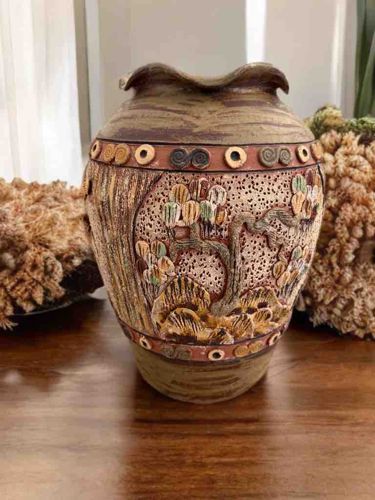
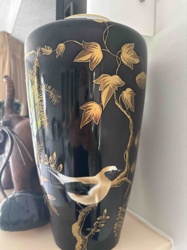
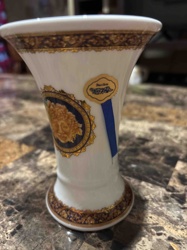
This is a ceramic vase featuring an embossed, relief-style scenic design. Its overall form is bulbous, tapering slightly towards the base and featuring a subtly flared, undulating rim at the top, which gives it a organic, almost ruffled appearance. The primary color palette consists of earthy tones, with a variegated brown wash that creates a textured, rustic look on the broader surfaces. A prominent decorative band encircles the shoulder of the vase, composed of alternating circular elements and stylized scroll or swirl motifs, executed in an ochre-brown color with lighter accents. Below this band, the central body of the vase showcases a richly textured, embossed landscape scene. This scene appears to depict trees or foliage with distinct, individually colored leaves in muted greens, golds, and browns. The background of the embossed scene has a stippled or speckled texture, adding depth to the relief. The lower part of the vase features another decorative band, similar in style to the upper one but potentially wider, and the base is a solid, slightly darker shade of brown. The craftsmanship suggests a handmade or at least hand-finished piece, given the irregularity of the rim and the detailed, tactile nature of the embossed design. There are no visible condition issues such as chips, cracks, or significant wear, and the patina appears consistent with its rustic aesthetic. The style suggests an influence of folk art or perhaps an Asian aesthetic, reminiscent of traditional pottery with natural motifs. The quality indicators point to a sturdy construction and careful application of the decorative elements. Without specific maker's marks, an exact manufacturing date is difficult to ascertain, but it appears to be a decorative item likely produced in the late 20th or early 21st century.
AI Appraisal Report
I have thoroughly examined the provided image of this Embossed Ceramic Scenic Vase. Visually, the condition appears excellent, with no visible chips, cracks, or significant wear. The varied brown wash, undulating rim, and detailed embossed landscape scene suggest a piece intended for decorative display, likely of contemporary manufacture. The craftsmanship, while appearing hand-finished due to the irregular rim and tactile design, is consistent with mass-produced decorative ceramics that incorporate artisanal touches.
Market conditions for such decorative ceramic vases are generally stable but not particularly high-value. Comparables in the secondary market, including online marketplaces and antique/consignment shops, typically fall into the modest range for well-preserved, ornamental ceramic pieces without significant artistic attribution or historical provenance. Demand for this style is moderate, appealing to individuals seeking rustic or organically inspired decor. The item is not rare; similar decorative vases, often from Asian origins or contemporary studios, are readily available. The primary factors impacting value are its aesthetic appeal, good condition, and decorative utility.
A significant limitation in authenticity verification from an image alone is the inability to inspect the base for maker’s marks, which would be crucial for attributing it to a specific artist or manufacturer. An in-person examination would allow me to assess the exact weight, texture, and glaze quality, and investigate for any subtle irregularities that might confirm handmade status or reveal manufacturing techniques. Provenance documentation could potentially elevate its value if it linked the piece to a known maker or collection. Without such information, I must appraise it as a well-made, contemporary decorative item.