AI estimate as of July 12, 2025 · verify with a professional before acting
AI-Generated · Verify before acting
Everything on this page is generated by AI for informational purposes only. AI can make mistakes — the AI may misidentify items or misattribute them (artist, maker, brand, designer, origin, era). This is not an official valuation and should not be used for insurance, sale, tax, estate, legal, or lending purposes — or any decision requiring a certified appraisal. It is not an authoritative claim about any person, brand, or rights holder — do not share or rely on it as a factual statement about a third party. Always consult qualified professionals before making financial decisions.
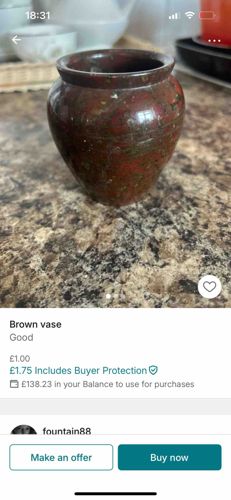
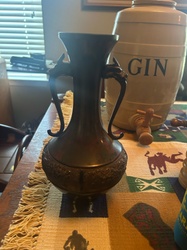
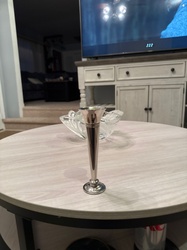
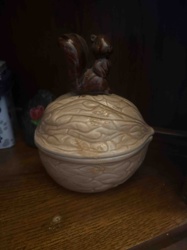
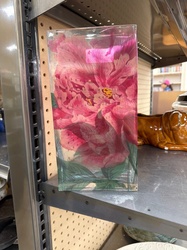
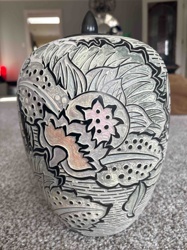
This appears to be a small, squat vase or jar, characterized by its deep reddish-brown and possibly green speckled coloration, suggestive of a natural stone material such as jasper or possibly a pottery with a mottled glaze. The shape is robust, with a wider body tapering towards a narrower base, and a relatively wide mouth that flares slightly. The surface exhibits a glossy, somewhat reflective finish, which highlights the varied color patterns and subtle striations within the material. There are visible signs of wear, including minor scuffs and what appears to be some white residue or spots, particularly around the upper rim and body. These could indicate age, previous use, or environmental exposure. The interior appears dark, consistent with the exterior color palette. Given its compact size and sturdy construction, it could be suited for holding small floral arrangements or serving as a decorative accent. The craftsmanship suggests a hand-finished or semi-mass-produced item, though no specific maker's marks are discernible from the image. Its style doesn't immediately suggest a distinct historical period, but resembles items commonly produced in the mid-to-late 20th century. The quality appears decent, consistent with a decorative household item.
AI Appraisal Report
I have examined the provided image of what appears to be a small, squat mottled vase or jar. Based on visual assessment, the item is likely made of pottery with a mottled glaze, giving it a resemblance to natural stone, possibly Jasper. The robust shape, wider body tapering to a narrower base, and flaring mouth are typical of decorative vases. Its glossy, reflective finish highlights the varied color patterns.
My assessment of its condition from the image indicates visible signs of wear, including minor scuffs and what appears to be some white residue or spots, particularly around the upper rim and body. These suggest age and previous use. Authenticity is challenging to confirm solely from images; while it appears to be a genuine decorative item, I cannot confirm its exact material (e.g., actual stone vs. glazed pottery) or a specific maker without physical examination. Without provenance or maker's marks, it's difficult to assign it to a particular artist or manufacturer.
In terms of market conditions, similar decorative pottery or faux-stone vases from the mid-to-late 20th century typically fall into the lower-end of the collectibles market. Demand for such items is generally modest unless there's a strong designer, historical, or artisanal provenance. Rarity is also low, as items of this nature were produced in quantity. The primary factors impacting value are its condition, lack of identifiable origin, and general decorative appeal rather than artistic significance.
For full authentication, an in-person examination would be crucial to determine the material composition definitively (e.g., ceramic, glass, or natural stone) and to properly assess the extent of wear and damage. Microscopic analysis could confirm glaze type or material. Provenance documentation, if available, would significantly enhance authenticity and potentially value. Without these, the appraisal is limited to its decorative merit as seen in the image.