AI identification & appraisal estimate

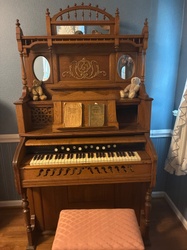
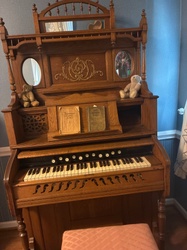
Pump organ, appears to be by Clough & Warren (not authenticated)

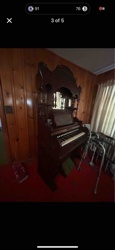
Submitted photo of Pump organ, appears to be by Clough & Warren (not authenticated)
Photo submitted by the user — not generated by AI

AI Estimated Value

Not an official valuation

$600-$1,200

AI estimate as of September 10, 2026 · verify with a professional before acting

AI-Generated · Verify before acting

Everything on this page is generated by AI for informational purposes only. AI can make mistakes — the AI may misidentify items or misattribute them (artist, maker, brand, designer, origin, era). This is not an official valuation and should not be used for insurance, sale, tax, estate, legal, or lending purposes — or any decision requiring a certified appraisal. It is not an authoritative claim about any person, brand, or rights holder — do not share or rely on it as a factual statement about a third party. Always consult qualified professionals before making financial decisions.

Read the full disclaimer

AI Item Analysis

This is a large, elaborate Victorian-era reed organ housed in an ornate wooden case, likely oak or a similar hardwood with a medium-brown finish. The piece features a towering upper hutch or superstructure accented with multiple mirrors, including a central rectangular mirror beneath a spindle-turned gallery and two flanking oval mirrors. A carved decorative flourish adorns the central panel between the oval mirrors. Below the hutch sits a slanted music rack, flanked on the left by an intricate fretwork speaker screen or register cover and an open compartment on the right. The keyboard consists of white and black keys, positioned above a row of knee-lever or swell louvers taking the form of downward-curved wooden slats. Across the nameboard above the keys, visible text appears to read 'Clough' on the left and 'Milwaukee' on the right, though the full maker's mark is partially obscured or stylized and the piece remains unauthenticated. Several stop knobs with white ceramic or celluloid inserts are arranged in a row above the keyboard. The wood exhibits a warm tone with standard signs of age-related wear, light surface scuffs, and a slightly patinated finish consistent with late 19th-century or early 20th-century manufacture. The craftsmanship is highly detailed, combining turning, fretwork, and carved elements typical of high-end parlor organs of that period. The attribution rests on the partially legible lettering on the nameboard, but lacks formal physical verification. A matching padded bench with a patterned pinkish fabric upholstery sits in front of the instrument.
AI Appraisal Report

Based on what I can see in the photograph, this Victorian-era reed organ features an elaborate wooden case with a towering hutch, multiple mirrors, decorative fretwork, and a matching upholstered bench. The nameboard bears partially legible lettering consistent with Clough & Warren, though I cannot verify from a photo whether the attribution is correct or if the markings are contemporary to the piece. The overall craftsmanship suggests a late 19th- or early 20th-century parlor instrument, but I would need physical inspection to confirm the internal mechanical condition, bellows integrity, and reed board state. The estimated value range reflects the assumed attribution to Clough & Warren in its current, unauthenticated state with standard age-related wear, light surface scuffs, and a patinated finish. General market demand for large parlor organs has softened considerably in recent decades due to their size, weight, and the specialized restoration costs required to return them to playing condition. Consequently, many reed organs of this type trade modestly as decorative furniture or historical artifacts rather than active musical instruments. To achieve a higher valuation or confirm authorship, an in-person examination by a qualified antique instrument specialist and detailed inspection of internal action parts would be necessary. If physical evaluation reveals the piece to be a later replica, significantly altered, or entirely unattributed, the market value would likely decrease to the $200-$400 range, driven primarily by the decorative appeal of the ornate Victorian case and mirrors rather than maker-specific pedigree.

Keep exploring

More antique musical instruments appraisals

Get your items appraised

Instant AI-powered appraisal estimates from a photo

Browse More Appraisals