AI estimate as of October 10, 2026 · verify with a professional before acting
AI-Generated · Verify before acting
Everything on this page is generated by AI for informational purposes only. AI can make mistakes — the AI may misidentify items or misattribute them (artist, maker, brand, designer, origin, era). This is not an official valuation and should not be used for insurance, sale, tax, estate, legal, or lending purposes — or any decision requiring a certified appraisal. It is not an authoritative claim about any person, brand, or rights holder — do not share or rely on it as a factual statement about a third party. Always consult qualified professionals before making financial decisions.
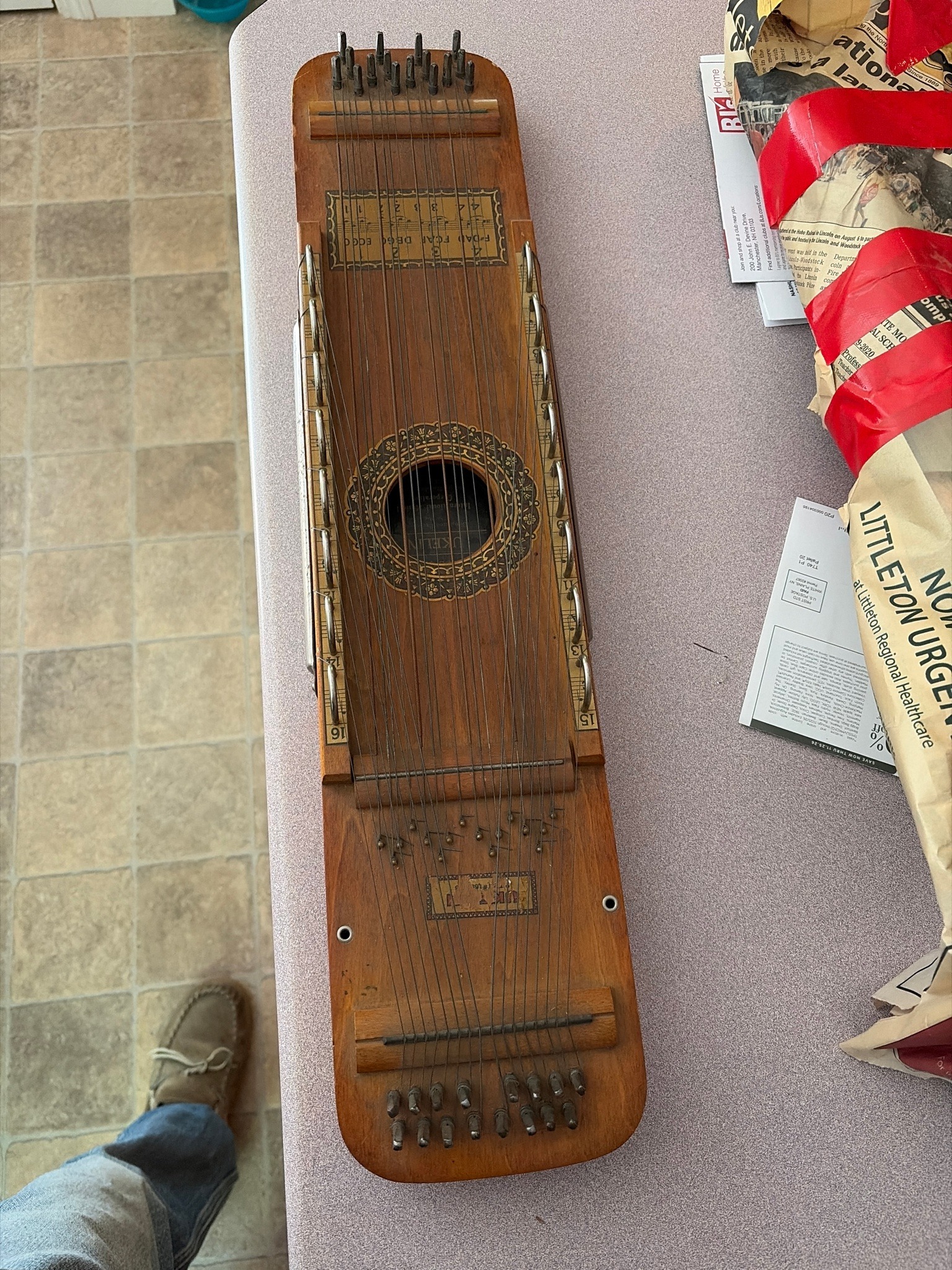
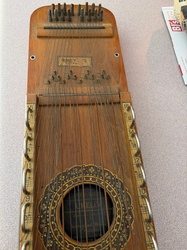
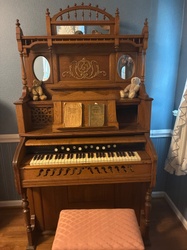
This stringed instrument appears to be a vintage ukelin, featuring an elongated wooden body with a central soundhole surrounded by an ornate decorative rosette. The instrument combines elements of both a bowed psaltery and a zither, designed to be played with a bow on one side and plucked on the other. It is constructed from a warm-toned wood, likely maple or birch, with a polished finish that shows surface wear, minor scratches, and signs of age consistent with mid-20th-century or earlier manufacture. The instrument features numerous metal tuning pins at both ends, a series of metal strings running lengthwise over wooden bridges, and metal loop pins or brackets along the right side numbered for chord selection. Printed paper or decal charts are adhered to the wooden soundboard around the soundhole and near the top, displaying musical notes and instructions for playing. A central label is visible inside the soundhole, though the exact text is partially obscured. The overall construction displays typical mass-production craftsmanship of folk instruments from the early to mid-20th century. The identification is based on the distinct shape, string configuration, and layout characteristic of a ukelin, but the item remains unauthenticated and unverified regarding its exact maker, production year, or operating condition.
AI Appraisal Report
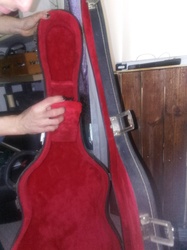
Based on what I can see from the provided imagery, this piece displays the physical characteristics of a vintage ukelin—a hybrid folk instrument combining elements of a Hawaiian ukulele or psaltery and a zither, marketed widely by door-to-door salesmen in the United States throughout the 1920s through the 1950s. The body appears to be constructed of laminate or solid birch/maple with typical factory-applied finish, decorative paper soundhole trim, and printed instruction decals. I can observe some surface wear, minor scuffing, and finish aging, but I cannot assess structural integrity, string tension, pin tightness, or whether the soundboard is warped or cracked underneath. I can't determine from a photo whether the internal label is fully intact or readable, nor can I evaluate musical playability. The market for ukelins is primarily driven by decorative appeal, folk art collectors, and novelty instrument enthusiasts rather than serious performing musicians. Because millions were produced by companies like the Manufacturers Advertising Company or the International Musical Corporation, they are relatively common. A typical ukelin in fair-to-good display condition generally commands between $60 and $120 at secondary market venues. If the instrument retains its original bow, case, and tuning wrench, or if it can be demonstrated to hold tune and play cleanly, it could reach the higher end or slightly above. Conversely, if it suffers from soundboard warping, structural seam separation, or missing strings, the value would realistically drop to the $20 to $40 range as a purely decorative wall hanger. An in-person inspection by a vintage instrument specialist would be necessary to evaluate internal bracing, identify the specific maker, and determine overall physical condition.