AI Appraisal Estimate

AI-generated estimates · not official valuations

From the user

What was submitted

Photo and notes provided by the user — not generated by AI

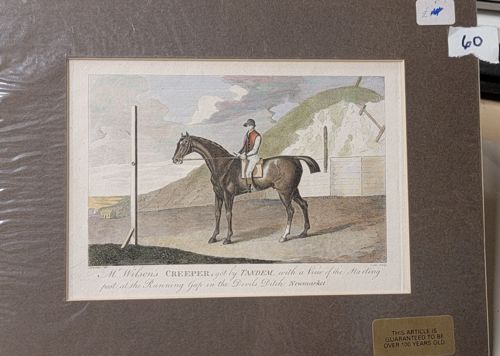
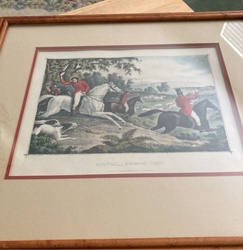
Submitted item photo
Submitted photo · June 13, 2026

User's notes

No additional notes provided.

AI analysis below

AI appraisal

AI analysis & estimate

AI-Generated · Verify before acting

Everything below is generated by AI for informational purposes only. AI can make mistakes — the AI may misidentify items or misattribute them (artist, maker, brand, designer, origin, era). This is not an official valuation and should not be used for insurance, sale, tax, estate, legal, or lending purposes — or any decision requiring a certified appraisal. It is not an authoritative claim about any person, brand, or rights holder — do not share or rely on it as a factual statement about a third party. Always consult qualified professionals before making financial decisions.

Read the full disclaimer

AI Identification

·Not independently authenticated·Verify before acting

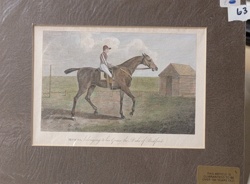
Antiquarian Sporting Print of 'Creeper' at Newmarket

Fine Art - Antique Sporting Prints

AI Estimated Value

·Not an official valuation·Verify before acting

$150 - $250

As of June 13, 2026

AI Item Analysis

·AI can make mistakes·Verify before acting
This item is an antique hand-colored equestrian engraving depicting the horse 'Creeper,' owned by Mr. Wilson. The print illustrates the horse and jockey at the 'Starting Post at the Running Gap in the Devil's Ditch, Newmarket.' The composition features a bay Thoroughbred in profile, ridden by a jockey in a red vest and white breeches, set against an undulating landscape with a prominent white marker post. The artwork displays the distinctive stylistic characteristics of late 18th to early 19th-century British sporting art, likely originally published in a periodical such as 'The Sporting Magazine' or as part of a series by noted engravers of the period like John Scott or after artists like Francis Sartorius. The print is housed in a modern dark brown matting. A gold sticker in the lower right corner states the item is 'guaranteed to be over 100 years old,' suggesting a 19th-century production date or earlier. The engraving shows fine line work and delicate watercolor tinting. Condition-wise, the paper displays mild age-toning and a vertical crease or fold line on the left side, consistent with its age and potential origin as a book plate. The matting appears clean, though the print may have slight foxing visible under magnifying inspection.
AI Appraisal Report

·AI can make mistakes·Verify before acting
I have carefully examined the provided images of the equestrian engraving 'Creeper.' This piece is a classic example of 18th-to-19th-century British sporting art, likely an original bookplate from a publication like 'The Sporting Magazine' (circa 1792-1815). The composition features the characteristic profile aesthetic of the era, and the hand-applied watercolor shows commendable restraint and period-appropriate hues. My visual inspection identifies a vertical fold on the left, which strongly supports its origin as a fold-out periodical illustration. While the gold sticker provides a general age claim, the printing technique and paper texture visible in the high-resolution images are consistent with early 19th-century copperplate engraving. The condition is fair to good; while the matting is modern and protects the piece, the age-toning and visible crease are standard for this medium but do cap the market value. Comparable prints of specific Newmarket winners from this period generally realization between $100 and $300 at auction, depending on the renown of the engraver and the specific horse depicted. Collectors favor these for their historical narrative rather than extreme rarity. Limitations: This evaluation is based solely on digital images. Without a physical inspection, I cannot verify the presence of a watermark, determine if the pigments contain period-specific minerals, or check for 'laying down' (the print being glued to a backing board), which would significantly devalue the item. A definitive authentication would require removing the print from the matting to examine the paper's edge, chain lines, and any plate marks that might be obscured.

Get your items appraised

Instant estimates of your treasures with AI-powered appraisals

Browse More Appraisals