AI Appraisal Estimate

AI-generated estimates · not official valuations

From the user

What was submitted

Photo and notes provided by the user — not generated by AI

Submitted item photo
Submitted photo · July 3, 2026

User's notes

No additional notes provided.

AI analysis below

AI appraisal

AI analysis & estimate

AI-Generated · Verify before acting

Everything below is generated by AI for informational purposes only. AI can make mistakes — the AI may misidentify items or misattribute them (artist, maker, brand, designer, origin, era). This is not an official valuation and should not be used for insurance, sale, tax, estate, legal, or lending purposes — or any decision requiring a certified appraisal. It is not an authoritative claim about any person, brand, or rights holder — do not share or rely on it as a factual statement about a third party. Always consult qualified professionals before making financial decisions.

Read the full disclaimer

AI Identification

·Not independently authenticated·Verify before acting

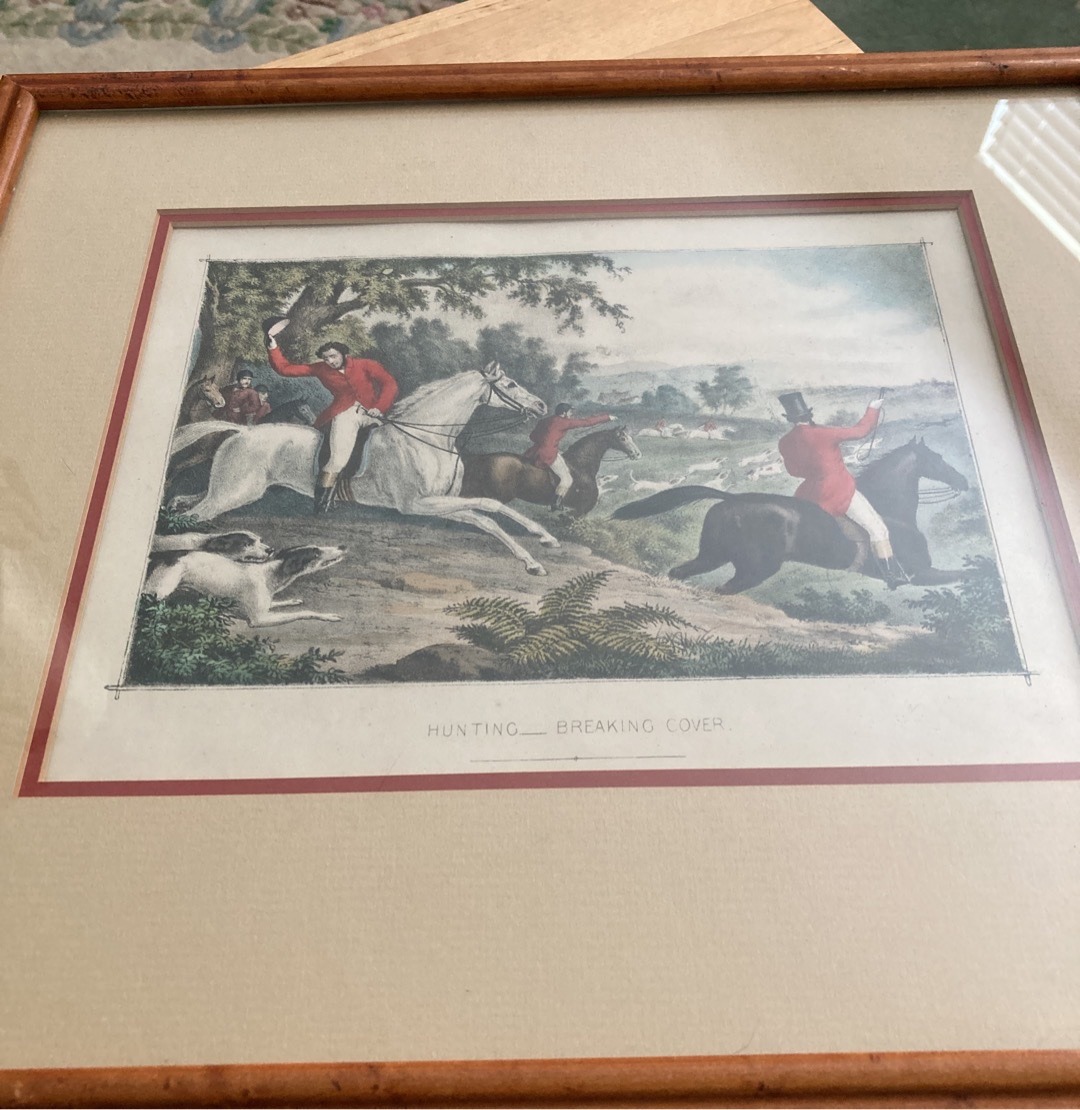
Equestrian print titled "HUNTING. — BREAKING COVER."

Prints and Artwork

AI Estimated Value

·Not an official valuation·Verify before acting

$100 - $350

As of July 3, 2026

AI Item Analysis

·AI can make mistakes·Verify before acting
This item is an equestrian-themed print, stylistically consistent with 19th-century British sporting art. It depicts a fox hunting scene with three main riders in traditional red hacking jackets (pinks) mounted on white and dark horses, accompanied by several hounds in the foreground and a larger pack in the distance. The print bears the centered title "HUNTING. — BREAKING COVER." in a serif typeface below the image. The composition features a naturalistic landscape with rolling hills and deciduous trees under a hazy, partially clouded sky. The print is housed behind glass in a multi-layered mount featuring a thin red border (fillet) and a wide beige mat. The frame appears to be polished wood or a veneer with a light brown tone and rounded profile. Due to the lack of visible signatures from the artist or engraver and the distance of the photograph, it is impossible to determine if this is an antique engraving, a lithograph, or a modern photomechanical reproduction. The coloration appears muted, potentially due to age-related fading or the original printing process. The condition appears fair, though there is a visible glare on the glass and some potential light foxing or discoloration on the matting. Without a physical inspection of the paper grain and ink texture, this identification remains a hypothesis based on visual subject matter.
AI Appraisal Report

·AI can make mistakes·Verify before acting
I have reviewed the provided image of the equestrian print titled 'HUNTING. — BREAKING COVER.' Based on what I can see, the piece reflects the aesthetic of 19th-century British sporting art, depicting a traditional fox hunting scene. However, I cannot verify from a photo whether this is a period engraving, a later lithograph, or a modern photomechanical reproduction. The muted colors and potential foxing on the matting suggest some age, but the lack of visible plate marks or artist signatures through the glass makes a precise dating impossible without physical inspection of the paper grain and ink texture. The value range of $100 - $350 assumes the piece is a mid-to-late 19th-century lithograph or engraving in fair condition. In the current market, decorative sporting prints of this type maintain a steady demand for traditional interior design, though values are heavily dependent on the rarity of the specific series and the reputation of the engraver. If this item were to be revealed as a modern digital reproduction upon physical examination, the value would likely fall below $50. Conversely, if it bears a mark consistent with a high-profile 19th-century engraver like Henry Alken or Thomas Blinks, the value could exceed the current estimate. To move beyond this hypothesis, an in-person examination by a specialist is required to check for watermarks, printing methods (such as aquatint vs. offset), and to inspect the paper outside of the frame. Provenance documentation would also assist in establishing the print's history. Until such verification occurs, this estimate remains a working assumption based on visual subject matter alone as seen in the photograph provided for review. The presence of glare and the frame's mounting hinder a more granular assessment of the print's physical state or underlying quality of the impression. Consequently, the value reflects its decorative appeal and speculative age rather than a verified antique status or authorship by a specific artist or firm. The final market price would significantly decrease if the piece were found to be a contemporary copy or in the style of rather than a period work of art from the 1800s.

Get your items appraised

Instant estimates of your treasures with AI-powered appraisals

Browse More Appraisals