AI Appraisal Estimate

AI-generated estimates · not official valuations

From the user

What was submitted

Photo and notes provided by the user — not generated by AI

Submitted item photo
Submitted photo · May 27, 2026

User's notes

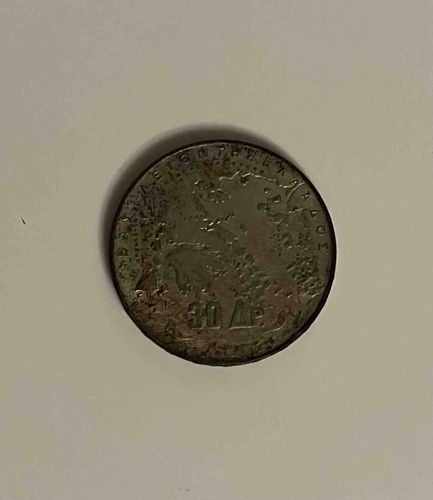
1963 30 Greek drachma

AI analysis below

AI appraisal

AI analysis & estimate

AI-Generated · Verify before acting

Everything below is generated by AI for informational purposes only. AI can make mistakes — the AI may misidentify items or misattribute them (artist, maker, brand, designer, origin, era). This is not an official valuation and should not be used for insurance, sale, tax, estate, legal, or lending purposes — or any decision requiring a certified appraisal. It is not an authoritative claim about any person, brand, or rights holder — do not share or rely on it as a factual statement about a third party. Always consult qualified professionals before making financial decisions.

Note

This analysis also relies on unverified notes provided by the user, which may be incomplete or inaccurate and could affect the result.

Read the full disclaimer

AI Identification

·Not independently authenticated·Verify before acting

1963 Greek 30 Drachma Coin (Phoenix rising from flames)

Coin

AI Estimated Value

·Not an official valuation·Verify before acting

$1-3

As of May 27, 2026

AI Item Analysis

·AI can make mistakes·Verify before acting
This is a circular metallic coin, likely made of a base metal alloy given its appearance. The dominant color is a dull, tarnished grey-brown with visible areas of green and reddish discoloration, indicative of heavy oxidation and environmental exposure. The surface exhibits significant wear and pitting, particularly noticeable in the central design elements, suggesting a long period of circulation or poor storage. Despite the wear, the obverse (visible side) clearly displays the inscription "30 ΔΡΧ." (30 Drachma) in the lower central portion, confirming its denomination. Above this, a stylized depiction of a phoenix rising from flames is discernible, a common motif on Greek coinage representing rebirth or renewal. Around the periphery of the coin, partial Greek lettering can be observed, though much of it is obscured by wear and tarnish. The edge of the coin appears reeded or milled, but the exact pattern is not clear due to the image quality and condition. The patination is uneven, with concentrated areas of green corrosion, which would be considered damage in numismatic terms. There are no apparent major repairs, but the overall condition is poor, significantly affecting its clarity and aesthetic appeal. Given the context, this coin is from 1963.

AI Appraisal Report

·AI can make mistakes·Verify before acting
I have examined the provided image and information for this 1963 Greek 30 Drachma coin. Visually, the coin's condition is poor, characterized by significant tarnish, heavy oxidation, and concentrated areas of green corrosion. The surface exhibits considerable wear and pitting, particularly on the central Phoenix motif and peripheral lettering. This level of deterioration significantly impacts its numismatic appeal and value. Authenticity, based solely on this image, appears consistent with known examples of the 1963 30 Drachma coin. The '30 ΔΡΧ.' inscription and the stylized Phoenix are discernible despite the wear. From a market perspective, 1963 Greek 30 Drachma coins are relatively common, and specimens in this condition typically do not command high prices. Demand is generally low for heavily worn and corroded examples, as collectors prefer coins with clear details and original luster. Rarity is not a factor for this specific issue in this condition. The primary factors impacting value are the severe environmental damage and extensive wear. Comparables in similar poor condition usually retail for minimal amounts, often as 'filler' coins or for their base metal scrap value, although the latter is negligible for this particular coin. For full and definitive authenticity verification, a physical in-hand examination would be necessary to assess details such as weight, diameter, thickness, specific gravity, and edge characteristics that are not clear from the image. Microscopic analysis could also confirm the nature of the corrosion. While the image provides a good indication, I cannot definitively rule out highly deceptive counterfeits without a physical inspection or, ideally, provenance documentation from a reputable source.

Get your items appraised

Instant estimates of your treasures with AI-powered appraisals

Browse More Appraisals