AI estimate as of October 17, 2025 · verify with a professional before acting
AI-Generated · Verify before acting
Everything on this page is generated by AI for informational purposes only. AI can make mistakes — the AI may misidentify items or misattribute them (artist, maker, brand, designer, origin, era). This is not an official valuation and should not be used for insurance, sale, tax, estate, legal, or lending purposes — or any decision requiring a certified appraisal. It is not an authoritative claim about any person, brand, or rights holder — do not share or rely on it as a factual statement about a third party. Always consult qualified professionals before making financial decisions.
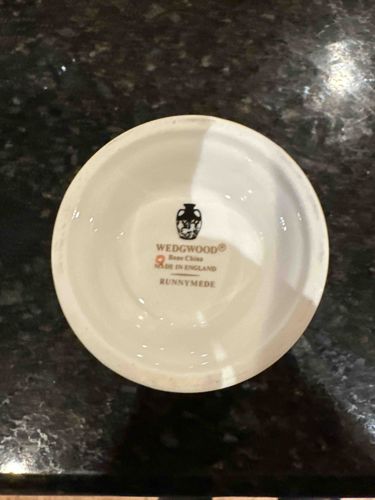
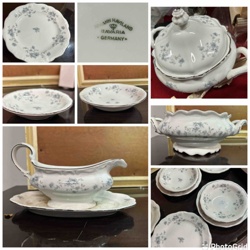
This item appears to be the underside of a white ceramic saucer or small dish. The primary material is identifiable as bone china, indicated by the printed marking. The visible surface is a pristine white, suggesting a clean, glossy glaze typical of high-quality porcelain. The shape is circular with a slightly raised rim, creating a shallow concave center. The central feature is the manufacturer's mark, crucial for identification. This mark includes the iconic black urn or vase logo, commonly associated with Wedgwood. Below the logo, the word 'WEDGWOOD®' is printed in black, followed by 'Bone China' and 'MADE IN ENGLAND' in smaller script, also in black. A distinctive red floral or stylized mark is also present, enhancing the overall presentation of the backstamp. The pattern name 'RUNNYMEDE' is printed in black block letters at the bottom of the mark. There are no visible signs of wear, chips, cracks, repairs, or significant patina on this visible underside, suggesting the item is in excellent or near-mint condition. The quality indicators are strong, given the reputable manufacturer and the clear, well-executed backstamp. Based on the 'MADE IN ENGLAND' notation and the 'Runnymede' pattern, which was introduced in 1971 and discontinued in 2006, the item likely dates from the latter half of the 20th century. The craftsmanship is evident in the smooth, even surface and the precise application of the transferware mark.
AI Appraisal Report
I have examined the image of this Wedgwood 'Runnymede' Bone China saucer or small dish (underside). Based on the clear manufacturer's mark, including the iconic black urn logo, 'WEDGWOOD®', 'Bone China', 'MADE IN ENGLAND', and the 'RUNNYMEDE' pattern name, I assess this item to be authentic Wedgwood. The visible surface is pristine white, with no apparent chips, cracks, repairs, or significant wear, indicating excellent to near-mint condition. The crispness of the transferware mark further supports this assessment. The 'Runnymede' pattern was produced between 1971 and 2006, placing this item within the late 20th to early 21st century. While the condition appears superb, this is only the underside, and a full assessment of the top surface, rim, and overall integrity would require physical inspection. There are no immediate red flags for authenticity from this image alone. However, a hands-on examination would allow for closer inspection of the glaze, weight, and any subtle imperfections that might not be visible in a photograph, which are crucial for full authentication. Detailed provenance documentation or scientific testing is not typically required for pieces of this nature and value, but would, of course, offer absolute certainty. Demand for classic Wedgwood patterns like 'Runnymede' remains steady among collectors and those seeking quality tableware. However, individual saucers or small dishes, particularly open stock pieces, are not typically rare. Comparables for individual bone china saucers from well-known manufacturers in similar condition usually fall within an accessible price range. Factors impacting value are primarily the excellent condition and the reputable Wedgwood name; however, its individual nature rather than part of a complete set limits its top-end value. Based on these considerations, I estimate the appraisal value to be between $15 and $25.