AI estimate as of August 26, 2026 · verify with a professional before acting
AI-Generated · Verify before acting
Everything on this page is generated by AI for informational purposes only. AI can make mistakes — the AI may misidentify items or misattribute them (artist, maker, brand, designer, origin, era). This is not an official valuation and should not be used for insurance, sale, tax, estate, legal, or lending purposes — or any decision requiring a certified appraisal. It is not an authoritative claim about any person, brand, or rights holder — do not share or rely on it as a factual statement about a third party. Always consult qualified professionals before making financial decisions.
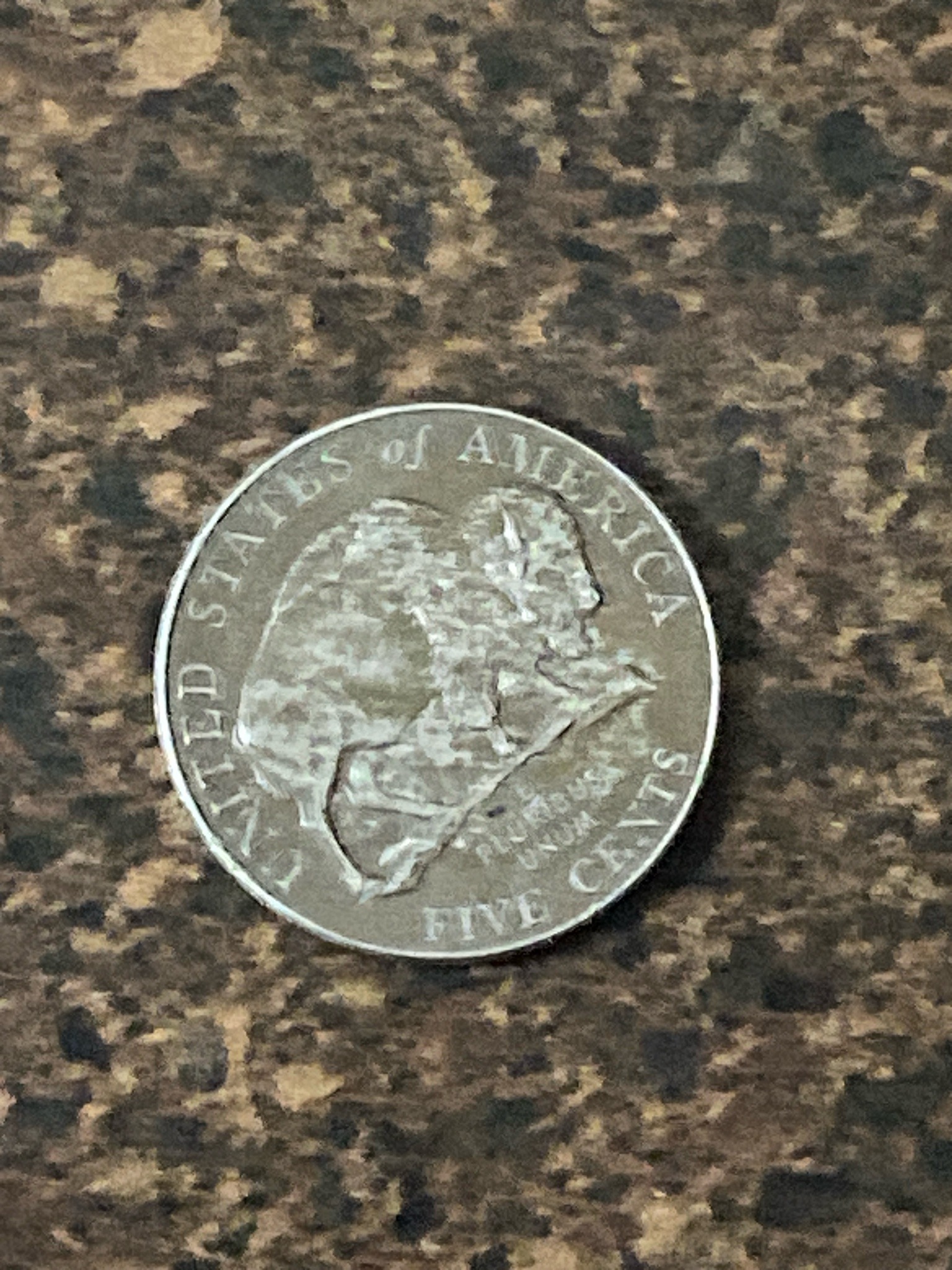
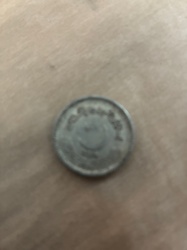
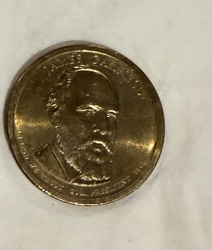
This item is a circular United States five-cent coin commonly known as a Buffalo Nickel or Indian Head nickel, featuring the reverse side design. The physical characteristics include a metallic composition typical of standard cupro-nickel or nickel-brass alloy used during the early to mid-20th century, displaying a dull silvery-gray coloration with noticeable signs of wear, surface blemishes, and accumulated patina across the fields and devices. Prominently visible in relief is the American bison standing on a mound, surrounded by capitalized text reading 'UNITED STATES OF AMERICA' along the upper periphery, 'FIVE CENTS' along the lower border, and the motto 'E PLURIBUS UNUM' positioned above the denomination. The overall craftsmanship and design elements are consistent with the classic United States coin series minted between 1913 and 1938, designed by sculptor James Earle Fraser. The identification rests strictly upon the clearly legible lettering and the iconic central motif of the bison as observed in the image, though the piece remains unauthenticated and ungraded.
AI Appraisal Report
Based on what I can see in the provided image, this piece displays visual characteristics consistent with a United States Buffalo Nickel, featuring the classic reverse design by James Earle Fraser. However, I must emphasize that physical examination is required to evaluate the piece properly, and I can't verify from a photo alone whether the item is an uncirculated issue, a circulated specimen, or a modern reproduction. The metallic composition, exact weight, and microscopic surface details cannot be determined through an image, meaning this identification remains a working assumption. Assuming the attribution is correct and the piece is a standard, circulated United States Buffalo Nickel from the 1913-1938 series with noticeable wear and patina, typical market behavior for common-date, worn specimens places the value within a modest range of $2 to $15. If the piece is unauthenticated or turns out to be a replica, copy, or modern novelty reproduction, the value would be negligible, likely limited to a fraction of a dollar. Conversely, if it were a rare, high-grade key-date variety, the value could increase significantly, though such an assessment requires physical inspection. To confirm the identity, grade, and actual market standing of the piece, an in-person examination by a professional numismatist and professional third-party coin grading would be necessary.