AI estimate as of September 3, 2026 · verify with a professional before acting
AI-Generated · Verify before acting
Everything on this page is generated by AI for informational purposes only. AI can make mistakes — the AI may misidentify items or misattribute them (artist, maker, brand, designer, origin, era). This is not an official valuation and should not be used for insurance, sale, tax, estate, legal, or lending purposes — or any decision requiring a certified appraisal. It is not an authoritative claim about any person, brand, or rights holder — do not share or rely on it as a factual statement about a third party. Always consult qualified professionals before making financial decisions.
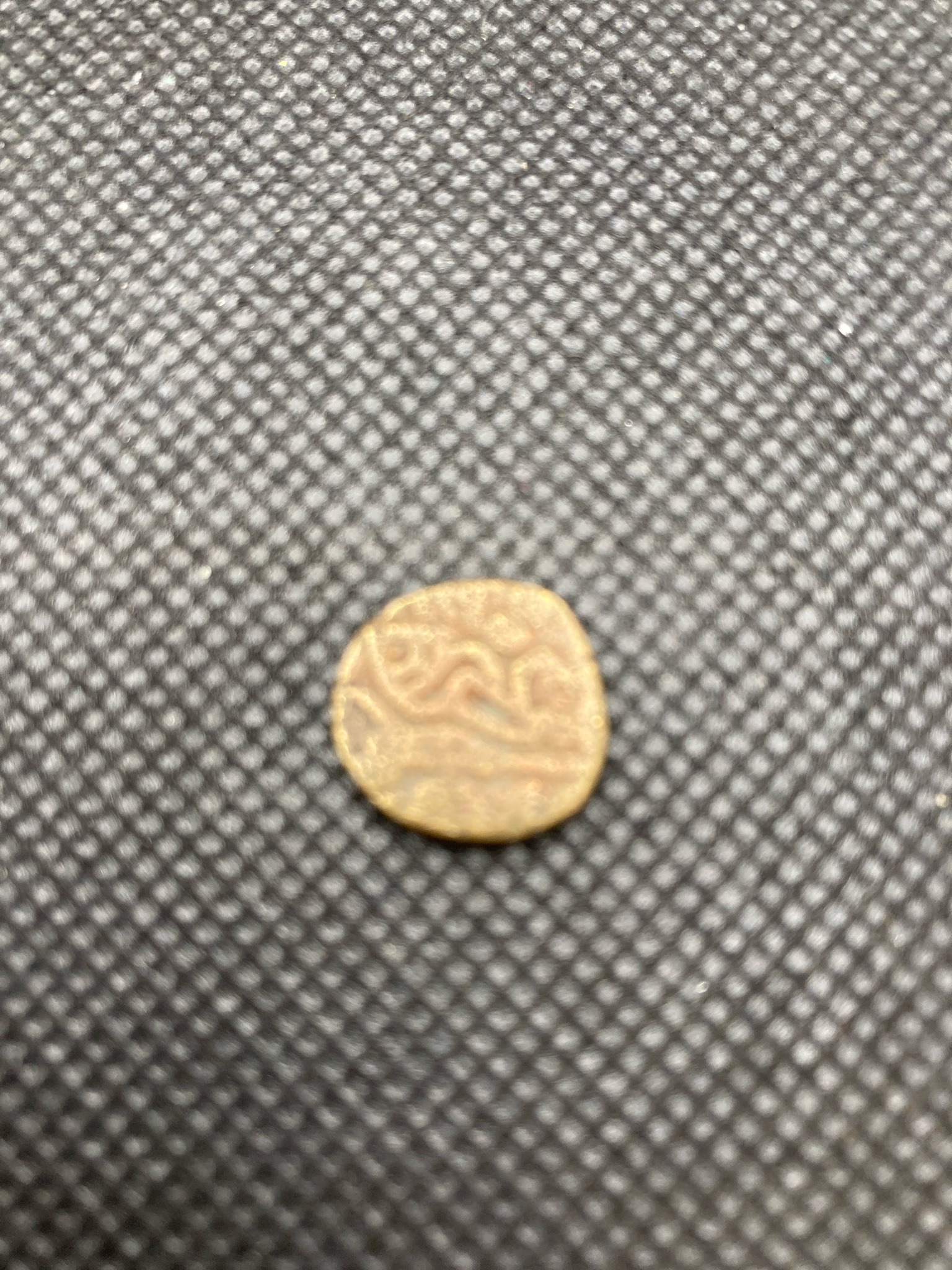
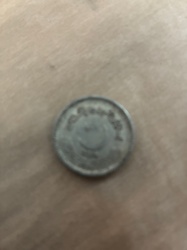
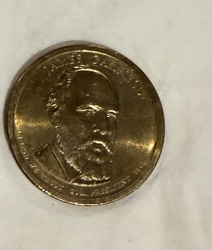
The provided image displays a small, roughly circular metallic object resting on a textured, patterned grey surface. The object exhibits a dull, gold-to-brownish hue, consistent with weathered bronze or copper-alloy artifacts. Due to the photographic angle, distance, and blur, the physical dimensions and exact weight cannot be determined from the visual evidence alone. The surface shows notable wear, oxidation, and a weathered patina, with soft, indistinct details across the face of the piece. There appears to be a raised, serpentine or abstract embossed design or script winding across the central portion, though the specific lettering, symbols, or iconography are difficult to read with precision. There are no clearly legible maker marks, dates, or signatures directly readable in the current image. The visual characteristics are consistent with ancient or medieval coinage, potentially originating from a historical numismatic tradition, though this remains an unverified hypothesis lacking proper in-person physical examination, metallurgical testing, or expert archival attribution. The identification is based strictly on the general shape, metallic appearance, and surface degradation observed in the photograph.
AI Appraisal Report
Based on what I can see in the provided photograph, the object appears to be a small, roughly circular metallic piece exhibiting a dull gold-to-brownish hue, consistent with weathered bronze or copper-alloy artifacts. I observe a weathered patina and soft, indistinct details with a raised, abstract or serpentine design across the central portion. However, I cannot verify the exact physical dimensions, weight, alloy composition, or specific iconography from a photo alone, and I would need a physical inspection to confirm these aspects. Assuming this hypothesis of an ancient or medieval bronze coin is correct, comparable uncertified numismatic items of this general type typically trade within a range of $100 to $300, depending heavily on preservation state and precise historical attribution. The heavy surface wear and indistinct details negatively impact the potential market value. Furthermore, I cannot assert authenticity based solely on visual evidence. To establish whether this piece is a genuine historical artifact, a reproduction, a replica, or a modern copy, one would need in-person numismatic examination, metallurgical composition testing, and expert archival attribution. If the item were determined to be a modern reproduction or replica rather than an ancient piece, the market value would drop significantly, typically to a nominal decorative range of $10 to $30.