AI Appraisal Estimate

AI-generated estimates · not official valuations

From the user

What was submitted

Photo and notes provided by the user — not generated by AI

Submitted item photo
Submitted photo · June 22, 2026

User's notes

No additional notes provided.

AI analysis below

AI appraisal

AI analysis & estimate

AI-Generated · Verify before acting

Everything below is generated by AI for informational purposes only. AI can make mistakes — the AI may misidentify items or misattribute them (artist, maker, brand, designer, origin, era). This is not an official valuation and should not be used for insurance, sale, tax, estate, legal, or lending purposes — or any decision requiring a certified appraisal. It is not an authoritative claim about any person, brand, or rights holder — do not share or rely on it as a factual statement about a third party. Always consult qualified professionals before making financial decisions.

Read the full disclaimer

AI Identification

·Not independently authenticated·Verify before acting

Antique Punched Tin Pie Safe

Antique Furniture / Americana

AI Estimated Value

·Not an official valuation·Verify before acting

$650.00 - $950.00

As of June 22, 2026

AI Item Analysis

·AI can make mistakes·Verify before acting
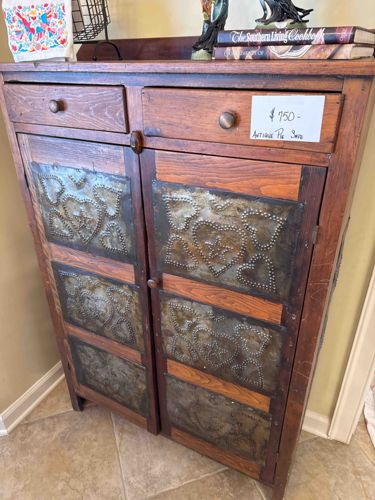
This is an antique American pie safe, a utilitarian kitchen storage piece likely dating from the mid-to-late 19th century. Constructed from a hardwood, possibly oak or chestnut based on the prominent grain patterns, the piece features two side-by-side drawers at the top with simple wooden pull knobs. Below the drawers are two large vertical doors, each inset with three hand-punched tin panels designed for ventilation. These tin panels feature a decorative folk-art motif of hearts surrounding a central five-pointed star. The punched holes served the practical purpose of allowing air to circulate while keeping pests and insects out of stored baked goods. The wood displays a warm, medium-brown oiled or varnished finish with a rich patina developed over decades of use. The construction is robust, featuring square-cut nails or early joinery typical of the period. Visible condition issues include scattered surface scratches, minor indentations, and significant oxidation and darkening on the tin panels, which is expected and desirable for an authentic antique. The right drawer currently bears a handwritten price tag of $750. The piece stands on integrated straight legs, common for country furniture of this era. Its craftsmanship reflects a blend of functional necessity and ornamental folk design, making it a highly collectible piece of Americana.
AI Appraisal Report

·AI can make mistakes·Verify before acting
Based on my visual examination of this mid-to-late 19th-century pie safe, I assess it to be an authentic piece of American country furniture. The visible wood grain suggests oak or possibly chestnut, showcasing a patina consistent with age, though the finish appears to be an older refinish rather than the original surface. The primary value driver here is the punched tin work; the motif featuring hearts and five-pointed stars is a desirable folk art pattern, often associated with Pennsylvania or Midwestern origin. The oxidation on the tin panels is heavy but uniform, suggesting genuine age rather than artificial aging agents. The current market for Americana and primitive furniture has softened from its peak but remains steady for pieces with distinct character. Comparable 12-tin safes (6 per door) often realize higher prices, but this 6-tin configuration (3 per door) with drawers is a solid middle-market example. The handwritten tag of $750 is well-positioned within current retail expectations. Condition issues such as surface scratches and minor indentations are acceptable for utilitarian pieces of this era. However, without physical inspection, I cannot verify the integrity of the secondary woods (drawer bottoms and backboards) or confirm the joinery techniques (dovetailing vs. butt joints). I am also unable to inspect for active woodworm or structural repairs to the legs. To fully authenticate the specific region of origin or maker, a review of the internal joinery and a magnified inspection of the tin punch technique would be required. Assuming the frame is structurally sound and the drawers retain their original bottoms, this piece represents a classic example of functional 19th-century craftsmanship.

Get your items appraised

Instant estimates of your treasures with AI-powered appraisals

Browse More Appraisals