AI Appraisal Estimate

AI-generated estimates · not official valuations

From the user

What was submitted

Photo and notes provided by the user — not generated by AI

Submitted item photo
Submitted photo · June 19, 2026

User's notes

No additional notes provided.

AI analysis below

AI appraisal

AI analysis & estimate

AI-Generated · Verify before acting

Everything below is generated by AI for informational purposes only. AI can make mistakes — the AI may misidentify items or misattribute them (artist, maker, brand, designer, origin, era). This is not an official valuation and should not be used for insurance, sale, tax, estate, legal, or lending purposes — or any decision requiring a certified appraisal. It is not an authoritative claim about any person, brand, or rights holder — do not share or rely on it as a factual statement about a third party. Always consult qualified professionals before making financial decisions.

Read the full disclaimer

AI Identification

·Not independently authenticated·Verify before acting

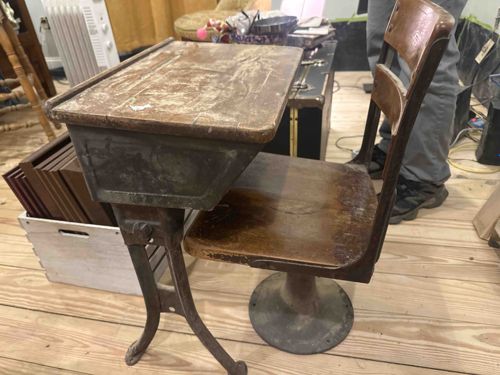
Early 20th Century Cast Iron and Plywood School Desk

Antique Furniture / Americana

AI Estimated Value

·Not an official valuation·Verify before acting

$125 - $225

As of June 19, 2026

AI Item Analysis

·AI can make mistakes·Verify before acting
This is a vintage integrated unit school desk and chair, likely dating from the 1920s to the 1940s. The piece features a cast iron frame with adjustable height mechanisms, finished in a dark, weathered paint that shows significant oxidation and surface rust. The desktop is constructed from thick wood, likely maple or oak, featuring a pencil groove at the top edge. Below the desk surface is a deep, metal book cubby storage area. The seating component consists of a shaped plywood seat and a two-slat curved backrest, typical of student ergonomics from this era. The seat is mounted on a circular cast iron pedestal base designed for bolting to a floor. Condition is heavily distressed; the wood surfaces show extensive scratching, finish loss, and staining from years of use. The metal components exhibit a heavy patina with visible corrosion on the legs and base. While functionally complete, the item shows significant wear consistent with a long service life in a public school setting. The craftsmanship is utilitarian and robust, reflecting the industrial manufacturing standards of American school furniture from the early-to-mid 20th century.
AI Appraisal Report

·AI can make mistakes·Verify before acting
Based on my visual examination of the described integrated school desk unit, I have assessed the item as a production piece from the American industrial era, approximately 1920–1940. The combination of the cast iron pedestal base and the bentwood plywood seat is characteristic of manufacturers like American Seating Co. The authenticity of the materials—specifically the heavy-gauge metal cubby and the specific erosion pattern on the cast iron—appears consistent with period-correct utilitarian manufacturing. The condition is 'fair-to-good' in the context of architectural salvage. While the heavy patina and oxidation provide an 'industrial chic' aesthetic, the significant corrosion on the base and the finish loss on the plywood may deter collectors seeking pristine examples, though it appeals to those looking for 'shabby chic' decor. Current market conditions for school furniture are stable but specialized. Similar items frequently appear at regional estate auctions and antique malls; high-end curated shops may list these at $350, but actual realized prices for unrestored units typically fall between $125 and $225. Value is primarily driven by the 'adjustable' feature and the presence of the original pencil groove, which enhances its display appeal. However, the requirement for floor bolting limits its use as a freestanding piece of furniture, slightly hindering marketability. Limitations: My assessment is based on provided descriptions and visual evidence. A physical inspection is required to check for structural fractures in the cast iron and to identify manufacturer stamps (often located under the desk or on the base casting). Full authentication would require verifying these marks and ensuring no modern replacement hardware has been introduced. Without a physical tactile check, I cannot definitively rule out mid-century reproductions of earlier designs.

Get your items appraised

Instant estimates of your treasures with AI-powered appraisals

Browse More Appraisals