Vintage German Pewter (Zinn) Relief-Decorated Oval Serving Bowl
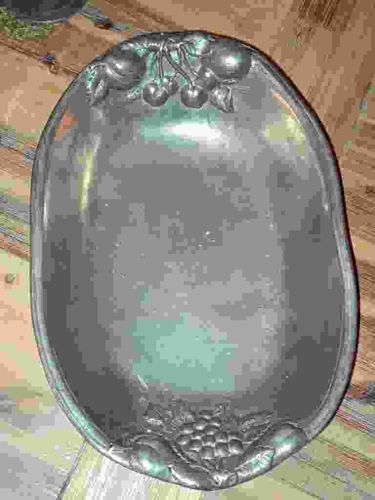
This is an oval serving bowl crafted from pewter, traditionally referred to as 'Zinn' in German cultures. The piece features a distinct relief-style ornamentation at the head and foot of the oval, depicting various fruit clusters including cherries, grapes, and leaves. The bowl exhibits a deep, matte grey patina characteristic of aged pewter, with notable oxidation and surface staining that indicates historical use. The construction appears to be cast metal with hand-finished decorative elements. In terms of condition, there is visible surface wear, minor scratches, and potential pitting consistent with mid-20th-century metalware. The rim follows a slightly irregular, organic curve that suggests a Jugendstil (Art Nouveau) influence, though it likely dates to the mid-century revival period. While no maker's marks are visible in the top or side views, such pieces often bear stamps on the underside indicating the tin content (e.g., '95% Zinn'). The depth of the relief work indicates a high-quality casting process, and the weight distribution appears typical for functional tableware decorative pieces.
AI-Generated Appraisal Disclaimer
Estimated Value
$45.00 - $85.00
Basic Information
Category
Antique and Vintage Metalware
Appraised On
March 19, 2026
Estimated Value
$45.00 - $85.00
Additional Details Provided By Owner
User Provided Information
Zinn
Item Description
This is an oval serving bowl crafted from pewter, traditionally referred to as 'Zinn' in German cultures. The piece features a distinct relief-style ornamentation at the head and foot of the oval, depicting various fruit clusters including cherries, grapes, and leaves. The bowl exhibits a deep, matte grey patina characteristic of aged pewter, with notable oxidation and surface staining that indicates historical use. The construction appears to be cast metal with hand-finished decorative elements. In terms of condition, there is visible surface wear, minor scratches, and potential pitting consistent with mid-20th-century metalware. The rim follows a slightly irregular, organic curve that suggests a Jugendstil (Art Nouveau) influence, though it likely dates to the mid-century revival period. While no maker's marks are visible in the top or side views, such pieces often bear stamps on the underside indicating the tin content (e.g., '95% Zinn'). The depth of the relief work indicates a high-quality casting process, and the weight distribution appears typical for functional tableware decorative pieces.
Related Tags
Get Your Items Appraised
Instant estimates of your treasures with AI-powered instant appraisals