Vintage Pewter Footed Mug with Scroll Handle
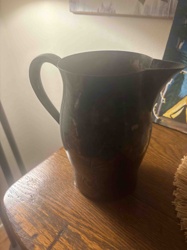
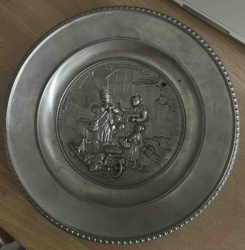
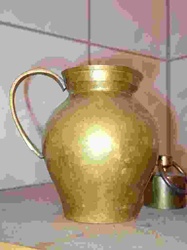
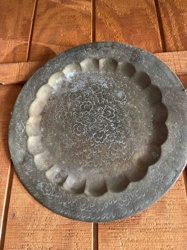
This item is a traditional footed mug or chalice-style drinking vessel, likely manufactured from pewter or a similar lead-free alloy, characterized by its muted, matte grey metallic finish. The piece features a conical, tulip-shaped body that tapers down to a rounded base before resting on a flared, tiered pedestal foot. A distinctive feature is the ornate, cast scroll handle attached to the side, exhibiting a 'C' or 'S' curve with a decorative thumb rest and a lower terminal point. The body is accented with horizontal incised circumferential lines—two near the rim and two near the midpoint—adding a subtle geometric texture to the design. In terms of condition, the piece shows significant patina consistent with age, including surface oxidation, small scuffs, and minor pitting, particularly visible at the junction where the body meets the foot. There are no visible maker's marks or hallmarks on the exterior, though these are typically found on the underside of the base. Based on the craftsmanship and handle style, the item likely dates to the mid-20th century, echoing colonial revival or early American pewter styles. The construction appears sturdy, though the metal shows characteristic softness reflected in the slight surface irregularities.
AI-Generated Appraisal Disclaimer
Estimated Value
$45 - $65
Basic Information
Category
Antique and Vintage Metalware
Appraised On
March 19, 2026
Estimated Value
$45 - $65
Item Description
This item is a traditional footed mug or chalice-style drinking vessel, likely manufactured from pewter or a similar lead-free alloy, characterized by its muted, matte grey metallic finish. The piece features a conical, tulip-shaped body that tapers down to a rounded base before resting on a flared, tiered pedestal foot. A distinctive feature is the ornate, cast scroll handle attached to the side, exhibiting a 'C' or 'S' curve with a decorative thumb rest and a lower terminal point. The body is accented with horizontal incised circumferential lines—two near the rim and two near the midpoint—adding a subtle geometric texture to the design. In terms of condition, the piece shows significant patina consistent with age, including surface oxidation, small scuffs, and minor pitting, particularly visible at the junction where the body meets the foot. There are no visible maker's marks or hallmarks on the exterior, though these are typically found on the underside of the base. Based on the craftsmanship and handle style, the item likely dates to the mid-20th century, echoing colonial revival or early American pewter styles. The construction appears sturdy, though the metal shows characteristic softness reflected in the slight surface irregularities.
Get Your Items Appraised
Instant estimates of your treasures with AI-powered instant appraisals