AI identification & appraisal estimate

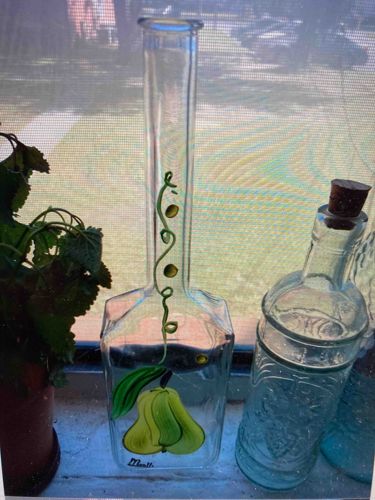
Hand-Painted Glass Pear Cruet (MOD. DEP. A 2)

Submitted photo of Hand-Painted Glass Pear Cruet (MOD. DEP. A 2)
Photo submitted by the user — not generated by AI

User's notes

Glass cruet,pears design, MOD. DEP. A 2 50cL3 135mm, signed lower left

These notes were written by the person who submitted this item. Appraiser.AI has not verified them, and the AI's identification and estimate may rely on them.

AI Estimated Value

Not an official valuation

$45.00 - $65.00

AI estimate as of March 23, 2026 · verify with a professional before acting

AI-Generated · Verify before acting

Everything on this page is generated by AI for informational purposes only. AI can make mistakes — the AI may misidentify items or misattribute them (artist, maker, brand, designer, origin, era). This is not an official valuation and should not be used for insurance, sale, tax, estate, legal, or lending purposes — or any decision requiring a certified appraisal. It is not an authoritative claim about any person, brand, or rights holder — do not share or rely on it as a factual statement about a third party. Always consult qualified professionals before making financial decisions.

This analysis also relies on unverified notes provided by the user, which may be incomplete or inaccurate and could affect the result.

Read the full disclaimer

AI Item Analysis

This is a vintage or modern-specialty glass cruet used for storing liquids like olive oil or vinegar. The bottle features a distinct silhouette with a wide, rectangular square-shaped base that transitions into a tall, slender columnar neck. It is constructed from clear, transparent glass. The primary decorative element is a hand-painted botanical design featuring a vibrant green and yellow pear at the base, topped with a curling vine that extends vertically up the neck. The painting style is expressive, using thick brushstrokes to create highlights and depth within the fruit and foliage. Technically, the bottle is marked 'MOD. DEP.' (Modèle Déposé, indicating a registered design) and 'A 2' with '50 cL' capacity and a base width of '135 mm'. The glass appears to be in good structural condition without visible chips or cracks. The painted surface shows vibrant colors, though there is potential for light surface wear typical of decorative kitchenware. A signature is present in the lower-left corner of the painted area, adding to its unique craftsmanship. The quality is indicative of European artisanal production, likely from the late 20th century, specifically designed for decorative Mediterranean-style kitchen aesthetics.
AI Appraisal Report

I have conducted a visual examination of the Hand-Painted Glass Pear Cruet, marked 'MOD. DEP. A 2'. The item appears to be in excellent used condition, with the paint retaining its vibrancy and the transparent glass showing no visible chips, cracks, or significant clouding. The 'MOD. DEP.' marking confirms its origin as a registered European design, likely Italian or French, typical of high-end Mediterranean-style kitchenware from the late 1990s to early 2000s. The market for decorative culinary glass is currently stable, with demand driven primarily by home decorators and collectors of 'Tuscan' or 'Provencal' aesthetics. Comparable hand-painted cruets by European artisanal brands often retail between $40 and $80 depending on the complexity of the artwork. The presence of a signature in the lower-left corner enhances its value over mass-produced alternatives, as it indicates individual craftsmanship rather than a simple decal application. Factors affecting value include the 50cL capacity, which is a desirable practical size, and the distinct rectangular base which provides stability. However, as this is a functional item, its value is capped by the availability of modern equivalents. Limitations: My assessment is based purely on digital images. Without a physical inspection, I cannot verify the molecular stability of the paint or detect minute 'flea bite' chips on the rim or base. To reach a definitive authentication, an in-person examination would be required to verify the glass weight and texture. For an absolute valuation, provenance regarding the specific artist’s signature would be necessary to determine if the artisan holds specific individual renown in the decorative arts market.

Keep exploring

More kitchenware & decorative glass appraisals

Get your items appraised

Instant AI-powered appraisal estimates from a photo

Browse More Appraisals