AI Appraisal Estimate

AI-generated estimates · not official valuations

From the user

What was submitted

Photo and notes provided by the user — not generated by AI

Submitted item photo
Submitted photo · June 12, 2026

User's notes

No additional notes provided.

AI analysis below

AI appraisal

AI analysis & estimate

AI-Generated · Verify before acting

Everything below is generated by AI for informational purposes only. AI can make mistakes — the AI may misidentify items or misattribute them (artist, maker, brand, designer, origin, era). This is not an official valuation and should not be used for insurance, sale, tax, estate, legal, or lending purposes — or any decision requiring a certified appraisal. It is not an authoritative claim about any person, brand, or rights holder — do not share or rely on it as a factual statement about a third party. Always consult qualified professionals before making financial decisions.

Read the full disclaimer

AI Identification

·Not independently authenticated·Verify before acting

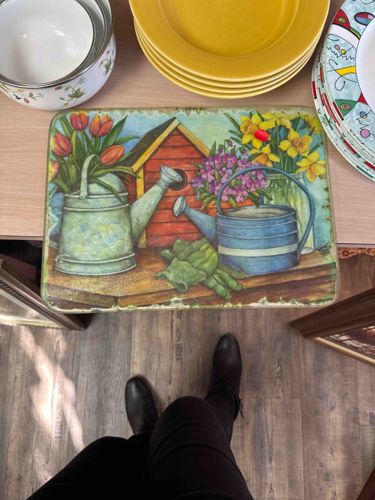
Tempered Glass Cutting Board with Garden Motif

Kitchenware & Decorative Housewares

AI Estimated Value

·Not an official valuation·Verify before acting

$5.00 - $12.00

As of June 12, 2026

AI Item Analysis

·AI can make mistakes·Verify before acting
This is a rectangular tempered glass cutting board, likely measuring approximately 12 by 15 inches. The item serves both a functional and decorative purpose, featuring a vibrant, folk-art style illustration on the reverse side of the glass. The imagery depicts a rustic gardening scene with iconic elements: a large galvanized watering can filled with red and orange tulips, a smaller blue watering can, a pair of green gardening gloves, and a background featuring a red garden shed and yellow daffodils. The colors are saturated with a painterly texture, printed onto the underside of textured 'pebble-finish' glass which provides a non-slip surface for food preparation. The edges are rounded for safety. Regarding condition, there is significant decorative wear along the perimeter edges where the printed backing material appears to be peeling, chipped, or delaminating from the glass substrate, which is a common issue with vintage or lower-end glass kitchenware of this type. This suggests an age likely from the late 1990s or early 2000s. There are no visible cracks or deep scratches on the glass surface itself, though a red price tag or sticker is present in the upper right quadrant, indicating it is currently in a secondary retail or thrift environment. The craftsmanship is mass-produced rather than artisanal.
AI Appraisal Report

·AI can make mistakes·Verify before acting
I have conducted a visual examination of the tempered glass cutting board featuring a garden motif. Based on the aesthetic style and construction—specifically the 'pebble-finish' glass and the folk-art printed backing—this item is a mass-produced piece of houseware dating to the late 1990s or early 2000s. The condition is fair to poor for a decorative collectible; I observe significant delamination and peeling of the printed graphic along the edges, likely caused by moisture infiltration and age. While the glass surface remains intact, this type of wear cannot be repaired, significantly diminishing its utilitarian hygiene and decorative appeal. The market for vintage glass cutting boards is saturated with similar garden themes (comparables include brands like CounterArt or Farberware), which typically retail for under $15 in excellent condition. The rarity of this specific design is low, and current collector demand for mass-market glass kitchenware of this era is minimal compared to artisanal or mid-century glass. The presence of a secondary market price tag further reinforces its status as a common thrift-store item. Critically, this appraisal is based on photographic evidence alone. I cannot confirm the integrity of the tempered glass or the presence of microscopic heat fractures without a physical inspection. Furthermore, a physical examination would be required to rule out lead-based pigments often found in older printed kitchenware. No formal provenance was provided, though for an item of this class, documentation rarely affects valuation. A full authentication would require verifying the manufacturer's mark, often found on the original packaging or a now-missing corner sticker.

Get your items appraised

Instant estimates of your treasures with AI-powered appraisals

Browse More Appraisals