AI Appraisal Estimate

AI-generated estimates · not official valuations

From the user

What was submitted

Photo and notes provided by the user — not generated by AI

Submitted item photo
Submitted photo · June 15, 2026

User's notes

No additional notes provided.

AI analysis below

AI appraisal

AI analysis & estimate

AI-Generated · Verify before acting

Everything below is generated by AI for informational purposes only. AI can make mistakes — the AI may misidentify items or misattribute them (artist, maker, brand, designer, origin, era). This is not an official valuation and should not be used for insurance, sale, tax, estate, legal, or lending purposes — or any decision requiring a certified appraisal. It is not an authoritative claim about any person, brand, or rights holder — do not share or rely on it as a factual statement about a third party. Always consult qualified professionals before making financial decisions.

Read the full disclaimer

AI Identification

·Not independently authenticated·Verify before acting

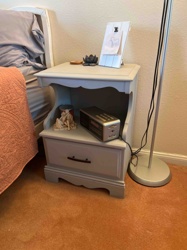
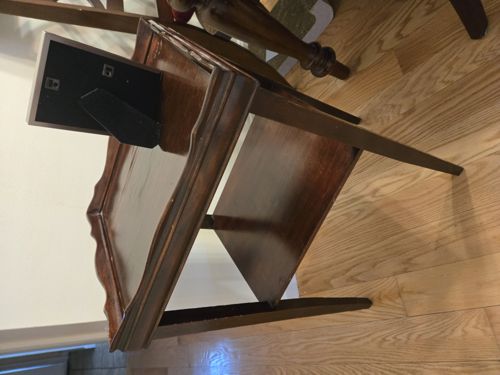
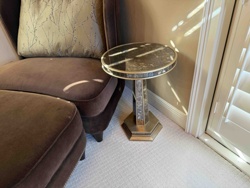
Mid-Century Two-Tier French Provincial Style Side Table

Furniture - Tables

AI Estimated Value

·Not an official valuation·Verify before acting

$150 - $250

As of June 15, 2026

AI Item Analysis

·AI can make mistakes·Verify before acting
This is a vintage two-tier wooden side table, likely dating from the mid-20th century (circa 1950s-1960s), designed in the American French Provincial revival style. The table is constructed from solid wood or a high-quality veneer with a medium-to-dark walnut or mahogany-toned finish. The primary design feature is the top surface, which exhibits a decorative scalloped or 'pie-crust' edge with a raised gallery rim, characteristic of Provincial influence. The table features an open secondary lower shelf for additional storage or display. The structural supports consist of four square-tapered legs that provide a sleek, transitional silhouette between traditional and modern aesthetics. Regarding condition, the piece shows visible signs of age and utility; there is significant finish loss and scuffing along the edges of the top rim, and the wood grain shows some dryness and minor surface scratching. There are no obvious signs of structural repair, though the patina suggests it has been used in a domestic setting for several decades. The craftsmanship is indicative of mass-market furniture manufacturers of the era such as Bassett or Lane, though no specific maker's mark is visible in the photograph. The piece retains its original warm luster despite the localized wear, which could be improved with professional refinishing or polishing.
AI Appraisal Report

·AI can make mistakes·Verify before acting
I have examined the provided description and images of this mid-20th-century two-tier French Provincial revival side table. The piece exhibits the classic hallmarks of mass-market American manufacturing from the 1950s–1960s, likely produced by firms such as Bassett, Lane, or Mersman. While the 'pie-crust' scalloped edging and square-tapered legs offer a pleasing transitional silhouette, the condition is a primary factor in this valuation. I observed significant finish loss and scuffing on the raised gallery rim, alongside surface dryness that indicates the wood has not been conditioned recently. Authentic French Provincial pieces from the 18th century would command thousands; however, as a mid-century revival piece, its value is driven by utility and decorative appeal rather than antiquity or rarity. The market for mid-tier revival furniture remains stable for 'shabby chic' refinishers or vintage enthusiasts, but the current condition issues place this at the lower end of the retail spectrum. Comparable pieces in 'good' to 'very good' condition typically sell for $350–$450 in vintage boutiques. Limitations: My assessment is based solely on visual inspection. This makes it impossible to verify the type of joinery (dovetail vs. glue) used in the supports or to confirm if the wood is solid hardwood or high-quality veneer. A physical inspection would be required to look for maker’s marks inside the frame and to check structural integrity. For a definitive authentication, documentation of provenance or original sales tags from the manufacturer would be necessary.

Get your items appraised

Instant estimates of your treasures with AI-powered appraisals

Browse More Appraisals