AI Appraisal Estimate

AI-generated estimates · not official valuations

From the user

What was submitted

Photo and notes provided by the user — not generated by AI

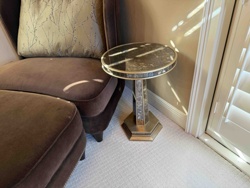
Submitted item photo
Submitted photo · June 12, 2026

User's notes

Good

AI analysis below

AI appraisal

AI analysis & estimate

AI-Generated · Verify before acting

Everything below is generated by AI for informational purposes only. AI can make mistakes — the AI may misidentify items or misattribute them (artist, maker, brand, designer, origin, era). This is not an official valuation and should not be used for insurance, sale, tax, estate, legal, or lending purposes — or any decision requiring a certified appraisal. It is not an authoritative claim about any person, brand, or rights holder — do not share or rely on it as a factual statement about a third party. Always consult qualified professionals before making financial decisions.

Note

This analysis also relies on unverified notes provided by the user, which may be incomplete or inaccurate and could affect the result.

Read the full disclaimer

AI Identification

·Not independently authenticated·Verify before acting

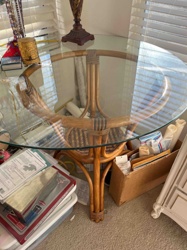
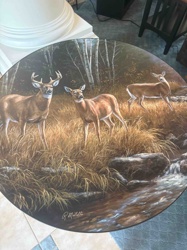
Chinese Style Bamboo Lattice Coffee Table with Glass Inset

Furniture - Tables

AI Estimated Value

·Not an official valuation·Verify before acting

$450 - $650

As of June 12, 2026

AI Item Analysis

·AI can make mistakes·Verify before acting
This square coffee table features a distinctive Chinoiserie-style design, characterized by an intricate bamboo lattice or 'broken ice' fretwork panel beneath a clear tempered glass top. The table is constructed with a thick, solid wood outer frame in a warm honey-oak or teak-tone finish, featuring mitered corner joints. The interior lattice is composed of interlocking bamboo pieces or steam-bent wood poles that create a complex geometric labyrinth pattern, typical of traditional Asian garden screen designs. The glass inset is recessed within the frame for a flush surface. In terms of condition, the wood shows light surface wear and minor scuffing consistent with careful household use. The glass appears intact without significant scratching or chips. The construction suggests late 20th-century production, likely influenced by the Boho-chic or British Colonial revival movements. The craftsmanship is evident in the precise fitting of the decorative lattice work, which remains structurally sound. No manufacturer marks are visible from this top-down perspective, but the quality indicates a boutique furniture manufacturer rather than mass-produced flat-pack goods.
AI Appraisal Report

·AI can make mistakes·Verify before acting
Based on my visual examination of this Chinoiserie-style 'broken ice' lattice coffee table, I find it to be a high-quality example of late 20th-century artisanal furniture. The piece utilizes a 'thick-frame' mitered construction that speaks to boutique manufacturing rather than mass-market production. The honey-toned finish and steam-bent wood joinery suggest an influence from the 1970s-1980s British Colonial and Boho-chic design movements, which are currently experiencing a resurgence in market demand. The condition is noted as 'Good,' with the integrity of the complex geometric fretwork remaining sound—a critical factor, as damage to these interlocking segments is difficult and costly to repair. Market comparables for similar bamboo-style vintage pieces from makers like McGuire or Maitland-Smith often reach higher premiums, though without a visible maker's mark, the valuation remains grounded in the quality of construction and decorative appeal. The current secondary market for high-end rattan and Chinoiserie remains strong, particularly in coastal and metropolitan design hubs. Please note that this appraisal is based on photographic evidence and descriptions. A definitive authentication would require an in-person inspection to verify the specific wood species, check the underside for hidden brand stamps, and assess the weight and density of the frame. Provenance or original purchase receipts would further solidify its standing, as scientific testing is generally unnecessary for furniture of this era unless seeking to prove an earlier 19th-century origin.

Get your items appraised

Instant estimates of your treasures with AI-powered appraisals

Browse More Appraisals