AI estimate as of November 19, 2025 · verify with a professional before acting
AI-Generated · Verify before acting
Everything on this page is generated by AI for informational purposes only. AI can make mistakes — the AI may misidentify items or misattribute them (artist, maker, brand, designer, origin, era). This is not an official valuation and should not be used for insurance, sale, tax, estate, legal, or lending purposes — or any decision requiring a certified appraisal. It is not an authoritative claim about any person, brand, or rights holder — do not share or rely on it as a factual statement about a third party. Always consult qualified professionals before making financial decisions.
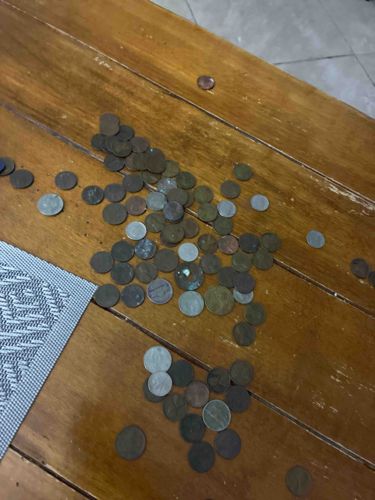
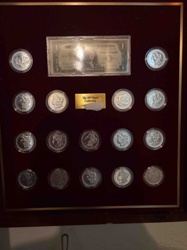
This item consists of a loose collection of numerous individual coins, predominantly appearing to be small denomination currency, scattered across a wooden surface. The coins vary significantly in color, suggesting a mix of metallic compositions, most commonly exhibiting shades of coppery-brown, dark brown, and some lighter, silvery-grey tones. Their physical characteristics indicate a range of diameters and thicknesses, although specific measurements are not discernable from the image. Many of the coppery-brown coins display a significant degree of tarnish and oxidation, consistent with age and environmental exposure. Some coins appear to be considerably worn, with details likely obscured due to heavy circulation, while others retain a slightly brighter, perhaps less circulated appearance. No specific mint marks, dates, or commemorative designs are clearly visible, precluding identification of specific denominations or countries of origin without closer inspection. The collection appears to be a casual accumulation rather than a curated set, spread across the grain of a light brown wooden table, which itself shows some minor wear and join lines. The presence of a patterned placemat (partially visible) suggests a domestic setting. The overall condition of the coins points to typical wear and tear associated with circulated currency, and there are no discernible signs of specific repairs or intentional alterations. The varied patina and wear levels indicate a collection accumulated over time, likely comprising coins from different periods or origins.
AI Appraisal Report
I have examined the provided image of this mixed collection of coins. Visually, the collection consists of numerous small-denomination coins, predominantly coppery-brown with some silvery-grey tones, scattered on a wooden surface. The condition appears to be typical of heavily circulated currency; many coins show significant tarnish, oxidation, and wear, obscuring details. I cannot ascertain specific denominations, dates, mint marks, or countries of origin from the image alone. Consequently, without clear identifying features, most coins appear to be common, low-value circulating currency. The absence of visible rare dates, errors, or precious metal content limits their numismatic value significantly.
From a market perspective, mixed lots of unidentified, heavily circulated common coinage typically hold value close to their face value, if they are still current tender, or a nominal amount for their metallic weight if demonetized and not identifiable as scarce. Comparables would be similar 'junk' coin lots or bulk foreign currency, which rarely command high prices unless a rare key date or error is discovered upon closer inspection. Demand for such unidentifiable, common circulated coins is very low among serious collectors, though they might appeal to hobbyists or for decorative purposes.
The primary factor impacting value negatively is the lack of identifiable features and the apparent heavily worn condition. There are no indications of rarity or significant collector demand based on this visual assessment.
Authenticity verification from an image only is extremely limited. To provide a definitive appraisal, an in-person examination is crucial. This would involve inspecting each coin for specific dates, mint marks, identifying features, and potential errors, as well as assessing their precise grade. Provenance documentation, though unlikely for such a casual collection, could offer insights into their origin. Scientific testing for metallic composition would be necessary to confirm any potential precious metal content, though visually, this appears to be base metal coinage.