AI Appraisal Estimate

AI-generated estimates · not official valuations

From the user

What was submitted

Photo and notes provided by the user — not generated by AI

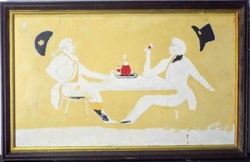
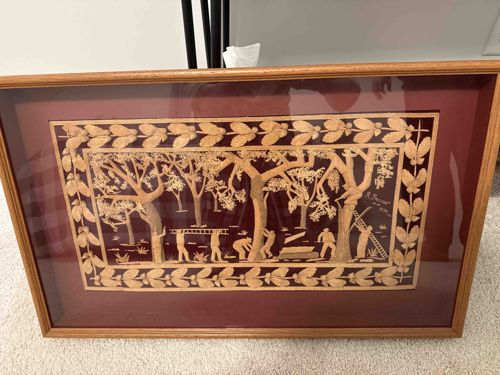
Submitted item photo
Submitted photo · June 14, 2026

User's notes

Cork art from 1936

AI analysis below

AI appraisal

AI analysis & estimate

AI-Generated · Verify before acting

Everything below is generated by AI for informational purposes only. AI can make mistakes — the AI may misidentify items or misattribute them (artist, maker, brand, designer, origin, era). This is not an official valuation and should not be used for insurance, sale, tax, estate, legal, or lending purposes — or any decision requiring a certified appraisal. It is not an authoritative claim about any person, brand, or rights holder — do not share or rely on it as a factual statement about a third party. Always consult qualified professionals before making financial decisions.

Note

This analysis also relies on unverified notes provided by the user, which may be incomplete or inaccurate and could affect the result.

Read the full disclaimer

AI Identification

·Not independently authenticated·Verify before acting

Vintage Chinese Cork Diorama Landscape (1936)

Fine Art / Folk Art

AI Estimated Value

·Not an official valuation·Verify before acting

$450 - $650

As of June 14, 2026

AI Item Analysis

·AI can make mistakes·Verify before acting
This is a rectangular horizontal wood-framed cork diorama, a traditional Chinese handicraft known as 'Ke Qi' or cork carving. The artwork is meticulously hand-carved from thin, porous sheets of natural balsa-wood-colored cork. It depicts a narrative forest scene featuring several figures engaged in manual labor, including two men carrying a ladder and others working with tools beneath a canopy of intricately carved, overlapping trees. The entire scene is enclosed by a stylized decorative border of carved cork leaves and vines. The figures and foliage are applied to a deep maroon or burgundy-colored background, creating a high-contrast relief. A notable feature is the handwritten signature and date 'R. Pierre 1936' located on the mid-right side of the inner artwork, indicating Western influence or provenance unusual for this medium. The piece is housed in a simple light-oak colored wooden frame behind glass. The construction demonstrates high-level craftsmanship, particularly in the delicate openwork of the tree branches. The condition appears well-preserved for its age, with the cork naturally darkened to a warm tan patina. There is no visible deterioration or crumbling typical of aging cork, though very minor debris or light dust may be present beneath the glass. The frame is in good condition with minimal surface wear.

AI Appraisal Report

·AI can make mistakes·Verify before acting
I have conducted a visual examination of the 1936 Chinese cork diorama (Ke Qi). This piece demonstrates exceptional craftsmanship and an unusual provenance due to the Western signature 'R. Pierre'. While traditionally a Chinese folk art originating from Fujian province, the date and signature suggest this was either commissioned for a Western national or created by a master carver for the export market during the mid-Republic period. The high-relief figures and intricate openwork on the tree canopies signify a level of labor-intensive detail rarely found in the mass-produced examples of the late 20th century. Condition: Based on the provided imagery, the cork shows a desirable warm patina without the friability or crumbling often seen in poorly stored examples. The maroon substrate remains vibrant, and the original glass enclosure has protected the delicate structural elements from oxidation. Market Analysis: The market for cork art is typically niche; however, pre-WWII examples with documented dates and signatures command a premium. Most pieces on the secondary market are 1970s souvenirs valued under $100. This piece's rarity lies in its age and the specific narrative scene, which elevates it from a generic landscape to a piece of social history. Limitations: This appraisal is based on digital images alone. A physical inspection is required to confirm the authenticity of the signature and to ensure no hidden repairs or insect damage exist within the organic material. To fully authenticate, I would recommend reviewing original purchase receipts or family provenance. Microscopic analysis of the adhesive and frame construction would further verify the 1936 origin.

Get your items appraised

Instant estimates of your treasures with AI-powered appraisals

Browse More Appraisals