AI Appraisal Estimate

AI-generated estimates · not official valuations

From the user

What was submitted

Photo and notes provided by the user — not generated by AI

Submitted item photo
Submitted photo · June 3, 2026

User's notes

No additional notes provided.

AI analysis below

AI appraisal

AI analysis & estimate

AI-Generated · Verify before acting

Everything below is generated by AI for informational purposes only. AI can make mistakes — the AI may misidentify items or misattribute them (artist, maker, brand, designer, origin, era). This is not an official valuation and should not be used for insurance, sale, tax, estate, legal, or lending purposes — or any decision requiring a certified appraisal. It is not an authoritative claim about any person, brand, or rights holder — do not share or rely on it as a factual statement about a third party. Always consult qualified professionals before making financial decisions.

Read the full disclaimer

AI Identification

·Not independently authenticated·Verify before acting

Tondo Folk Art Landscape Oil Painting on Wooden Panel

Fine Art / Folk Art

AI Estimated Value

·Not an official valuation·Verify before acting

$45 - $85

As of June 3, 2026

AI Item Analysis

·AI can make mistakes·Verify before acting
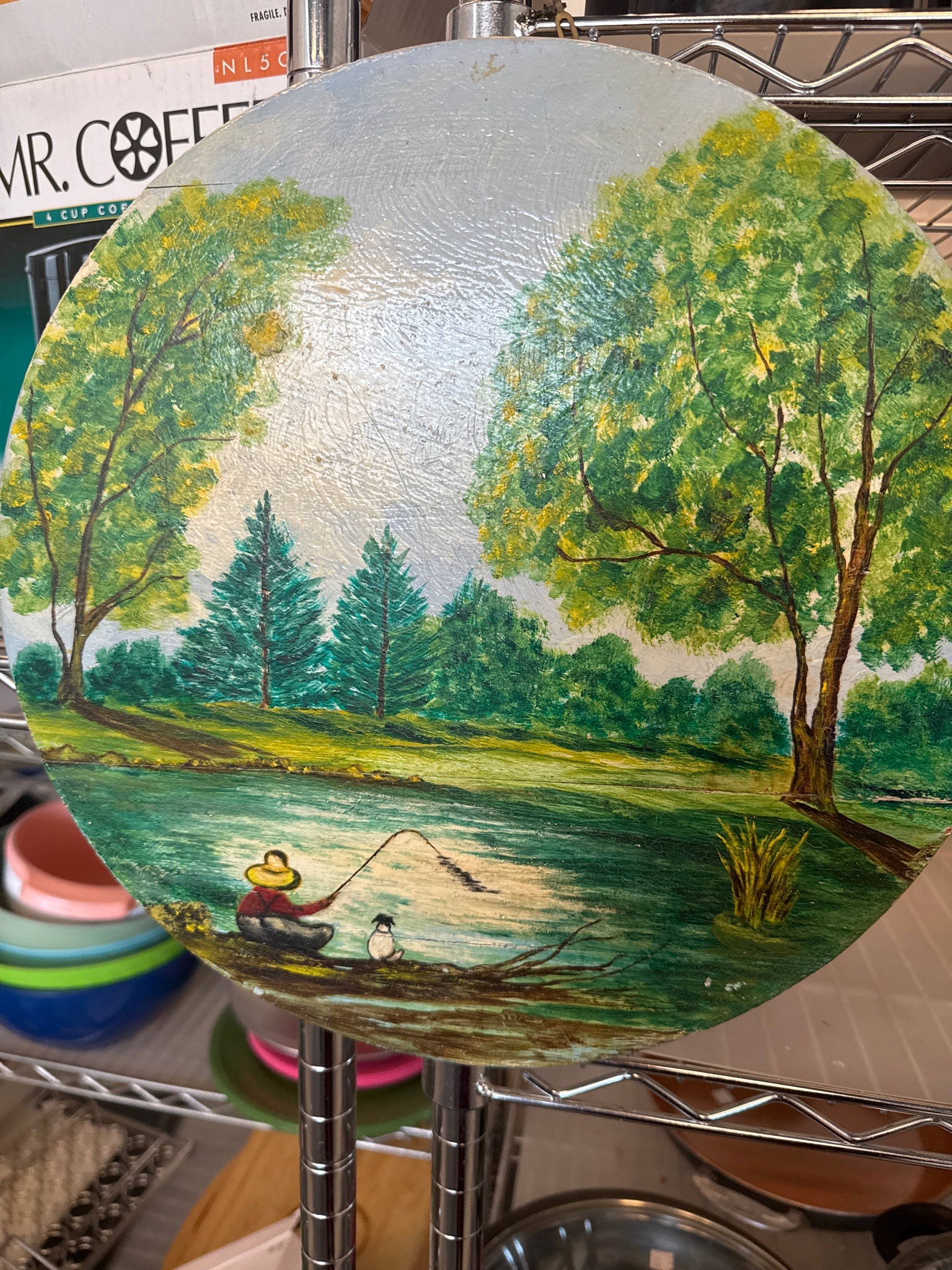
This is a circular (tondo) landscape painting executed in oil or acrylic on a thick wooden panel, likely a repurprosed tabletop or furniture component. The scene depicts a serene pastoral setting featuring a lone fisherman in a yellow wide-brimmed hat and red shirt, seated on a log accompanied by a small white and black dog. The artist employed a naive or folk-art style, characterized by simplified forms and visible, textured brushwork. The palette is dominated by earthen greens, yellows, and browns, with a pale blue-grey sky that shows a distinct impasto texture. Large deciduous trees frame the composition on the left and right, with pointed coniferous evergreens in the background. Regarding condition, the piece shows significant signs of age and wear. There is visible craquelure across the surface, particularly in the sky area where the paint is thicker. Noticeable abrasions and paint loss are present along the top and bottom periphery of the circular edge. A small area of surface grime or a circular stain is visible near the upper-left tree. The wooden substrate appears aged, and the overall construction suggests a mid-20th-century origin, likely produced as an amateur decorative piece or hobbyist project. There are no visible signatures or maker's marks on the face of the painting to identify a specific artist.
AI Appraisal Report

·AI can make mistakes·Verify before acting
I have examined the digital image of this circular (tondo) landscape painting on a wooden substrate. The work is executed in a naive, folk-art vernacular, likely dating to the mid-20th century (circa 1940-1960). The application of paint is heavy in the sky, demonstrating an amateur impasto technique, while the framing trees use simplified dabs for foliage. The condition is fair to poor; visible craquelure, significant perimeter paint loss, and surface abrasions suggest the piece was exposed to fluctuations in humidity/temperature or was part of a functional object (like a tabletop) that saw heavy use. The market for anonymous, mid-century amateur folk art is currently soft, as most value in this genre is driven by established 'named' artists or exceptional regional provenance. This piece lacks a signature, which limits its appeal to purely decorative value. Similar 'found object' paintings typically sell at local auctions or estate sales for modest sums. Factors suppressing the value include the significant condition issues and the lack of historical context or artist attribution. Note: This appraisal is based solely on the visual evidence provided. Limitations of this remote assessment include the inability to verify the wood species of the substrate, the chemical composition of the pigments, or the stability of the paint bond. A physical inspection would be required to rule out modern 'distressing' techniques or to identify any faint signatures on the reverse. Full authentication would require provenance documentation or provenance research to link the work to a specific folk art community or known hobbyist circle.

Get your items appraised

Instant estimates of your treasures with AI-powered appraisals

Browse More Appraisals