AI Appraisal Estimate

AI-generated estimates · not official valuations

From the user

What was submitted

Photo and notes provided by the user — not generated by AI

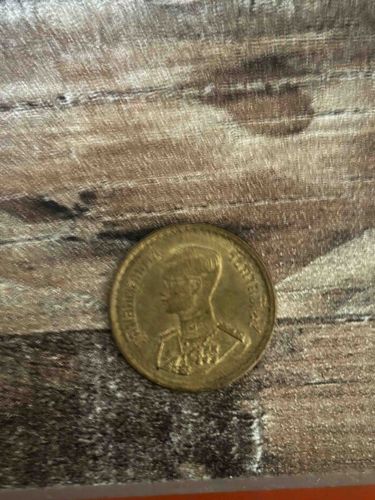
Submitted item photo
Submitted photo · June 15, 2026

User's notes

No additional notes provided.

AI analysis below

AI appraisal

AI analysis & estimate

AI-Generated · Verify before acting

Everything below is generated by AI for informational purposes only. AI can make mistakes — the AI may misidentify items or misattribute them (artist, maker, brand, designer, origin, era). This is not an official valuation and should not be used for insurance, sale, tax, estate, legal, or lending purposes — or any decision requiring a certified appraisal. It is not an authoritative claim about any person, brand, or rights holder — do not share or rely on it as a factual statement about a third party. Always consult qualified professionals before making financial decisions.

Read the full disclaimer

AI Identification

·Not independently authenticated·Verify before acting

Thai 50 Satang Coin (Rama IX)

Coin

AI Estimated Value

·Not an official valuation·Verify before acting

$0.25 - $1.00

As of June 15, 2026

AI Item Analysis

·AI can make mistakes·Verify before acting
This item is a circular, brass-colored coin, likely from Thailand, featuring the profile portrait of a monarch on its obverse. The monarch depicted is King Bhumibol Adulyadej (Rama IX), identifiable by the characteristic facial features and regalia. He is shown looking to the left, wearing a military-style uniform adorned with medals and what appears to be a royal order sash. The coin has a visibly aged patina, presenting a dull golden-brown hue, consistent with a brass or bronze alloy that has undergone natural oxidation over time. There are noticeable areas of wear on the high points of the portrait and along the rim, which has slightly softened the intricate details of the uniform and facial features. The inscription, seemingly in Thai script, encircles the portrait along the rim, but specific characters are difficult to decipher due to the image resolution and condition of the coin. The coin's edge appears to be smooth or reeded, though this cannot be definitively confirmed from the provided image. The overall condition suggests that it has been in active circulation for a considerable period. This type of coin would typically be circulated in the mid to late 20th century, given the reign of King Rama IX. The craftsmanship appears to be standard for a circulating coinage, with a raised relief portrait and legends.

AI Appraisal Report

·AI can make mistakes·Verify before acting
Based on my visual examination of the provided image, this 50 Satang coin from Thailand, featuring King Bhumibol Adulyadej (Rama IX), appears to be authentic. The portrait details, uniform, and overall design elements are consistent with known specimens of this coinage. Its brass-colored appearance and aged patina indicate typical wear and oxidation for a circulating coin of this era and material. I note significant wear on the high points of the portrait and rim, suggesting it has seen considerable circulation. This condition places it in a generally 'Good' to 'Very Good' range, not uncirculated or fine. Regarding market conditions, Thai 50 Satang coins from the reign of Rama IX are common and widely available. They were minted in large quantities and are not considered rare. Demand is primarily from novice collectors or those seeking representative examples of Thai coinage. Higher grades or specific variety dates would command more, but this specimen's condition precludes such a premium. Factors impacting value are primarily its commonality and circulating condition. Without the reverse side visible, I cannot confirm the specific year, which could minimally affect value if it were a scarcer date, though this is unlikely for a circulated example. My valuation reflects its status as a common, circulated world coin. It is crucial to note that this authenticity verification is based solely on visual assessment from an image. Full authentication would require in-person examination to assess the coin's weight, diameter, thickness, and edge reeding (if present), and to verify metallic composition. Microscopic analysis could confirm manufacturing techniques and rule out counterfeits, though counterfeiting of such low-value circulating coins is rare. Provenance documentation is typically not a factor for common coinage of this type.

Get your items appraised

Instant estimates of your treasures with AI-powered appraisals

Browse More Appraisals