AI Appraisal Estimate

AI-generated estimates · not official valuations

From the user

What was submitted

Photo and notes provided by the user — not generated by AI

Submitted item photo
Submitted photo · June 25, 2026

User's notes

No additional notes provided.

AI analysis below

AI appraisal

AI analysis & estimate

AI-Generated · Verify before acting

Everything below is generated by AI for informational purposes only. AI can make mistakes — the AI may misidentify items or misattribute them (artist, maker, brand, designer, origin, era). This is not an official valuation and should not be used for insurance, sale, tax, estate, legal, or lending purposes — or any decision requiring a certified appraisal. It is not an authoritative claim about any person, brand, or rights holder — do not share or rely on it as a factual statement about a third party. Always consult qualified professionals before making financial decisions.

Read the full disclaimer

AI Identification

·Not independently authenticated·Verify before acting

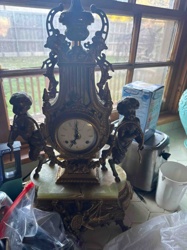
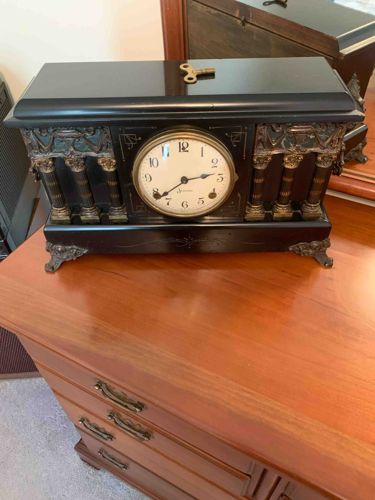
Sessions Black Mantle Clock with Corinthian Columns

Antiques & Collectibles - Horology

AI Estimated Value

·Not an official valuation·Verify before acting

$150 - $250

As of June 25, 2026

AI Item Analysis

·AI can make mistakes·Verify before acting
This is a classic early 20th-century (circa 1910-1920) mantle clock manufactured by the Sessions Clock Company of Forestville, Connecticut. The clock features a characteristic 'Black Adamantine' or lacquered wood finish designed to mimic expensive French black marble. It is architecturally styled with prominent neoclassical elements, including four sets of fluted gilt-bronze (ormolu) or brass-finished faux-marble columns with Corinthian capitals flanking the central dial. Above the columns are ornate decorative scrollwork friezes. The dial is off-white with black Arabic numerals and elegant spade hands, protected by a circular brass bezel with a glass crystal. The brand name 'Sessions' is visible just below the hands. The base is supported by four ornate lion-paw style cast-metal feet. The top of the clock is flat with a subtle bevel, and a dual-ended winding key is currently resting on top. Structurally, the clock appears intact, though visible patina and minor oxidation are present on the metal column accents and feet. There is slight fading of the decorative etchings around the dial area. The black finish shows minor surface scratches and dust accumulation consistent with age. This style of clock was a staple of American middle-class households in the Edwardian era, highlighting the mass-production of high-decorum horological pieces.

AI Appraisal Report

·AI can make mistakes·Verify before acting
I have virtually examined this Edwardian-era Sessions mantel clock, likely produced between 1910 and 1920. Authenticity appears consistent with the known mass-production techniques of the Sessions Clock Company of Forestville, Connecticut. The 'Black Adamantine' finish, a celluloid veneer designed to replicate expensive marble, is in fair condition with expected age-related surface abrasions. The neoclassical Corinthian columns retain their gilt-bronze appearance, though visible oxidation suggests a loss of the original lacquer. The lion-paw feet and decorative friezes are intact, which is critical for value as these components are often lost or replaced. The dial shows minor discoloration but remains legible with the original spade hands. Market demand for American black mantel clocks has softened significantly over the last decade, transitioning from high-value collectibles to decorative accents. Comparable sales for similar Sessions models typically fall within the $150 to $250 range at auction. Factors negatively impacting value include the oxidation of the metal mounts and the commonality of the design. Conversely, the presence of the winding key is a positive attribute. This appraisal is subject to several limitations due to the nature of a visual-only inspection. A physical examination is required to verify the integrity of the movement, the presence of the pendulum, and to confirm the clock is in working order (chime and timekeeping). I would also need to inspect the rear housing for original factory labeling and signs of recent repair or replacement parts. No scientific testing was conducted; full authentication would require opening the case to inspect the gear works for the Sessions hallmark and assessing any internal wear.

Get your items appraised

Instant estimates of your treasures with AI-powered appraisals

Browse More Appraisals