AI Appraisal Estimate

AI-generated estimates · not official valuations

From the user

What was submitted

Photo and notes provided by the user — not generated by AI

Submitted item photo
Submitted photo · June 1, 2026

User's notes

No additional notes provided.

AI analysis below

AI appraisal

AI analysis & estimate

AI-Generated · Verify before acting

Everything below is generated by AI for informational purposes only. AI can make mistakes — the AI may misidentify items or misattribute them (artist, maker, brand, designer, origin, era). This is not an official valuation and should not be used for insurance, sale, tax, estate, legal, or lending purposes — or any decision requiring a certified appraisal. It is not an authoritative claim about any person, brand, or rights holder — do not share or rely on it as a factual statement about a third party. Always consult qualified professionals before making financial decisions.

Read the full disclaimer

AI Identification

·Not independently authenticated·Verify before acting

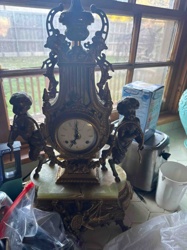
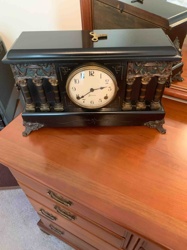
Rococo Style Ormolu Gilt Brass Mantel Clock Case

Antiques & Collectibles - Horology

AI Estimated Value

·Not an official valuation·Verify before acting

$400 - $600

As of June 1, 2026

AI Item Analysis

·AI can make mistakes·Verify before acting
This is a decorative mantel clock case designed in the ornate Rococo style, likely dating from the late 19th to the early 20th century. The piece is constructed from cast metal, likely brass or bronze with an ormolu (gilt) finish, displaying a bright golden hue. It features heavy asymmetrical scrollwork, acanthus leaf motifs, and lattice piercing throughout the body. The dial plate is integrated into the casting with a floral repoussé center, surrounded by individual white enamel (cartouche) Roman numeral markers. Physically, the clock stands on an integrated four-footed base with dramatic C-scrolls. The craftsmanship shows intricate casting details, though some signs of oxidation and patina are visible in the recessed areas, consistent with age. Notably, the clock hands and the internal mechanical movement appear to be missing or damaged, as the center of the dial shows an exposed arbor without hands. The upper finial is stylized as a shell or cresting plume. There are no visible maker's marks on the front face, which is common as such markings are typically found on the rear movement plate or inside the back casing. The overall condition shows some surface wear to the gilding and minor dust accumulation in the fretwork.

AI Appraisal Report

·AI can make mistakes·Verify before acting
I have conducted a professional visual examination of this Rococo revival mantel clock case. The item exhibits the characteristic 'Rocaille' aesthetic popular during the late 19th-century French revival period, featuring asymmetrical C-scrolls and pierced lattice work. The casting quality is moderate to high, with the ormolu finish showing a soft, aged patina and typical oxidation in recessed areas. The individual enamel cartouche numerals appear intact, which is a positive for value. However, the valuation is significantly tempered by the absence of the mechanical movement and hands. In the current horological market, a 'hollow' case is viewed primarily as a decorative object or a restoration project rather than a functional timepiece. Collectors typically seek complete, running movements by known Parisian makers (e.g., Japy Frères). Without the movement, the item loses approximately 60-70% of its potential market value. The current range reflects its appeal as a high-quality decorative bronze element for a designer or a hobbyist restorer. Visual inspection alone cannot definitively confirm the base metal composition—whether it is solid cast brass or a heavier dore bronze—nor can it verify if the gilding is original mercury firing or a later electroplated repair. A full authentication would require an in-person physical appraisal to check for foundry marks hidden on the interior casting, a weight-to-volume analysis, and potentially a chemical swab to determine the nature of the gilding. Provenance documentation regarding its original purchase or previous collections would also be necessary to elevate its status above 'decorative revival' to a significant historical piece.

Get your items appraised

Instant estimates of your treasures with AI-powered appraisals

Browse More Appraisals