AI estimate as of September 18, 2025 · verify with a professional before acting
AI-Generated · Verify before acting
Everything on this page is generated by AI for informational purposes only. AI can make mistakes — the AI may misidentify items or misattribute them (artist, maker, brand, designer, origin, era). This is not an official valuation and should not be used for insurance, sale, tax, estate, legal, or lending purposes — or any decision requiring a certified appraisal. It is not an authoritative claim about any person, brand, or rights holder — do not share or rely on it as a factual statement about a third party. Always consult qualified professionals before making financial decisions.
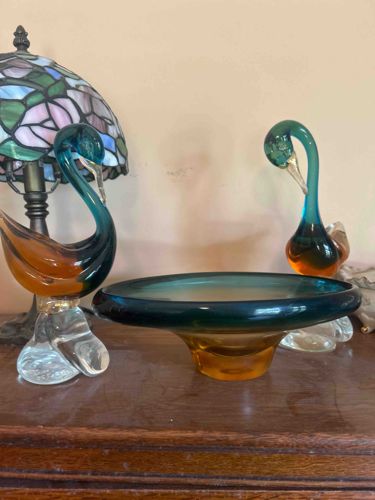
This item is an art glass bowl, designed with a shallow, circular form, elevated on a short pedestal base. The glass exhibits a striking two-tone coloration, transitioning from a rich, dark teal/blue-green at the rim and upper portion of the bowl to a warm, translucent amber-orange on the pedestal base and the underside of the bowl. The color variations appear to be integral to the glass, suggesting a cased or gradient glass technique, where different colored layers are fused or blended during manufacturing. The rim of the bowl is smooth and slightly flared, indicating a polished finish. The design is sleek and minimalist, characterized by fluid lines and a substantial feel, typical of mid-20th-century modern or Scandinavian-inspired art glass. There are no visible chips, cracks, or significant abrasions on the surface, indicating good overall condition. The transparency of the glass allows light to pass through, highlighting the color transition beautifully, and the piece appears to be hand-blown or artisan-crafted due to the inherent variations in such glasswork. The craftsmanship suggests a focus on aesthetic appeal and quality, likely intended as a decorative centerpiece or serving dish for fruits or other dry items.
AI Appraisal Report
Based on my visual examination of the provided image, this Teal and Amber Art Glass Bowl on Pedestal Base appears to be in excellent condition. There are no visible chips, cracks, or significant abrasions, which speaks to its careful preservation. The color transition from rich teal to warm amber is well-executed, indicative of quality cased or gradient glasswork. The sleek, minimalist design with a slightly flared and polished rim suggests a mid-20th-century modern or Scandinavian aesthetic, which currently enjoys strong market demand. The substantial feel and apparent hand-blown quality, as indicated by the fluid lines, contribute to its appeal as a decorative art object.
Market comparables for similar high-quality, two-tone art glass bowls, particularly those with a pedestal base and mid-century design influence from unidentifiable makers, typically fall within the $150-$300 range. Signed pieces or those definitively attributed to renowned designers or manufacturers (e.g., Murano, Scandinavian Modern masters) would command significantly higher prices. While the demand for decorative art glass remains consistent, items without clear attribution or provenance tend to have a ceiling unless they possess exceptional characteristics.
The main factor impacting value here is the lack of visible maker's marks or definitive attribution. While the craftsmanship is evident, without a signature or verifiable history, it cannot be positively identified as a product of a more prestigious maker. For full authentication and to potentially maximize value, an in-person examination would be crucial to look for acid-etched marks, pontil marks characteristic of specific glassblowers, or hidden signatures. Additionally, provenance documentation (e.g., original sales receipts, designer certificates) would be invaluable. Scientific testing might confirm glass composition or manufacturing techniques, but it's rarely applied to items in this value range unless authenticity is strongly challenged.