AI estimate as of August 11, 2025 · verify with a professional before acting
AI-Generated · Verify before acting
Everything on this page is generated by AI for informational purposes only. AI can make mistakes — the AI may misidentify items or misattribute them (artist, maker, brand, designer, origin, era). This is not an official valuation and should not be used for insurance, sale, tax, estate, legal, or lending purposes — or any decision requiring a certified appraisal. It is not an authoritative claim about any person, brand, or rights holder — do not share or rely on it as a factual statement about a third party. Always consult qualified professionals before making financial decisions.
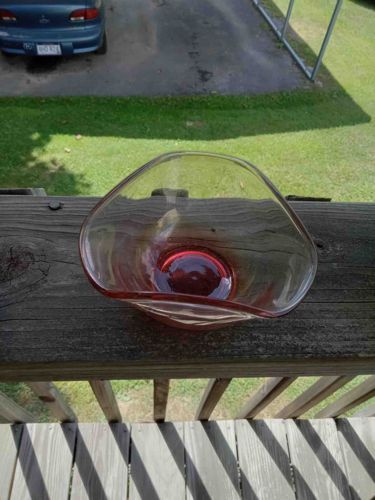
The item is a contemporary art glass bowl, likely a fruit bowl or decorative centerpiece, characterized by its striking fuchsia/cranberry colored glass with clear glass elements. It exhibits an free-form organic or asymmetrical shape, with undulating sides that rise and fall, creating a visually interesting silhouette. The base of the bowl is distinctly fuchsia/cranberry and forms a recessed, circular well, from which the lighter, somewhat transparent fuchsia clear glass extends upwards and outwards. The clear glass portion appears to have a slight fuchsia tint, suggesting it may be a lighter shade of the same color or a blend transitioning from the darker base. The glass itself appears relatively thick, especially at the base, indicative of a quality manufacturing process, possibly hand-blown or molded art glass. There are no immediately visible chips, cracks, or significant abrasions on the surface, implying good overall condition. The exterior surfaces appear smooth and glossy, reflecting light readily. No apparent maker's marks, signatures, or specific manufacturing details are discernible from the provided image. The style suggests it could be from the mid-20th century to contemporary, possibly influenced by Murano or art deco designs due to its vibrant color and flowing form. The craftsmanship seems to be of a good standard, with clean lines and a well-finished rim, despite the organic shape.
AI Appraisal Report
Upon visual examination of the provided image, this Fuchsia/Cranberry Free-Form Art Glass Bowl presents as a high-quality decorative object. Its striking color and organic, undulating form are characteristic of modern art glass, potentially influenced by mid-century design or Murano traditions. The apparent thickness and smooth, glossy surface suggest good craftsmanship, likely either hand-blown or molded. Condition appears excellent, with no visible chips, cracks, or significant abrasions. This contributes positively to its market appeal.
Market conditions for decorative art glass remain relatively stable, with a consistent demand for unique and aesthetically pleasing pieces. Comparable items from independent glass artists or smaller studios, particularly those displaying vibrant colors and free-form designs, typically command values ranging from moderate to high-end within the decorative arts market. The vibrant fuchsia/cranberry color adds to its desirability, as bold colors are often sought after in contemporary interiors.
While not exceptionally rare, art glass of this quality and aesthetic appeal enjoys steady demand among collectors and those seeking distinctive home decor.Factors positively impacting value include its excellent condition, appealing color, and seemingly substantial construction. However, the absence of a discernible maker's mark or signature significantly limits its value. Without attribution to a known artist or studio, it cannot command the prices associated with established names.
It is important to note the inherent limitations of appraising from images alone. Definitive authenticity verification, especially regarding the specific glass type, manufacturing technique (e.g., hand-blown vs. molded), and potential origin, cannot be determined without physical inspection. An in-person examination would allow for tactile assessment of glass quality, weight, pontil marks (if hand-blown), and a thorough search for subtle signatures or labels missed in imagery. Provenance documentation, such as purchase receipts or artist certificates, would also be crucial for full authentication and attribution, which could significantly impact its value upwards.